An organised workspace is the foundation for efficient workflows. A key element in achieving this is a functional office filing system that systematises the organisation of documents, letters, and files. Choosing the right system depends on individual requirements such as paper volume, available space, and preferred materials. This guide analyses the technical criteria and presents various models based on their specifications.
Buyer's Guide: Selection Criteria for Your Filing System
The decision for a filing system should be based on an analysis of your functional requirements. The following parameters should be considered.
Material and Construction
The material influences both the durability and the aesthetics of the system.
- Metal: Systems made of metal, often in the form of powder-coated steel mesh, are characterised by high stability and a modern, industrial aesthetic. They are robust and easy to maintain. The powder coating provides protection against corrosion and scratches.
- Wood: A document tray made of wood offers a warm, classic aesthetic. Solid wood or high-quality engineered wood is durable but can be heavier. Combining it with metal elements can increase structural stability.
- Plastic: Plastic filing systems are lightweight, often available in many colours, and generally more cost-effective. However, their stability and longevity may be lower than metal or wood versions, depending on the quality of the material.
Design and Capacity
The design determines how the system integrates into your workspace and how much storage it provides.
- Stackable: A stackable letter tray allows for vertical expansion of storage space without taking up additional desk surface. Look for systems with locking mechanisms or guides that prevent the tiers from shifting.
- Wall Organiser: A wall organiser utilises vertical surfaces and is ideal for workspaces with limited desk area. It is well-suited as a central collection point for mail or for sorting projects by theme.
- With Drawer: A desk organiser with a drawer offers additional, enclosed storage for smaller office supplies like pens, sticky notes, or paper clips, contributing to a tidy and uncluttered appearance.
Format Compatibility and Dimensions
Most office documents in Europe use the A4 format. Ensure the internal dimensions of the compartments are designed for this size. Also, check the external dimensions of the system to make sure it fits into the intended space on your desk, shelf, or wall.
Recommended Filing System Solutions
The following products have been selected based on their technical specifications and functional features for various use cases.
MyGift Vintage Gray Solid Wood Desktop Stackable Letter Tray
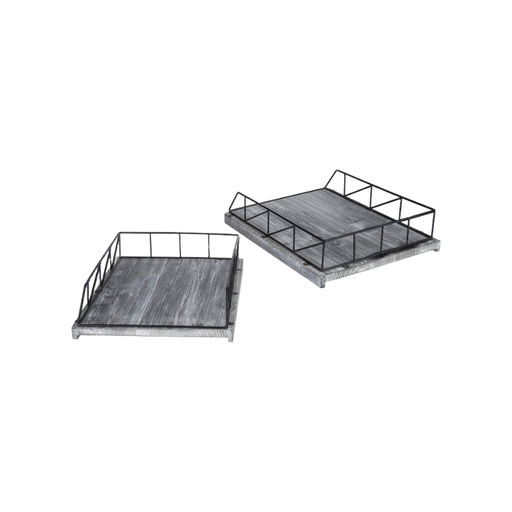
- Why we recommend this product: This system combines the material benefits of wood and metal. The wooden trays provide a solid base for documents, while the metal frame ensures structural stability. Its design allows for flexible use as two individual trays or one stacked unit.
- Key Features:
- Material Combination: Black metal frame and grey wood trays.
- Flexible Stacking: The two trays can be used individually or stacked. When stacked, the trays are slidable for easy access.
- Format: Suitable for standard A4 documents, magazines, and large envelopes.
- Best for: Users looking for an aesthetic solution with moderate capacity for their desk who appreciate the tactile feel of natural materials. Ideal for home offices or executive workspaces.
Senhoglb Desktop 5 Tier A4 Mesh in Tray File Holder
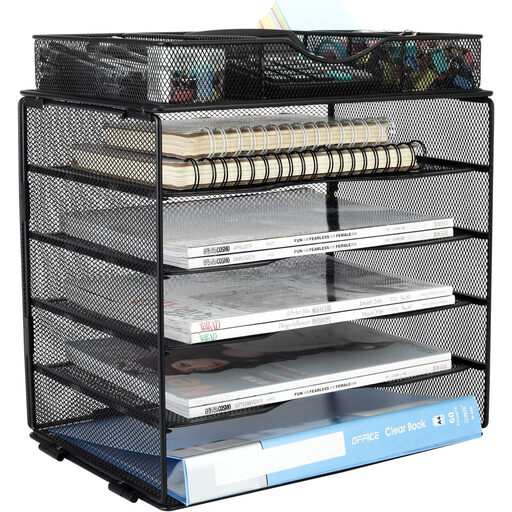
- Why we recommend this product: This model maximises vertical storage capacity on a minimal footprint. The metal construction is designed for durability, and the additional drawer enhances organisation by also holding small items.
- Key Features:
- High Capacity: Five tiers for paper storage plus an integrated drawer for office supplies.
- Robust Construction: Made from steel mesh with a powder-coated finish that offers resistance to rust and scratches.
- Tool-Free Assembly: The system slots together without screws, allowing for quick setup.
- Best for: Professionals and students with a high volume of paperwork who need a comprehensive office organisation solution directly on their desk.
Senhoglb 8 Tier A4 Mesh Wall Pocket File Holder
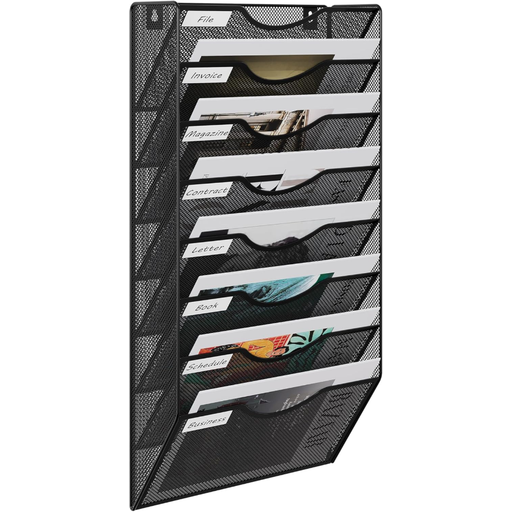
- Why we recommend this product: As a wall organiser, this system creates order without occupying valuable desk space. With eight compartments and label panels, it allows for highly detailed and clear document sorting.
- Key Features:
- Maximum Space-Saving: The wall-mounted design completely frees up your desk.
- Comprehensive Organisation: Eight separate compartments, each with a panel for labels for clear categorisation.
- Durable Material: The powder-coated metal construction is designed for long-term use and heavy loads.
- Best for: Users in offices or home offices with limited desk space. Also suitable for entryways to sort daily mail or as a central file repository for different projects or departments.
Other Alternatives and Specialised Solutions
The models presented here cover common use cases. However, if you are looking for more specific designs, different materials, or various configurations, you will find a wider selection of organisational tools in our main category.
Find more models in the category: Letter Trays
Frequently Asked Questions (FAQ)
1. What is the difference between a letter tray and a file holder? A letter tray is typically an open, flat compartment for the temporary storage of current documents, letters, or single sheets directly at the workspace. A file holder can refer to more robust systems designed to hold thicker file folders, entire binders, or for long-term archiving. However, the terms are often used interchangeably in everyday language.
2. How can I organise my document tray most efficiently? For efficient office organisation, a system with clearly defined categories is recommended. A common method is to divide items into "Inbox," "In Progress," and "Completed/Archive." Label each compartment clearly. Schedule regular times to clear the trays and move the documents to the next step in your workflow or into an archive.
3. Are stackable filing systems stable? The stability of stackable systems depends on their construction and material. Models with a solid metal frame or interlocking elements generally offer high stability. It is important not to overload the trays and to place heavier items in the lower tiers to keep the centre of gravity low.


