Which solution is right for you?

Listening and comparing on your own

If you repeatedly listen to several recordings using the same wired headphones, controllable levels and consistent playback settings are important. The European Broadcasting Union identifies loudness differences between programmes as a significant playback issue.

Groups listening together

If several people need to listen at the same time, first establish whether everyone will hear the same signal or whether you need different sources. Mackie describes the HM-4 as distributing one shared stereo source; according to the manufacturer, the PreSonus Monitor Station V2 allows you to select Main/Cue for each headphone output.

Listeners with demanding headphones

Your existing headphones need a compatible connection and enough amplification, with precise volume control at your preferred listening level. A single high power rating won’t answer this question; for example, FiiO specifies the K11’s power ratings for particular outputs and loads.

What should you look for when buying?

Use your existing headphone output

A good fit if: One listening station and one computer source are enough, and your existing output drives your headphones adequately with precise volume control.

The trade-off: You can’t tell whether it will work for your specific setup based on general power ratings alone.

USB DAC with headphone amplifier

A good fit if: You want to listen to digital files on your computer through a dedicated headphone output, and add specific connections or controls.

The trade-off: This type of DAC doesn’t automatically select different recordings for several people; check the inputs on the specific model.

Analogue multi-headphone amplifier

A good fit if: Several people want to listen to the same analogue stereo source at the same time and adjust their own volume.

The trade-off: Devices such as the Mackie HM-4 distribute one shared source. For digital playback from a computer, you’ll need a suitable analogue signal.

Monitor controller with source routing

A good fit if: You want to use several inputs or route Main and Cue signals to specific listening stations.

The trade-off: You’ll need to supply the right signals; Main/Cue doesn’t automatically mean you have an unlimited number of independent computer streams.

What you need What to check before buying Who it matters most to
Consistent loudness and playback Easy-to-reach volume and gain controls; keep EQ, bass or loudness features under control. When I compare recordings repeatedly, I want to keep loudness and sound settings consistent. Around 33% of consumers put this comparison first.
The right output for your headphones Compare the plug, specific output and power ratings at the stated load; start at a low volume. If you want to connect a particular pair of existing headphones and adjust the volume precisely, the right combination is especially important. Around 27% of consumers prioritise headphone compatibility.
Several people, one recording Check the number of outputs you need and whether each has its own level control; also confirm the analogue signal connection and compatible plugs. If several people are listening to the same recording at once, I want a separate volume control for each listening station. Around 20% of consumers put shared listening first.
Selecting different sources Plan the signal path in advance and check which sources and Main/Cue signals can actually reach the listening stations you need. If different signals need to be selected or routed, I want to plan the sources and listening stations clearly before buying. Around 20% of consumers prioritise source selection.

Common buying mistakes

  • Assuming four headphone sockets mean four independent recordings

    According to the manufacturer, the Mackie HM-4 distributes one stereo source to up to four pairs of headphones. By contrast, the PreSonus Monitor Station V2 documents Main/Cue selection for each output; the signals available still depend on the connected source.

    Before buying, decide whether everyone will listen to the same thing or whether you need different signals, then check the complete signal path.

  • Comparing the highest power rating without checking the output and load

    The stated figures for the FiiO K11 vary depending on the headphone output and load. A single figure therefore doesn’t prove that the amplifier will suit every pair of headphones.

    Compare manufacturers’ ratings only when the output, load and test conditions match, and also check whether you can adjust the volume precisely to your preferred level.

  • Assuming the louder recording is the better one

    The European Broadcasting Union identifies loudness differences between programmes as a significant playback issue. EQ and loudness features can also affect your comparison.

    Match the recordings for your comparison and keep your headphones, volume and sound processing consistent between listens.

  • Expecting a more powerful amplifier to make open-back headphones suitable for the office

    Shure explains that sound passes in and out through the openings in the ear cups of open-back headphones. An amplifier won’t change their design.

    When choosing headphones for a shared office, consider sound leakage and background noise separately from your choice of amplifier.

Key brands to consider

FiiO

The K11 is a desktop USB DAC/headphone amplifier for one listening station, with additional optical and coaxial digital inputs.

  • FiiO specifies three gain levels and 6.35-mm and 4.4-mm headphone outputs.
  • The K11 requires an external 12-V power supply. Its power ratings apply to the stated output and load; there’s no indication that it provides separate listening signals for a group.

Mackie

The HM-4 lets several people listen to one stereo source; the differently equipped Big Knob Studio adds source and monitor selection.

  • Mackie specifies four individually controlled outputs for one shared source on the HM-4. The Big Knob Studio is described as having two headphone outputs with independent level controls and source selection.
  • The HM-4’s shared source shouldn’t be confused with several independent recordings.

PreSonus

The Monitor Station V2 is a monitor controller for workstations where several inputs and Main/Cue signals need to be routed to different listening stations.

  • According to PreSonus, each of its four headphone outputs has Main/Cue selection and its own level control.
  • The different recordings actually available will also depend on the connected signal source.

iFi audio

The ZEN DAC 3 is a USB DAC/headphone amplifier for a computer-based listening station, with analogue outputs on the rear.

  • The manual specifies 6.35-mm and 4.4-mm headphone outputs, PowerMatch and switchable fixed or variable rear outputs.
  • iFi recommends switching PowerMatch at a low volume. In “Fixed” mode, the rear output bypasses the device’s volume control.

RME

The ADI-2 DAC FS is designed for listeners looking for separately specified headphone and in-ear outputs, as well as adjustable playback features.

  • RME specifies a headphone output, a dedicated IEM output and DSP features such as EQ and loudness.
  • Keep these features consistent when comparing recordings without altering their sound. Having two types of output doesn’t prove that two independent listening signals are available.

Joybuy products for comparing audio on a PC

This selection from Joybuy includes a USB audio DAC with a headphone amplifier for PC playback.
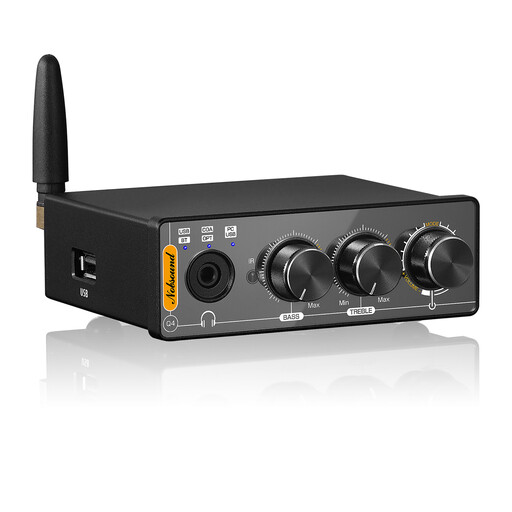
Nobsound Q4 USB audio DAC with headphone amplifier

Nobsound Q4 USB audio DAC with headphone amplifier

For PC playback through a USB audio DAC with a headphone amplifier, particularly if you also need optical inputs and adjustable sound settings.

The product name lists Bluetooth, an optical input, 24-bit/192-kHz audio, Treble and Depth controls, and a remote control.

Keep the Treble and Depth settings consistent when comparing recordings without altering their sound. Use only a compatible external DC power supply; an incompatible power supply can cause overheating, a fire risk or damage to the device.

Joybuy

Frequently asked questions

Do I need to set a particular volume or LUFS value when comparing recordings?

No. The European Broadcasting Union’s recommendation on normalising broadcast programmes doesn’t prescribe a headphone volume for your workplace. Keep your listening volume moderate and match the recordings you’re comparing for a fairer listening experience. The German Environment Agency warns that sound that is too loud, or exposure for too long, may damage your hearing.

How do I connect an amplifier for four pairs of headphones to a computer?

With devices such as the Mackie HM-4, connect a suitable analogue stereo output from your computer or audio interface to the input, then plug the headphones into the individually controlled outputs. Start at a low volume at every listening station. The HM-4 is designed for one analogue stereo source and doesn’t convert your computer’s USB audio signal to analogue sound itself.

How should I care for a headphone amplifier on a shared desk?

Follow the instructions for your specific model. For example, Chord says not to spray cleaning products onto the Mojo 2 and to clean its case with a clean microfibre cloth. This is a manufacturer’s instruction for a specific model, not general cleaning advice for all amplifiers.

What are my rights when shopping online in Germany?

When you buy from a business by distance selling, you generally have 14 days from receiving the goods to withdraw from the contract; exceptions and the circumstances of the purchase should be taken into account. According to consumer information from the European Union, faulty goods are generally covered by a legal guarantee of at least two years against the seller. This is separate from any voluntary manufacturer’s guarantee.

Does a device sold in Germany need to carry a CE marking?

A CE marking is required only if the specific product is covered by harmonised EU rules that require it. It isn’t an independent quality mark. For electronic products within its remit, the German Federal Network Agency checks matters including marking and product identification; the conformity of a particular model is determined by its product documentation.