What to look for when buying
When your ingredients are the deciding factor, citrus presses, centrifugal juicers and slow juicers differ mainly in what they’re designed for and how long juicing takes. ETM TESTMAGAZIN says centrifugal juicers are faster than slow juicers when processing larger quantities, but also noisier. This isn’t a blanket comparison of individual models.
Citrus press
A good fit if: You mainly juice oranges, lemons or other citrus fruit.
Consider: A citrus press isn’t designed for whole apples or leafy greens.
Centrifugal juicer
A good fit if: You mainly want to juice fruit or firm vegetables quickly.
Consider: ETM TESTMAGAZIN says this type of juicer is faster than a slow juicer for larger quantities, but also noisier. Cleaning the sieve adds to the time needed.
Slow juicer
A good fit if: Leafy greens or fibrous ingredients are regulars on your menu.
Consider: According to ETM TESTMAGAZIN, processing takes longer than with centrifugal juicers. Suitability for different ingredients and cleaning requirements vary by model.
| Priority |
What to check when buying |
Who it matters to most |
| Quick preparation in the morning |
Compare the feed chute size for your usual ingredients with the effort involved in cleaning. |
If you’re short on time before heading out, both preparation and cleaning matter. Around 33 % of consumers prioritise quick preparation. |
| Juicing citrus fruit |
Check the cones, pulp control and how easy the individual parts are to clean. |
If you usually want a glass of orange or other citrus juice, you don’t automatically need a machine for vegetables. Around 25 % of consumers prioritise pure citrus juice. |
| Leafy greens and fibrous ingredients |
Check that the model is specifically suitable for the ingredients you plan to use. |
If you plan to juice leafy greens or fibrous ingredients regularly, suitability for those ingredients matters more than the shortest possible juicing time. Around 25 % of consumers prioritise these ingredients. |
| Easy cleaning |
Check how accessible the parts are and whether they’re dishwasher-safe, according to the instructions for the specific version. |
If you want to spend as little time as possible cleaning after each use, factor this into your comparison. Around 17 % of consumers prioritise ease of cleaning. |
Joybuy products
These products include citrus presses, as well as centrifugal and slow juicers for fruit and vegetables. Check the product details to make sure each model suits your ingredients and cleaning routine.
 No image available
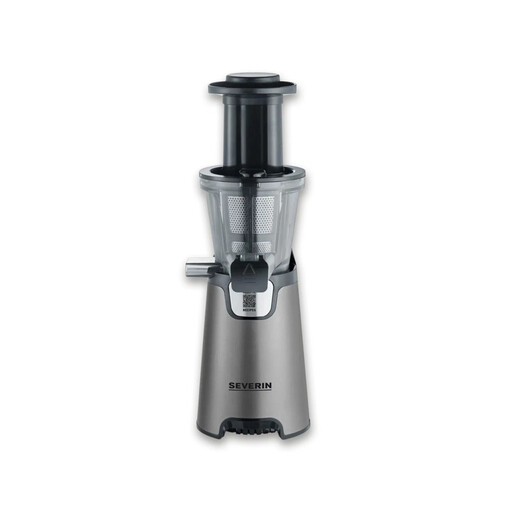
Severin Slow Juicer ES 3571
An option if you want to juice fruit and vegetables and are looking for an easy-clean design.
1-litre juice container; 150 watts; stainless steel; cleaning brush.
View at Joybuy
 No image available
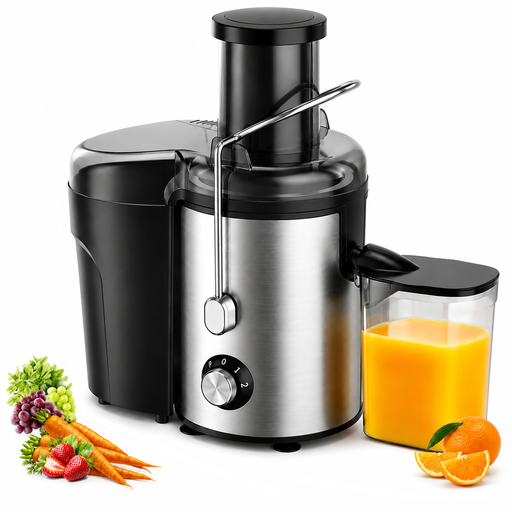
Centrifugal juicer, 600 W, 75 mm
An option for fruit and vegetables if the 75-mm feed chute suits the ingredients you use.
600 W; 75-mm feed chute; two speed settings.
View at Joybuy
 No image available
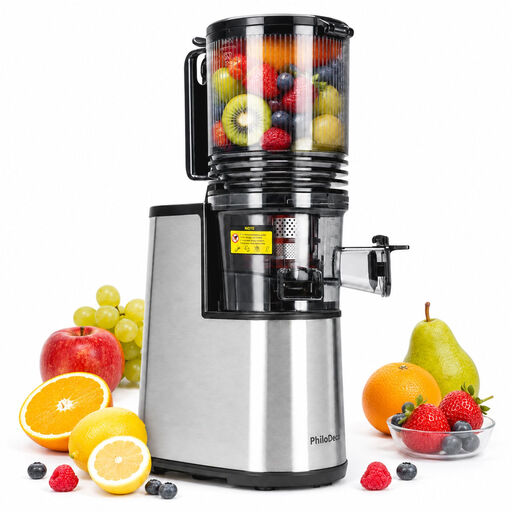
Cold-press slow juicer, 110 mm XXL
An option if you want to juice whole apples or larger vegetables, provided they fit through the feed chute.
110-mm XXL feed chute; 40 Nm; reverse function to help prevent blockages.
View at Joybuy
 No image available
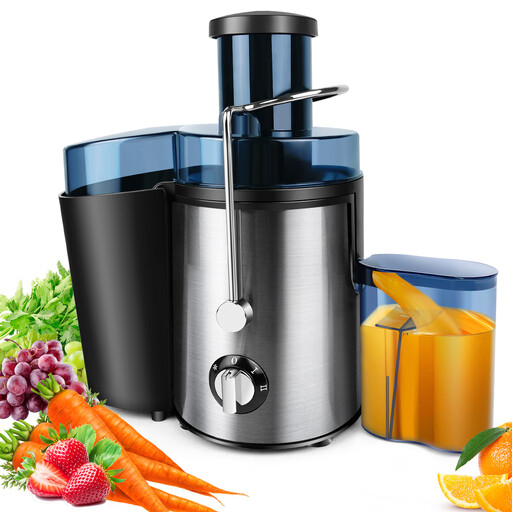
DayPlus centrifugal juicer, 1000 W
An option for a range of soft and firm ingredients, if the feed chute is wide enough for your preparation.
1000 W; 65-mm feed chute; two speed settings; 500 ml capacity.
View at Joybuy
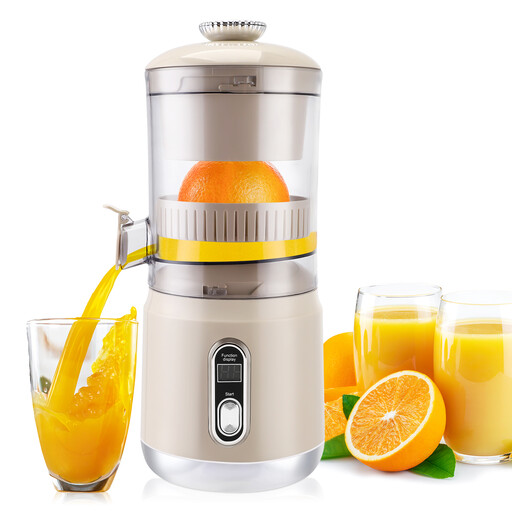 No image available
Electric citrus press for oranges and citrus fruit
An option if you mainly want to juice oranges, lemons or limes.
Electric operation; removable juice collector, cone and lid.
View at Joybuy
Frequently asked questions
How should I store juice made in the morning until my afternoon break?
Pour the juice hygienically into a sealed bottle and keep it chilled until you’re ready to drink it. The Federal Centre for Nutrition says freshly made juice in a sealed glass bottle can keep in the fridge for around two to three days; this doesn’t mean it can be kept in an unrefrigerated bag. The Federal Institute for Risk Assessment also emphasises the importance of temperature during transport and storage.
Should I wash citrus fruit before juicing it?
Yes. The Consumer Advice Centre recommends rinsing the fruit with lukewarm water and drying it before juicing, as substances from the peel can get into freshly squeezed juice.
Are the removable parts of every juicer dishwasher-safe?
No, it depends on the model and the individual parts. According to the technical specifications, the parts of the Severin CP 3535 aren’t dishwasher-safe; Philips describes the removable parts of the HR1889/70 as dishwasher-safe. Always follow the instructions for the version you buy.
What should I know about a fault or buying online in Germany?
If a product is faulty, your statutory rights are against the seller and are separate from any voluntary guarantee. The Consumer Advice Centre explains that online purchases generally come with a right to cancel, usually within 14 days; the details and any exceptions depend on the contract.
Which regulations apply to an electric juicer?
For electrical and electronic equipment where it’s required, the official EU consumer portal lists CE marking. This is a manufacturer’s declaration, not an independent quality mark. EU rules on food contact materials also apply to materials that come into contact with food. These statements don’t apply generally to manual presses.


