What should you look for when buying?
First, work out whether you really need water below boiling point. Then compare capacity, ease of use in a shared kitchen and how much upkeep the kettle needs.
| What matters |
What to check when buying |
Who it matters most to |
| Water capacity and team use |
Rated capacity, a visible water-level or cup indicator, and the appliance’s minimum fill level. |
If I’m making hot water for several colleagues, I want to measure the amount easily and avoid having to refill the kettle unnecessarily often. Around 29% of consumers in this buying situation make this their main priority. |
| Temperature settings for different teas |
The temperature settings available on the specific model and how easy it is to use. |
If we make different teas, the available temperature settings should suit the drinks we enjoy. Around 29% of consumers in this buying situation say temperature control is their top priority. |
| Ease of use in a shared space |
The outer surfaces, lid and spout; also check who is responsible for arranging the workplace safety inspection. |
If lots of people use the same appliance, I want to consider how to handle hot surfaces and pour the water safely. Around 21% of consumers in this buying situation say safe handling is their top priority. |
| Cleaning and care |
How wide the lid opens, whether the inside is easy to reach, whether the filter is removable, and the local water hardness. |
If the kettle is used frequently, I want to keep on top of limescale and everyday cleaning. Around 21% of consumers in this buying situation say easy cleaning is their top priority. |
Kettles at Joybuy
This selection includes kettles for a shared kitchen. If you make different types of tea, compare the temperature settings specifically listed for each product.
 No image available
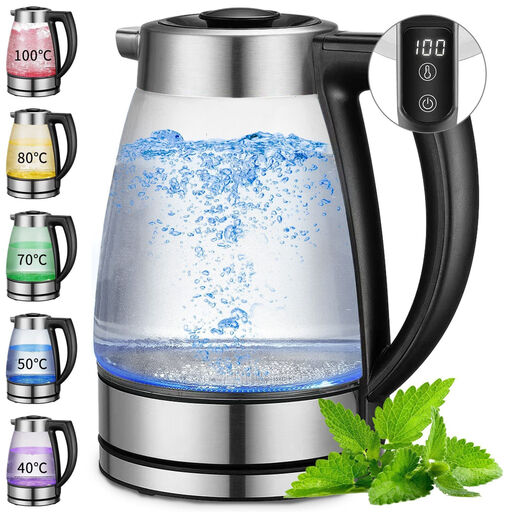
2-l borosilicate glass kettle
Capacity is an important factor when choosing a kettle for a shared kitchen where several cups may be needed.
2 l; 2200 W; 304 stainless steel base; 360° rotating base.
View at Joybuy
 No image available
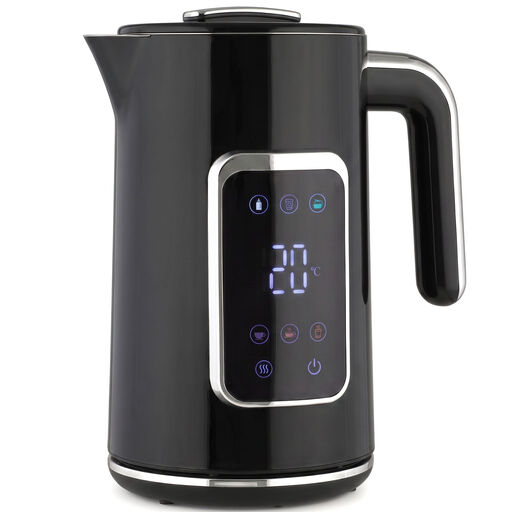
1.7-l kettle with temperature control
If you need to set a specific temperature as well as boil water, factor this feature into your comparison of the products available.
1.7 l; 2200 W; LED display; adjustable temperature; keep-warm function.
View at Joybuy
 No image available
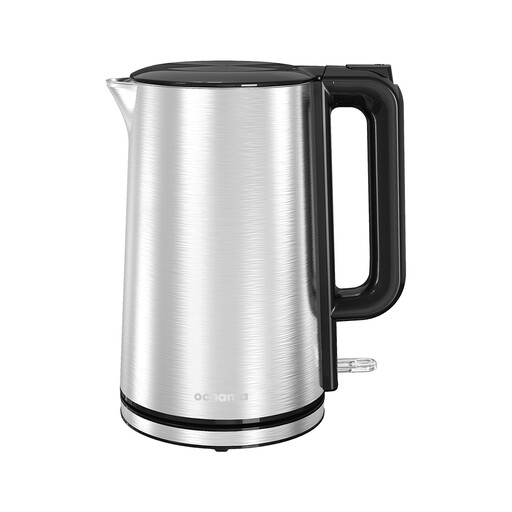
ochama kettle, 1.7 l
The stated capacity can help when comparing kettles for a kitchen where several people need hot water.
1.7 l; 2100 W; double-walled stainless steel; seamless interior.
View at Joybuy
 No image available
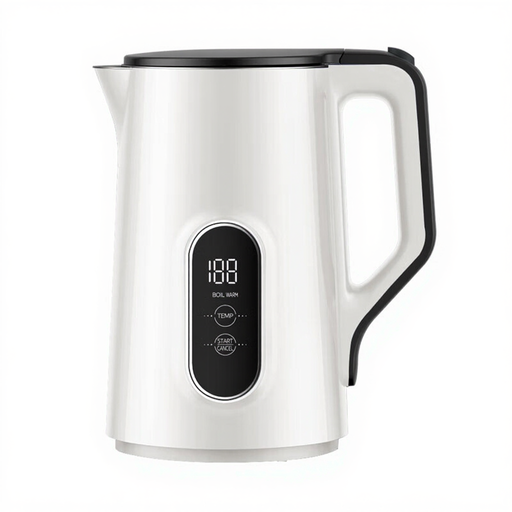
Midea kettle, 1.5 l, 45–100 °C
The temperature range is important if you want to set the water temperature to suit different teas.
1.5 l; 2200 W; temperature settings from 45–100 °C; double-walled design; digital temperature display.
View at Joybuy
 No image available
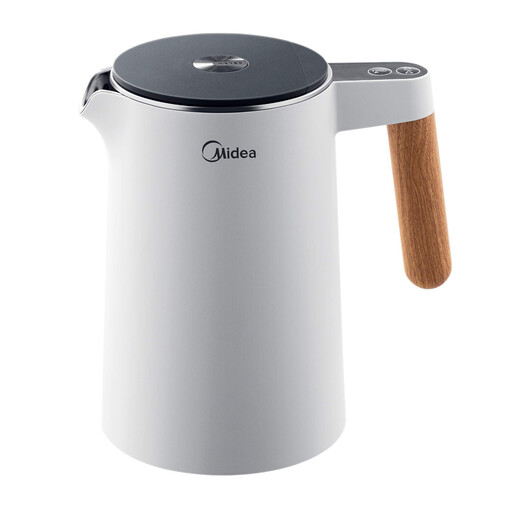
Midea stainless steel kettle, 1.5 l, 7 temperature settings
If you need a choice of different temperatures, compare the settings listed with the drinks you usually make.
1.5 l; 2200 W; seven temperature settings from 45–100 °C; keep-warm function; LED display; double-walled design.
View at Joybuy
Frequently asked questions
When is temperature control useful in an office kitchen?
Temperature control is useful if you make teas that need water at different temperatures. Compare the settings on the specific model: according to the manufacturer, the Bosch TWK8611P offers 70, 80 and 90 °C, as well as boiling; the Severin WK 3418 can be adjusted in 5-°C increments.
How should we care for a kettle in a hard-water area?
Ask your local water supplier about the water hardness and descale the kettle regularly. The Verbraucherzentrale suggests using diluted citric acid; also follow the instructions for your particular kettle.
Who is responsible for electrical safety checks in the office?
The employer must arrange the required inspections of electrical equipment at work, which must be carried out by suitably qualified people. According to the DGUV, this also applies to privately owned kettles if their use at work is permitted. Inspection intervals depend on the conditions of use.
Is the CE marking the same as a workplace equipment inspection?
No. For a new kettle designed for 50 to 1.000 V AC and placed on the German market, the relevant EU requirements, including CE marking, must be met. The European Union describes CE as the manufacturer’s declaration that the relevant product rules have been met. It does not replace the required workplace inspections, which are the employer’s responsibility.
Are a guarantee and statutory rights the same thing?
No. Statutory rights are a legal claim against the seller, while a guarantee is a voluntary offer with its own terms and conditions. The Verbraucherzentrale recommends checking the specific terms of the contract and guarantee when ordering for a business, as consumer information may not apply to every business purchase.


