
Lieferung heute & morgen

Qualitätsgarantie

Willkommens-Angebote freischalten: KOSTENLOSE Lieferung | Bis zu 80 % RABATT | Kostenlose 30-Tage-JoyPlus-Testphase
App herunterladen
An office mobile pedestal can keep documents, stationery, tools or work materials together right where you need them. In practice, however, poor purchases are often down to unsuitable dimensions, unclear load limits or wheels that don’t work reliably on your flooring, rather than the appearance.
Before you buy, check these three points in particular:
A home office, a traditional office, a studio and a workshop also have different requirements. For example, a mobile filing cabinet for confidential documents needs different features from an office drawer cabinet for frequently used craft or workshop materials.
First, measure the available space under or beside your desk. It’s not just the width and height that matter: check the desk depth, how far the drawers extend and how much room the castors need to move.
For document storage, check the following:
A compact desk organiser is a different type of product from a floor-standing mobile pedestal. A five-tier A4 mesh organiser can keep your desk storage tidy, but it won’t replace a lockable filing cabinet.
Steel frames are often designed for regular use in mobile filing cabinets. Even so, it’s worth comparing the construction of each model. Check the material, drawer runners, maximum load per drawer and total weight.
A high load limit per drawer is especially important if you plan to store piles of paper, tools or equipment. The HaluPeit model, for example, has a stated maximum total load of 50 kg. Always check the specifications provided by the manufacturer for the product you’re considering.
Drawers on a mobile pedestal should extend as far as possible, so the contents are easy to see and reach. Full-extension runners can help with this. Don’t judge claims such as ‘smooth-running’ in isolation: compare them with the drawer construction and the product’s weight.
Four castors make it easy to move the cabinet around. For everyday use, however, locking brakes and a stable weight distribution matter more than the number of castors alone. It’s best to put heavier items in the lower drawers. This reduces the risk of a tall cabinet becoming unstable when you pull out several drawers.
A lockable mobile pedestal is useful if you don’t want documents to be freely accessible. The lock adds a layer of access control, but it doesn’t replace organisational measures such as separate user areas or secure document storage.
Also check:
The products below cover a range of uses. The details are based on the specifications provided for each product.
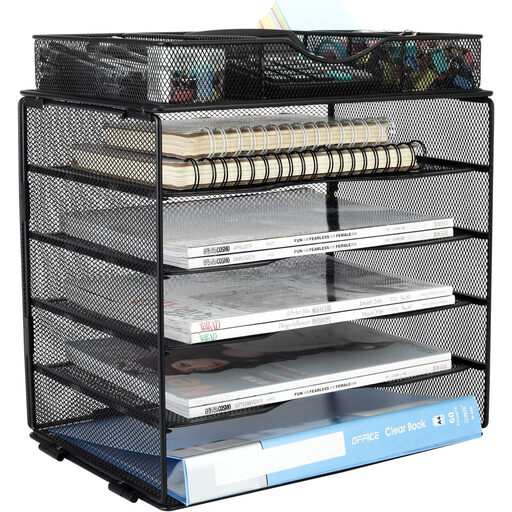
Why this product suits this profile: This vertical organiser measures just 34,5 × 23,5 × 36,5 cm and keeps desk storage organised. It’s a good alternative if you don’t need a floor-standing solution just yet.
The five tiers and one drawer make it easy to understand the storage capacity before you buy. It isn’t described as a lockable or floor-standing mobile pedestal.
Metal construction, five storage tiers, one drawer and tool-free assembly.
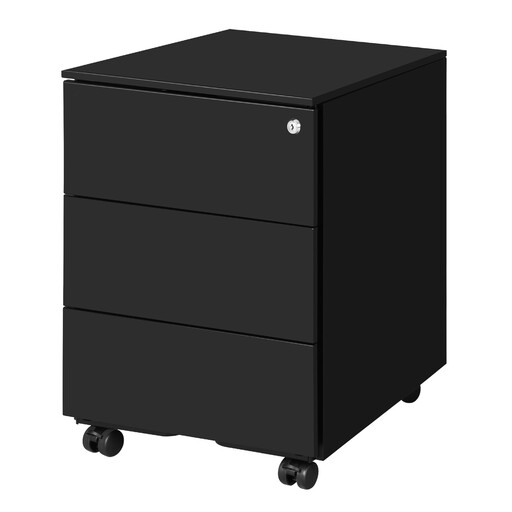
Why this product suits this profile: This model combines three drawers, a lock and castors. Measuring 45 × 39 × 55 cm, it’s suitable for a home office or workplace where you need regular access to documents.
The specifications state a load capacity of up to 15 kg per drawer, full-extension runners and two castors with brakes. That gives you clear details on some of the key things to consider when buying.
Steel frame, lockable drawers, three drawers, four castors and delivery with the cabinet pre-assembled; the castors need to be fitted.
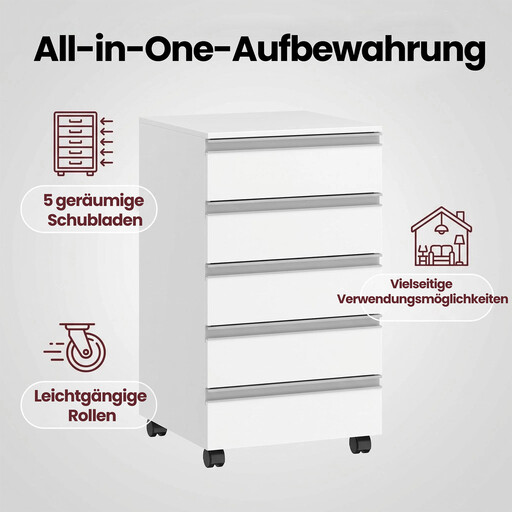
Why this product suits this profile: Five larger drawers and dimensions of around 40,5 × 40,5 × 65,5 cm make it a good fit for studios, workshops and offices where materials are changed or accessed frequently.
The product description lists reinforced drawer runners, two lockable front castors and a maximum total load of 50 kg. You should still check that it’s suitable for the materials you plan to store.
Five drawers, castors that swivel through 360 degrees, lockable front wheels and a sturdy top.
We’ve put together a complete, regularly updated list of products that meet these strict selection criteria and fully comply with the safety regulations in force in the EU.
Measure the clear height and depth beneath the desk. Leave extra room for the drawers to open, and check whether desk legs or cable trays could get in the way. Lock the castors once you’ve positioned the cabinet.
Its lifespan depends on the material, load, flooring, drawer runners and how often you move it. Distributing the load evenly, keeping within the stated maximum load and cleaning the castors regularly can help reduce wear. There’s no reliable way to give a single lifespan that applies to every model.
There are usually no ongoing running costs. Potential extra costs include replacement castors, damaged drawer runners or additional storage accessories. If you choose a lockable model, you may also need to replace a lost key. Before buying, check what’s included, whether spare parts are available and what the assembly instructions say.