If keeping fat content low matters more to you than quick preparation, popcorn kernels let you control how much fat you add – provided you’re allowed to prepare them at work. Under the Annex to EU Regulation (EC) No 1924/2006, a ‘low fat’ claim for solid foods requires a maximum of 3 g of fat per 100 g. By contrast, the values given by More Nutrition, Chio, Heimatgut and EDEKA for the pre-portioned varieties considered here range from 11 to 21 g per 100 g.
Which type is right for you?
If fat content is your main priority
You want to decide for yourself how much oil to add when popping the corn, and can set aside the time and use a suitable appliance. Check the nutritional information per 100 g as well: making popcorn yourself doesn’t automatically make it low in fat.
If you have a short break and access to a microwave
You want to make hot popcorn without preparing the ingredients, and are allowed to use the microwave at work. Follow the instructions on the bag and use the specified recipe; the microwave varieties considered here cannot be classed as low in fat.
If you don’t have access to a way to prepare it
Ready-popped popcorn is an option if you’re taking a break somewhere without an appliance. Check the pack size and nutritional information rather than assuming a small bag means it’s low in fat.
What should you look for when buying?
First check the fat content per 100 g, then decide how much preparation your workplace allows.
| What to consider |
What to check |
Who it matters to |
| Fat content |
Check the fat per 100 g and the ingredients; if you’re making it yourself, factor in the oil you add. |
If I want to limit fat intake, I need a reliable figure rather than judging by the packaging. This is the main priority for around 50% of consumers. |
| Preparing it at work |
Check whether you’re allowed to use the appliance, as well as the wattage and cooking time stated on the pack. |
During a short break, I want to be able to make popcorn without breaking the rules for shared appliances. Quick preparation takes priority for around 30% of consumers. |
| A snack that needs no appliance |
For ready-popped popcorn, check the pack weight and nutritional information per 100 g. |
Without a microwave or popcorn maker, I want to take a ready-to-eat pack with me for my break. This is the main priority for around 20% of consumers. |
Common misconceptions
-
Assuming ‘reduced fat’ means ‘low fat’
Comparing a product with another recipe doesn’t tell you whether it meets the requirements for a ‘low fat’ claim. Under the Annex to EU Regulation (EC) No 1924/2006, solid foods must contain no more than 3 g of fat per 100 g to make this claim.
If ‘low fat’ is your priority, check the fat content in the nutritional information for the specific product.
-
Assuming organic or palm-oil-free means low in fat
Heimatgut states that its Organic Salty Popcorn contains 17 g of fat per 100 g. Other claims on the packaging don’t change this figure.
Consider these features separately from fat content, and compare the figures per 100 g for your main priority.
-
Assuming a microwave bag is low in fat just because it’s a single portion
For the salty microwave varieties considered here, Chio, Heimatgut and EDEKA state fat contents of 17 g, 18 g and 21 g per 100 g respectively. EDEKA also states that GUT&GÜNSTIG contains 2.5 g of salt per 100 g.
Compare the fat and salt per 100 g, and consider how much of the bag you actually plan to eat.
-
Checking a product image instead of the pack you’re buying
Chio notes that packs with different labelling may be on sale at the same time.
Read the ingredients list and nutritional information on your pack. If you have allergies, the allergen information on the pack is important too.
Brands to help you choose
Seeberger
Seeberger sells popcorn kernels for popping in a pan or popcorn maker, as well as microwave varieties. When it comes to fat content, these involve different preparation methods.
- With popcorn kernels, you can choose how much oil and seasoning to add.
- The fat content of the finished popcorn depends on how you prepare it.
Heimatgut
Heimatgut offers ready-popped Organic Salty Popcorn and salty organic microwave popcorn.
- You can choose between the two types based on how much preparation you want to do.
- Heimatgut states that they contain 17 g and 18 g of fat per 100 g respectively – both figures are too high for a ‘low fat’ claim.
Chio
Chio offers salty microwave popcorn to prepare in a suitable microwave.
- Chio gives a preparation time of two to three minutes for its salty variety.
- Chio states that this variety contains 17 g of fat per 100 g and recommends checking the labelling on the pack you buy.
GUT&GÜNSTIG
EDEKA’s own brand sells salty microwave popcorn.
- Prepare it according to the instructions for your microwave’s power rating.
- EDEKA states that it contains 21 g of fat and 2.5 g of salt per 100 g.
More Nutrition
More Nutrition offers Chunky Popcorn in several varieties, with its product descriptions focusing on sugar content.
- The manufacturer states that fat content varies by flavour, at either 11 g or 14 g per 100 g.
- Even the lower of these figures doesn’t meet the requirements for a ‘low fat’ claim.
Popcorn products at Joybuy
For the office, the options here include popcorn kernels to pop yourself and packaged popcorn with a caramel coating. With kernels, check that you’re allowed to prepare them at work; for the packaged product, it’s worth checking the serving instructions.
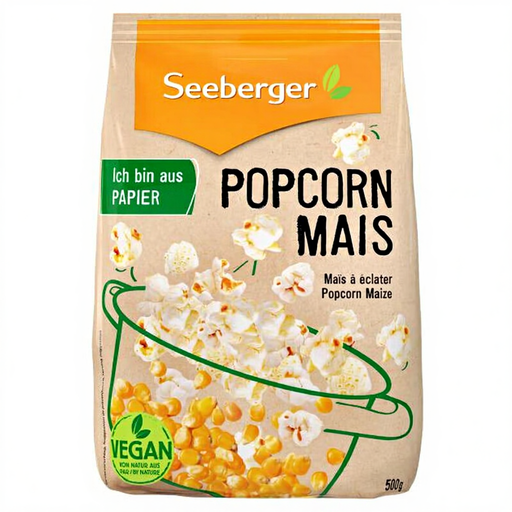 Image unavailable
Seeberger popcorn kernels, 500 g
If you want to control how much fat you add and are allowed to use a suitable appliance at work, these popcorn kernels could be a good option.
Pack weight: 500 g. Follow the preparation instructions and bear in mind that the oil you add affects the fat content of the finished popcorn.
View at Joybuy
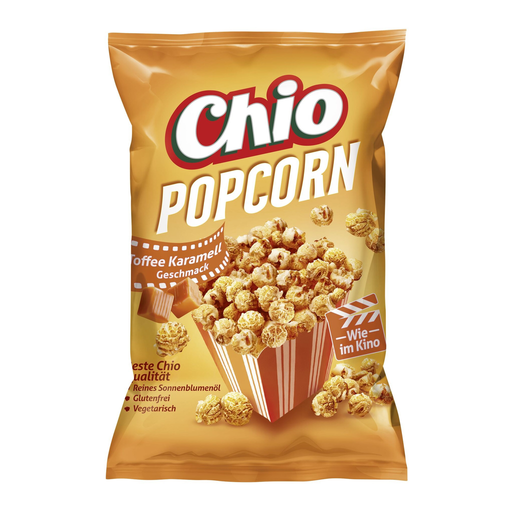 Image unavailable
Chio Toffee Caramel Popcorn, 120 g
If you’re looking for packaged popcorn with a caramel coating for your office break, this is one option. Check the pack to see whether it needs to be prepared before eating.
Pack weight: 120 g. Compare the fat and sugar information on the specific pack when deciding whether it’s right for you.
View at Joybuy
Frequently asked questions
When can popcorn be described as ‘low fat’?
Under the Annex to EU Regulation (EC) No 1924/2006, solid foods must contain no more than 3 g of fat per 100 g to be described as ‘low fat’. Check this figure in the product’s nutritional information; ‘reduced fat’ doesn’t mean the same thing.
Is microwave popcorn the obvious choice if I want to keep fat intake low?
Not just because it’s quick to prepare. Chio states that its salty microwave popcorn contains 17 g of fat per 100 g, Heimatgut gives 18 g for its salty microwave variety, and EDEKA states that GUT&GÜNSTIG contains 21 g. Compare the nutritional information for the variety you’re thinking of buying.
What should I check before popping corn at work?
First check whether you’re allowed to use a suitable appliance or prepare it another way at work. Seeberger recommends using a pan or popcorn maker for its popcorn kernels. Also follow the instructions, take account of the oil you add, and check any rules about smells and cleaning.
What should I check if I have allergies or the recipe has changed?
Always check the ingredients and allergen information on the specific pack you buy. Chio notes that packs with different labelling may be on sale at the same time, so don’t rely on a product image alone.


