Office snackers watching their sugar intake
You want to keep rusks handy for your break and compare both the added sugar labelling and the sugar content per 100 g.


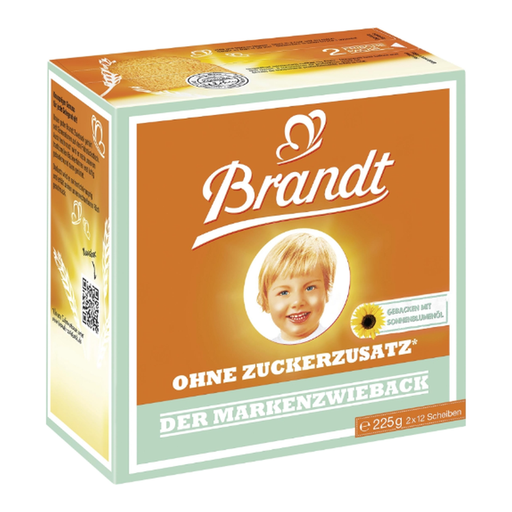
If you’re looking to reduce added sugar in the office biscuit tin, rusks labelled accordingly are a sensible starting point. It’s also important to check the ingredients list and the sugar content per 100 g. REWE lists 4.5 g of sugar per 100 g for Brandt Brand Rusks with No Added Sugar, so ‘no added sugar’ does not mean ‘sugar-free’. For a shared tin, you’ll also need to check that the allergens, any special dietary requirements and storage instructions are suitable for the specific pack.
You want to keep rusks handy for your break and compare both the added sugar labelling and the sugar content per 100 g.
If you’re filling a tin for several people, make sure the ingredients, allergens and best-before date remain clear even after you’ve transferred the rusks.
If gluten-free or lactose-free products are needed, check the labelling for the specific variety. You can’t tell whether a product meets these requirements just from the fact that it’s a rusk or from its low sugar content.
First, decide which requirement matters most to the people sharing the office tin. Then compare the information on the packs you’re considering, and work out how to keep that information available with the tin.
| Criteria | What to check when buying | Who it matters to |
|---|---|---|
| Added sugar and sugar content | Check the exact labelling, ingredients list and sugar content per 100 g. REWE lists 4.5 g per 100 g for Brandt Brand Rusks with No Added Sugar; Brandt lists 14 g per 100 g for its classic Brand Rusks. | If I want to avoid added sugar, the claim on the front of the pack isn’t enough on its own: I also want to be able to compare the sugar content. This is likely to be the top buying priority for around 36% of consumers. |
| Keeping the tin stocked | Check the storage instructions and choose an amount that can be kept in a dry place where you intend to store it. Keep the ingredients, allergen information and best-before date when transferring the rusks. | If I’m filling the shared tin, I want to be able to take out portions without separating the pack information from the rest of the supply. This is likely to be the first deciding factor for around 29% of consumers. |
| Allergens and special diets | Read the ingredients and ‘may contain’ information on the current pack. Brandt Brand Rusks with No Added Sugar, as listed by REWE, contains wheat and soya; REWE lists Schär Gluten Free Rusks as gluten-free and lactose-free, but notes that they may contain traces of soya. | If someone sharing the tin needs to avoid a particular ingredient, I’ll check that requirement before looking at the sugar content. The right product labelling is likely to take priority for around 21% of consumers. |
| Taste and classic recipe | Compare the ingredients and sugar content of classic and speciality varieties rather than assuming that products from the same brand have the same recipe. | If no special dietary requirement takes priority, I want to choose a type of rusk that people will actually eat during their break. This is likely to be the first thing around 14% of consumers consider. |
These two claims don’t mean the same thing. For example, REWE lists 4.5 g of sugar per 100 g for Brandt Brand Rusks with No Added Sugar.
As well as checking the claim, read the sugar information in the nutritional values and check the ingredients list. Compare different varieties using the same measure: per 100 g.
Rusks aren’t automatically free from particular allergens. Brandt Brand Rusks with No Added Sugar, as listed by REWE, contains wheat and soya; REWE notes that Schär Gluten Free Rusks may contain traces of soya.
Check each current pack individually. If you transfer rusks to another container, make sure everyone eating from the tin can still read the ingredients and allergen information.
These claims answer different questions. REWE lists 9.3 g of sugar per 100 g for Brandt Lactose-Free Rusks; sugar is included in the ingredients list for the Schär Gluten Free Rusks it stocks.
Decide which requirement the product must meet, then compare the other ingredients and nutritional values of suitable varieties.
Without the pack, it’s harder to match the best-before date, ingredients and allergens to the contents of the tin later on. You should also keep the storage instructions with the supply.
Store the rusks in a dry place and keep the original pack or a complete, legible label until they’ve been used up.
Brandt offers several types of rusks with different labelling and sugar content.
Schär Gluten Free Rusks are a specifically labelled option if gluten-free food is essential.
Burger Rusks are worth considering when comparing classic recipes.
This selection includes Brandt Whole Grain Rusks, labelled ‘No Added Sugar’, which may be suitable for storing in a dry place. To decide whether they’re right for the office tin, check the nutritional values and ingredients on the specific pack. The figures for other Brandt varieties don’t apply to this product.
 No image available
A good option for an office tin if you’re looking for rusks with no added sugar: the product name includes ‘No Added Sugar’, and the description recommends storing them in a cool, dry place.
Before buying, check the sugar content per 100 g and the full ingredients and allergen information on the pack. The nutritional values for Brandt Brand Rusks with No Added Sugar don’t apply to this wholegrain variety.
No. The label ‘no added sugar’ doesn’t mean that the product contains no sugar. REWE lists 4.5 g of sugar per 100 g for Brandt Brand Rusks with No Added Sugar. Check the nutritional values and ingredients for the variety you’re considering.
Not without checking the specific variety: Brandt Brand Rusks with No Added Sugar, as listed by REWE, contains wheat. REWE specifically lists Schär Gluten Free Rusks as gluten-free; for every pack, also check the other ingredients and any ‘may contain’ information.
Make sure the ingredients list, allergen information, best-before date and storage instructions are clearly linked to the contents of the tin. The Federal Office of Consumer Protection and Food Safety explains that relevant allergens must be identified in the ingredients list. Anyone sharing the tin should be able to tell which information applies to the variety inside.
Follow the storage instructions on the specific pack and use a dry tin in a suitable place. When transferring the rusks, keep the best-before date with the relevant supply so it can still be checked later.