A compact mains-powered blender is a good fit if there’s a socket where you plan to blend, along with a suitable place to blend and clean it. A battery-powered blender is an option if you want to blend without a socket and your portion and ingredients are within the device’s limits. As well as blending performance, pay close attention to noise, cleaning and the seal on the specific model. Remove the stones from cherries before blending: the German consumer advice centre warns that cherry stones contain substances that can release hydrogen cyanide during digestion.
Who is a personal blender suitable for in the office?
Considerate in a shared office
If you want to blend in a shared office, consider the noise your blender may make and its impact on others. IMTEST takes noise levels into account in its blender tests, but measurements for one model can’t be applied to other appliances.
A daily single serving
If you want to make a single serving with pitted cherries and drink it straight from the blending cup, useful capacity, approved ingredients and the seal are all important things to consider.
Blend wherever you like
If you need to move your blender or don’t have a socket where you want to use it, a battery-powered model can offer more flexibility. You’ll still need to plan when to charge it and check which ingredients are suitable.
What should you look for when buying?
Compact mains-powered blender with a takeaway cup
A good fit if: there’s a socket where you plan to use it and a suitable place to clean it.
Bear in mind: the power cord limits where you can blend; the seal and cleaning requirements depend on the specific model.
Battery-powered blender
A good fit if: there’s no socket where you want to blend and your portion fits in the container.
Bear in mind: you’ll need to charge it; cordless operation doesn’t tell you how loud it is or which ingredients it can handle.
Only compare noise figures when the test conditions are similar: IMTEST measures noise during specific tasks and blending times.
| Buying priority |
What to check |
Who it matters most to |
| Noise |
Look for comparable noise measurements for the exact model and ingredients. If there aren’t any, consider blending away from shared work areas. |
If you want to blend in a shared office without needlessly disturbing others, noise will be a priority. Around 31% of consumers consider noise their most important concern. |
| Cherry ingredients |
Remove the stones from cherries and follow the appliance’s guidance on ingredients, liquid, capacity and short-term operation. |
If you want to use fresh or frozen pitted cherries in your smoothie, make sure your exact recipe falls within the appliance’s limits. Around 25% of consumers prioritise how well it processes ingredients. |
| Cleaning and carrying |
Check the cleaning instructions for the cup, lid and blade unit separately; make sure the seal on the exact model is suitable for carrying. |
If you want to clean the blender at work and take the cup with you afterwards, easy cleaning and a suitable seal are important. Around 25% of consumers prioritise cleaning and portability. |
| Blending location and power supply |
Check whether there’s a socket where you want to use it; for battery-powered models, check the cup capacity, charging connection and stated number of blending cycles. |
If you want to blend somewhere without a socket, flexibility will be your main priority. Around 19% of consumers put blending location and power supply first. |
Which buying mistakes should you avoid?
-
Blending cherry stones because the blender can handle hard ingredients
Crushing cherry stones doesn’t make them suitable for smoothies. The German consumer advice centre explains that substances in the stones can release hydrogen cyanide during digestion.
Remove the stones before filling the blender. Don’t assume that guidance on ice or frozen fruit also applies to cherry stones.
-
Assuming wattage means quiet operation or a particular blending result
IMTEST assesses blending results and noise separately under set conditions; the rated power alone doesn’t answer either question.
Look for results and noise measurements for the exact model and comparable ingredients.
-
Assuming a takeaway lid is completely leakproof without checking
In its test, IMTEST found that the drinking lids on the Severin SM 003743 weren’t completely leakproof. A cup designed for taking with you doesn’t prove that a particular lid will prevent leaks.
Check the seal on the exact model and, if in doubt, carry the cup upright.
-
Choosing a battery-powered blender based on portability alone
Cordless operation doesn’t tell you how loud the blender is or what its capacity and ingredient limits are. For the nutribullet Portable NBP003B, the manufacturer specifies small quantities of ice.
Make sure the portion size, charging options and approved ingredients suit your routine at work.
Brands to consider
Severin
The SM 3743 is a mains-powered blender supplied with two Mix & Go cups for single servings.
- Severin specifies 320 W, two speed settings and a maximum continuous operating time of around one minute. The package includes two cups, each with a 600 ml capacity.
- IMTEST found that the drinking lids on the tested SM 003743 model weren’t completely leakproof; the blade unit had to be cleaned by hand.
WMF
The Kult X Mix & Go pairs a compact mains-powered blender with a container designed to double as a drinking bottle.
- WMF specifies 300 W, a 0.6-litre container and an automatic cut-off if the blending container isn’t fitted correctly.
- The leakproof-lid claim comes from the manufacturer and isn’t independent proof of its seal or noise level.
nutribullet
The Portable NBP003B is a cordless model for making a single serving without a socket where you blend.
- The manufacturer specifies a 475 ml cup, USB-C charging and 15 or more automatic blending cycles.
- The manufacturer recommends using only small quantities of ice. The specifications don’t confirm how loud it will be in an office.
Philips
The HR2600/80 Mini Blender is a compact mains-powered option.
- Philips specifies a 350 W motor and a four-blade assembly for this model.
- These product specifications don’t allow you to compare noise, leakproofing or cleaning across different models.
Beast
The Mega 1200 Plus was tested by IMTEST as part of a smoothie maker comparison.
- In its September 2026 comparison, IMTEST measured 74.2 dB for the red smoothie test. This figure applies to this model and those test conditions.
- You can’t directly apply this measurement to a cherry recipe or the noise levels in a particular office.
Portable smoothie blenders at Joybuy
This selection includes portable smoothie blenders, including models with a stated cup capacity and a rechargeable USB-C model.
 No image available
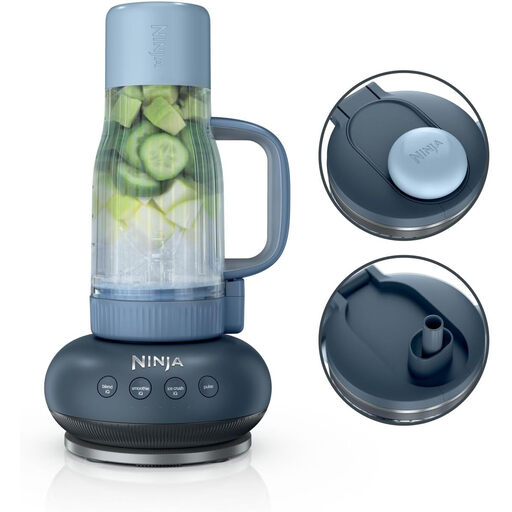
Ninja BlendBoss Portable Blender, 710 ml
The travel cup is designed for blending and taking with you. The product title lists three automatic programmes, ice-crushing capability and dishwasher-safe parts.
View at Joybuy
 No image available
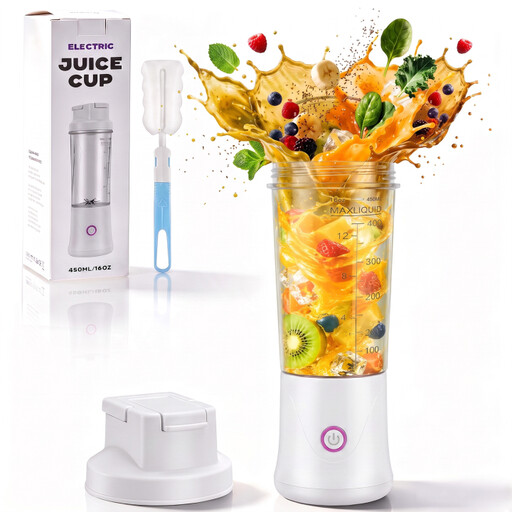
Portable blender, 652 ml, 6 blades, white
The title mentions smoothies, office use and travel. The cup capacity and six blades are listed as product features; check that your prepared portion will fit in the container.
View at Joybuy
 No image available
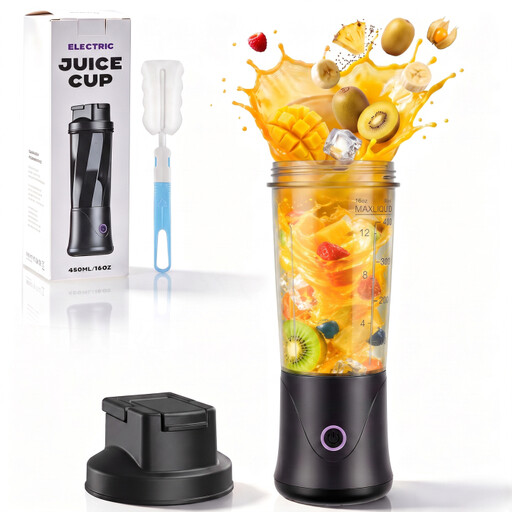
Portable blender, 400 ml, 6 blades, black
The title mentions smoothies and office use. The stated cup capacity makes it easier to check whether it suits your portion; check the cleaning instructions for the removable parts.
View at Joybuy
 No image available
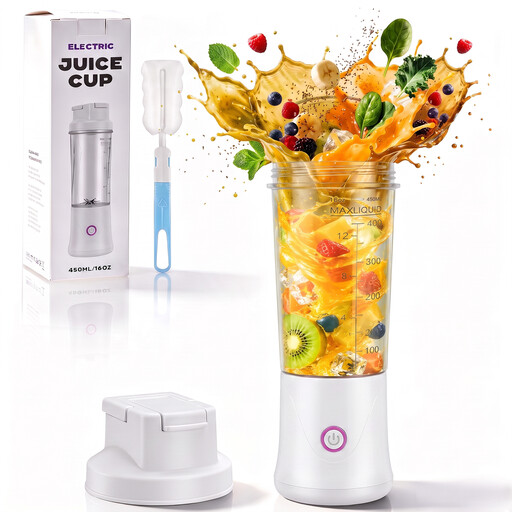
Portable blender for smoothies and shakes
The product title describes a portable blender for smoothies and shakes. If you have a particular single serving in mind, check that it fits the cup capacity before buying.
View at Joybuy
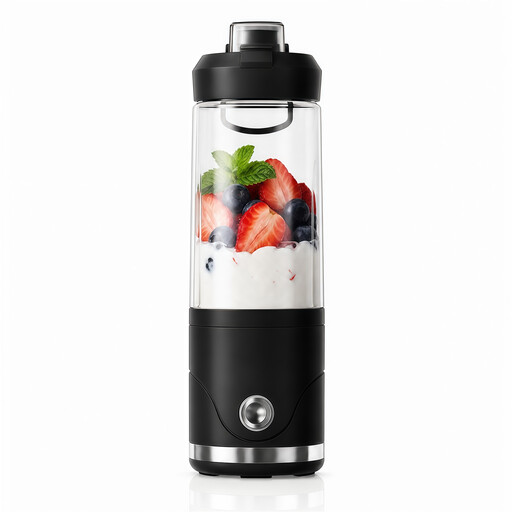 No image available
Portable USB-C blender, rechargeable, 6 blades, black
If you want to blend somewhere without a socket, this rechargeable model could be an option; remember to plan for charging. The product title lists USB-C and six blades.
View at Joybuy
Frequently asked questions
Can you put cherry stones in a blender?
No, remove the stones first. The German consumer advice centre distinguishes between accidentally swallowing an individual whole stone and crushing or chewing one: cherry stones contain substances that can release hydrogen cyanide during digestion.
How do I clean a personal blender at work?
Check the instructions for the specific model, paying attention to the cup, lid and blade unit separately, and make sure you have somewhere suitable to clean it. A cup that’s easy to clean doesn’t automatically mean the blade unit is dishwasher-safe; IMTEST specifically treated these parts separately in its Severin test.
Does a CE mark mean a blender is especially quiet?
No. For products that must carry a CE mark, the manufacturer uses it to declare that the product meets the relevant EU requirements. It doesn’t mean the noise level or smoothie results have been independently assessed.
What should I look for in a cup intended for food?
Check the stated intended use and cleaning instructions for the specific cup. According to the Federal Office of Consumer Protection and Food Safety, the manufacturer or importer based in the EU is responsible for ensuring that materials intended to come into contact with food are safe.


