For a quick break at your desk, a mix of individually wrapped bars can be a good choice, provided each variety’s weight and ingredients suit your needs. First decide what matters most to you: a convenient single portion, a stated protein content, or specific ingredient and allergen requirements. A bar isn’t automatically a complete lunch, so compare the nutritional values per 100 g with the amount you’ll actually eat.
Which bar mix is right for you?
With a mixed pack, it’s not just the number of bars that counts: the varieties it contains need to suit the break and the ingredient requirements of the person eating them.
For regular, short breaks at work
If you want to take a bar from the pack and eat it between meetings, check the weight per bar and choose varieties you’ll actually enjoy. ALDI SÜD and REWE stock a range of fruit and cereal bars, but portion sizes and nutritional values vary from product to product.
For choosing a protein bar
If the stated protein content matters to you, compare the amount per bar rather than relying on the description on the front of the pack. Check the ingredients too: allergen information and ingredients such as milk and soya are relevant for the protein bars described by Barebells and Seitenbacher.
For specific ingredient and allergen requirements
If you need to avoid certain ingredients or are looking for a vegan or gluten-free option, check every variety in the mix individually. The German Food Federation explains that relevant allergens are highlighted in the ingredients list; a brand name is no substitute for checking the specific pack.
What should you look for when choosing?
Start with what matters most to you, then check each bar individually. According to the German Food Federation, nutritional values are generally given per 100 g; for a break, the weight of the bar you actually eat matters too.
| What matters to you |
What to check when buying |
Who it matters most to |
| Single portions and snack size |
Compare the weight in grams per bar and nutritional values per 100 g; also check any portion information provided. |
If I’m taking a quick break at my desk, I want to know how much I’ll actually eat in one bar. Around 45% of consumers prioritise the convenience of a single portion. |
| Stated protein content |
Check the protein content per bar, along with the ingredients and allergen information for the variety you choose. |
If you want to include a protein bar in your mix, you need information for that specific variety rather than a general brand claim. Around 33% of consumers put stated protein content first. |
| Ingredients and allergens |
Check the ingredients list, highlighted allergens, may-contain information and any required labelling for each variety. |
If I need to avoid certain ingredients or only want to buy suitably labelled bars, every variety in the mix must meet my requirements. This is the main priority for around 22% of consumers. |
Which buying misconceptions can you avoid?
-
Treating one claim as the whole story
A claim about protein or added sugar doesn’t automatically tell you everything about a bar’s overall composition. The consumer advice centre Verbraucherzentrale recommends not treating nutrition claims as an overall assessment of a product.
Compare the nutritional information and check the ingredients and allergen details for the specific variety.
-
Checking just one variety in a mixed pack
Ingredients and may-contain information can vary between the bars in a pack. This is especially important if you need to avoid certain allergens.
Check the labelling on every variety, and only choose the mix if each one meets your requirements.
-
Confusing values per 100 g with values for one bar
Two bars with similar nutritional values per 100 g can have different weights. So you can’t work out the nutritional values of the portion you actually eat from the per-100 g column alone.
Compare the weight of each bar and, where provided, its nutritional values. The German Food Federation explains that nutrition labelling is based on 100 g.
-
Treating the best-before date as a use-by date
According to the German Food Federation, a best-before date is not the same as a use-by date. If stored correctly, an unopened product may still be fine after this date.
Follow the storage instructions and check the packaging and product carefully after the date has passed. Don’t eat a bar from damaged packaging.
Throwing away unopened bars solely because their best-before date has passed can lead to avoidable food waste.
A guide to some relevant brands
These brands offer different types of bars; mentioning them isn’t a judgement on the quality of every product they make. Always check the features of the specific variety you choose.
CORNY
CORNY offers cereal bars in several formats. REWE’s range includes classic, Haferkraft, nut and protein varieties, among others.
- A range of varieties makes it easy to mix up the flavours.
- Nutritional values, ingredients and allergens need to be checked for each variety separately.
Barebells
Barebells offers protein bars for shoppers who want to compare the stated protein content per bar.
- Barebells states that its protein bars contain 15–20 g of protein per bar, depending on the variety.
- Barebells says its bars may contain traces of gluten. If you need to avoid gluten or lactose, check the labelling on the specific variety.
Seitenbacher
As well as cereal bars, Seitenbacher also offers protein bars.
- Seitenbacher states that its classic protein bar contains 16 g of protein per bar.
- According to Seitenbacher, the classic protein bar contains ingredients from milk and soya. This variety is therefore unsuitable if you need to avoid these ingredients.
REWE Bio
REWE Bio includes oat, fruit and flapjack bars, among others; features such as being vegan vary by product.
- Choose from different formats according to the variety and portion size.
- REWE lists may-contain information for certain bars, including peanuts, sesame, soya, milk or nuts. An organic or vegan label is no substitute for checking allergens.
Bars for a desk break at Joybuy
These multipacks contain Corny cereal and oat bars for regular short breaks. They vary by flavour, weight per bar and pack size. If you’d like to put together a mix of different varieties, check the ingredients and information on each selected pack individually.
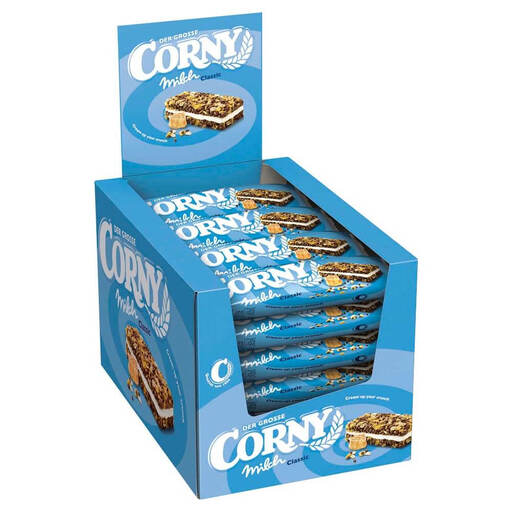 Image unavailable
Corny Milk Classic Cereal Sandwich Bars, 24 × 40 g
This pack is worth considering if you want individual bars for regular short breaks.
It contains 24 bars, each weighing 40 g. If you need to avoid gluten or milk, check the ingredients and allergen information; also compare the values per 100 g with the weight of one bar.
View at Joybuy
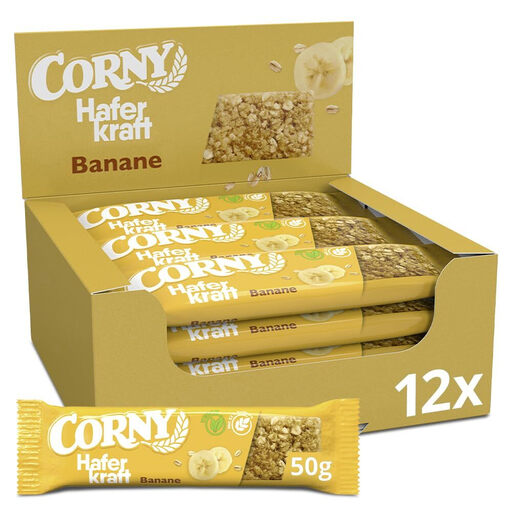 Image unavailable
Corny Haferkraft Banana Oat Bars, 12 × 50 g
These oat bars are a good fit if you want to focus on the amount you’ll have during each individual break.
The pack contains 12 bars, each weighing 50 g. The product information also gives nutritional values per bar. When checking the ingredients, note that the oats contain gluten, and check the pack’s may-contain information.
View at Joybuy
 Image unavailable
Corny Haferkraft Zero Peanut Butter Oat Bars, 12 × 50 g
This peanut butter variety is worth considering if you want to stock up on individually portioned oat bars, as long as the ingredients suit your requirements.
The pack contains 12 bars, each weighing 50 g. According to the product information, this variety contains peanuts and oats containing gluten; check the may-contain information too. The word ‘Zero’ is no substitute for checking the sugar content or comparing the values per 100 g with those for one portion.
View at Joybuy
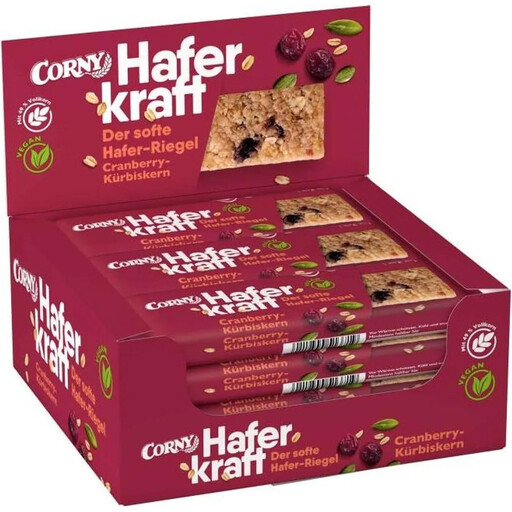 Image unavailable
Corny Haferkraft Cranberry Oat Bars, 12 × 50 g
The cranberry variety offers another flavour to enjoy during regular snack breaks.
The pack contains 12 bars, each weighing 50 g. According to the product information, this variety contains oats with gluten and carries may-contain information for other allergens. Compare the nutritional values per 100 g with the actual weight of your bar.
View at Joybuy
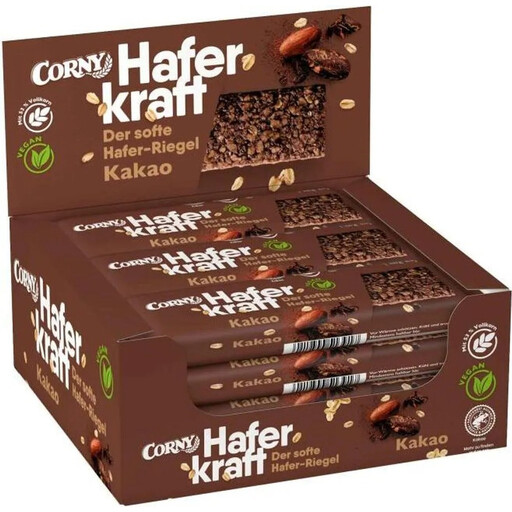 Image unavailable
Corny Haferkraft Cocoa Oat Bars, 12 × 50 g
This cocoa variety is worth considering if you want to try different Haferkraft flavours while keeping to the same pack and portion size.
The pack contains 12 bars, each weighing 50 g. According to the product information, this variety contains oats with gluten; check its may-contain information too. For a portion-to-portion comparison, consider the 50 g weight of each bar as well as the values per 100 g.
View at Joybuy
Frequently asked questions about bar mixes
How do I compare the portion sizes of different bars?
First compare the weight of one bar, then its nutritional values. According to the German Food Federation, nutritional values are generally given per 100 g; additional information per portion can make it easier to compare the amount you’ll actually eat. In a mixed pack, check each variety separately.
Do I need to check every variety in a mix if I have allergies?
Yes. Check the ingredients and allergen information for every variety in the pack. The German Food Federation explains that relevant allergenic ingredients are highlighted in the ingredients list. Check the may-contain information too; the labelling for one variety doesn’t automatically apply to the whole mix.
Is a protein bar with no added sugar automatically a better choice?
No. These claims alone don’t tell you whether the bar suits your needs. Compare the protein content per bar, the sugar content and other nutritional values, as well as the ingredients and allergens. The consumer advice centre Verbraucherzentrale points out that nutrition claims are no substitute for an overall assessment of a food.
Can I eat a bar after its best-before date?
A bar isn’t automatically inedible just because its best-before date has passed, provided it’s unopened. According to the German Food Federation, a best-before date is not a use-by date. Follow the storage instructions and check the packaging and product carefully; don’t eat a bar from damaged packaging.


