
Lieferung heute & morgen

Qualitätsgarantie

Willkommens-Angebote freischalten: KOSTENLOSE Lieferung | Bis zu 80 % RABATT | Kostenlose 30-Tage-JoyPlus-Testphase
App herunterladen
Organisation in the home office, corporate workspace or creative studio doesn't start with as many storage boxes as possible – it begins with the right storage strategy. If you stow away documents, stationery, tools or paperwork without a system, you'll quickly lose track and waste valuable desk space.
When choosing office storage, three typical buying problems often arise:
A functional solution should therefore suit your space, how often you'll use it, and the weight of the items you need to store. The following recommendations for 2026 highlight what matters when it comes to rolling cabinets, wall-mounted organisers and document trays.
For standard documents, compatibility with A4 is a key consideration. An A4 document tray should have enough internal space for paper, clear plastic sleeves and, where necessary, slim folders. For a wall-mounted document organiser, depth is also crucial: compartments that are too shallow won't securely hold filled folders.
Before buying, you should check the following measurements:
A compact rolling cabinet for the office can fit under many desks. A taller mobile filing cabinet, on the other hand, offers more storage space but needs a suitable footprint.
The choice of material affects stability, maintenance and the maximum weight it can hold. Steel is often suitable for frequently used drawers and storage compartments. Coated metal surfaces can be cleaned with a dry or slightly damp cloth. Furniture made from wood-based materials can offer a larger, flat storage surface, but should be protected from moisture and continuous heavy loads.
Look for specific load capacity figures rather than general terms like "robust" or "extra sturdy". For example, the JOYFURNOS cabinet specifies a maximum load of 15 kg per drawer. The HaluPeit rolling cabinet states a maximum total load of 50 kg. These figures relate to the respective product specifications and should not be applied to other models.
A lockable rolling cabinet can be useful if you need to keep invoices, personnel records or other confidential documents off your desk. A lock provides additional access restriction, but does not replace legally or company-required document security.
For mobile furniture, the following details are also relevant:
A wall-mounted organiser must be fixed using suitable wall plugs and screws. The fixings supplied are not equally suitable for every wall type. Different wall plugs may be required for plasterboard, brick or concrete.
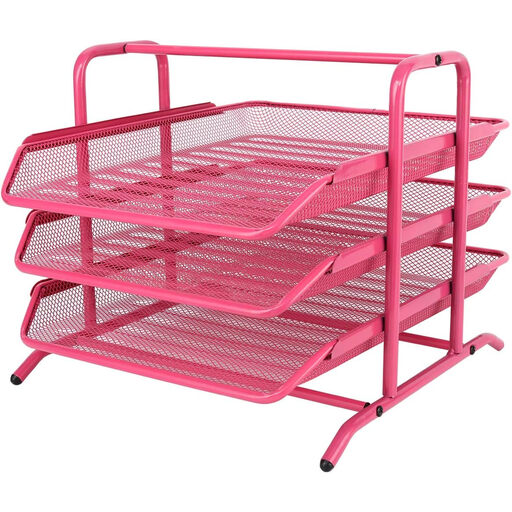
Why it suits this group: Three open A4 compartments are ideal for a home office, study or small desk where documents need to stay within easy reach.
The dimensions of 35.5 × 29.5 × 26 cm and A4 compatibility make space planning easier. Non-slip rubber feet help keep it stable on your desk.
Open metal mesh, three pull-out compartments and several colour options. The organiser simply needs to be placed on a flat surface.
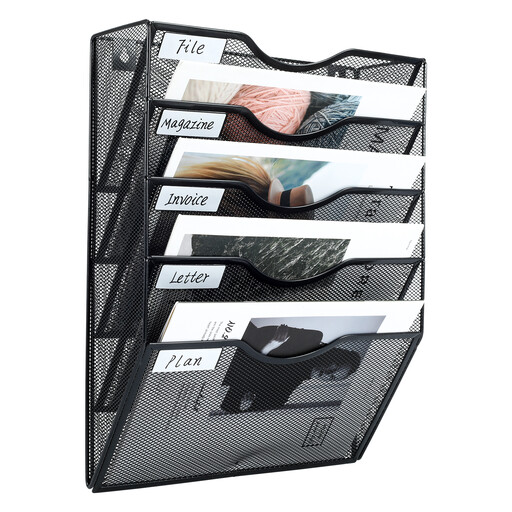
Why it suits this group: This wall-mounted solution creates five separate storage compartments without taking up any extra desk space.
The compartments are designed for A4 documents and come with labelling fields. Secure wall mounting is essential for use.
Metal construction with powder-coated surface, five tiers, and includes mounting materials and adhesive labels.
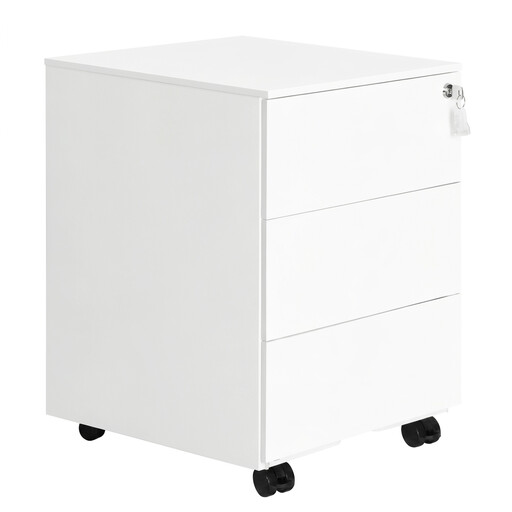
Why it suits this group: Ideal for home office workstations and offices where documents, stationery and small devices need to be stored right by the desk.
This model features a lock, four castors and two castors with brakes. The steel frame and specified load capacity of 15 kg per drawer provide concrete comparison data.
Dimensions of 45 × 39 × 55 cm, three drawers, full-extension runners and pre-assembled delivery. The castors are attached separately.
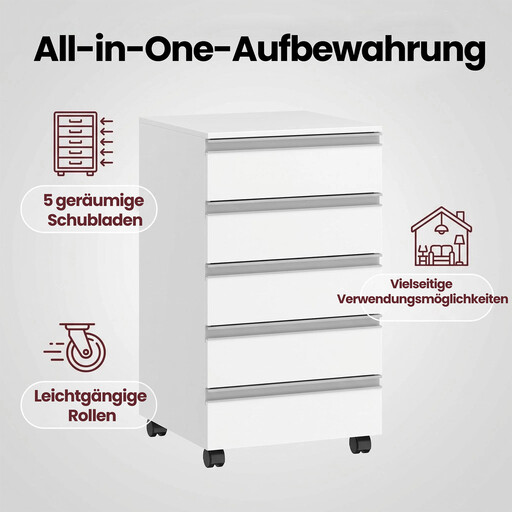
Why it suits this group: Five deeper drawers and a flat top are designed for workshops, studios and offices with higher material volumes.
The total load capacity of 50 kg and lockable front castors are stated as specific product specifications. Before buying, check the desired placement height against the dimensions on the product page.
Particle board and steel, five drawers, 360-degree castors and a top surface for a small printer or work equipment.
A good layout reduces search time without requiring every drawer to be completely full. The following categories have proven effective, for example:
Labels should be clear and concise. For confidential documents, a lockable rolling cabinet is recommended. For open shelving, sensitive documents should not be left permanently visible.
Discover a regularly updated selection of file organisers, document trays and other solutions for the office and home office.
For small workstations, a wall-mounted document organiser, a compact desk organiser or a three-tier A4 tray are suitable. Rolling cabinets can be positioned under the desk, but need enough clearance for the drawers to open.
A lockable rolling cabinet is worthwhile if you store documents containing personal data, confidential business documents or private financial records at your workstation. Also check whether the lock, key storage and your company's internal policies are compatible with your intended use.
Assign a fixed category to each compartment and regularly remove completed tasks. A4 documents should ideally be sorted upright or flat using a consistent system. Overfilled drawers make full extension difficult and can put extra strain on the mechanism.