Teams sharing a pot of tea
If several people drink black tea at the same time, the tea capacity and brewing-time controls should suit your shared break.


If several people share a pot and no one can pour the tea at the right time, choose a tea maker that stops the brewing process once the set steeping time has elapsed. For individual cups at different times, a kettle with a separate tea filter may be enough, but it requires more steps and closer timing. Check the actual tea capacity, and make sure the appliance is approved and inspected before using it at work; the DGUV points out that approved private appliances also need regular inspections.
If several people drink black tea at the same time, the tea capacity and brewing-time controls should suit your shared break.
For individual cups at different times, hot water and tea brewed separately may be more practical than making a full pot that everyone has to wait for.
If the strainer and pot are shared, a removable filter and a clear agreement about who cleans the parts after use can help. The DGUV recommends organising cleaning duties in shared office kitchens.
In a shared office, the key question is whether you want a full pot ready to serve or for everyone to brew their own cup. Capacity, brewing time and filter cleaning all determine which appliance will fit your daily routine.
| Consideration | What to look for when buying | Most relevant for |
|---|---|---|
| Stopping the brewing process | Check whether the model actually lifts the tea basket automatically or drains the brew into a separate pot. | If I can’t reliably remember when the brewing time is up while I’m working, I want the process to stop automatically. Around 40% of consumers prioritise this. |
| Tea capacity per pot | Compare the stated tea capacity with the usual number of people drinking at the same time, rather than looking only at the maximum water capacity. | For a shared break, I want to make enough tea in one brew. Around 30% of consumers put pot capacity first. |
| Cleaning the filter | Check whether the filter is removable and read the manufacturer’s cleaning instructions; agree who is responsible within the team. | If different people use the strainer and pot, it should be clear who cleans them after brewing. Around 20% of consumers prioritise this. |
| Individual servings | Decide whether you mainly need hot water for individual brews or ready-made tea for several people. | With staggered breaks, I want to brew my own cup rather than wait for a shared pot. Around 10% of consumers prefer this. |
Water and tea capacities can differ. WMF lists 1,7 l for water and 1,4 l for tea for the WMF Lono 2-in-1.
Compare the stated tea capacity with what you need for a shared break.
If there isn’t enough tea per brew, you may need to brew more batches and clean the appliance more often.
A timer alone doesn’t mean the tea leaves are removed from the water when the brewing time is up. Rommelsbacher’s information about the keep-warm function on the TA 1200 is also contradictory.
Check what happens to the filter and tea once the brewing time has elapsed on the specific model. If you need a keep-warm function on the TA 1200, ask for confirmation before buying.
A permanent filter needs cleaning after brewing. The DGUV recommends clearly assigning cleaning duties in shared office kitchens.
Check whether the filter is removable and agree as a team who will clean it.
The Design Tea Maker Advanced Plus 42440 is designed for making a shared pot, with a tea basket that moves automatically.
The TA 1200 brews tea using a separate filter and glass pot.
The PC-TK 1165 combines a kettle and tea strainer for small quantities and manually controlled brewing.
The Lono 2-in-1 Tea and Water Kettle is a useful comparison model, with a removable filter and separate stated capacities for water and tea.
The WK 3422 is a tea maker with an automatically moving basket and adjustable brewing settings.
This selection includes electric tea makers and kettles with tea filters. Check each model’s instructions, tea capacity and features to make sure they suit your office.
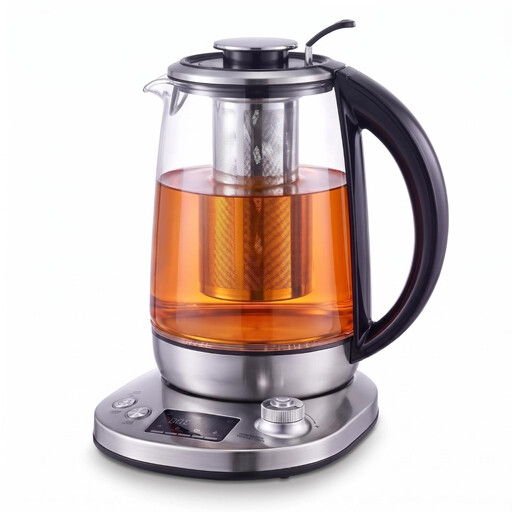 No image available
The removable tea filter is suitable for brewing when you want to take it out separately for cleaning.
1,7 l capacity; temperature settings from 40 °C to 100 °C; 2.200 W; keeps warm for 2 hours.
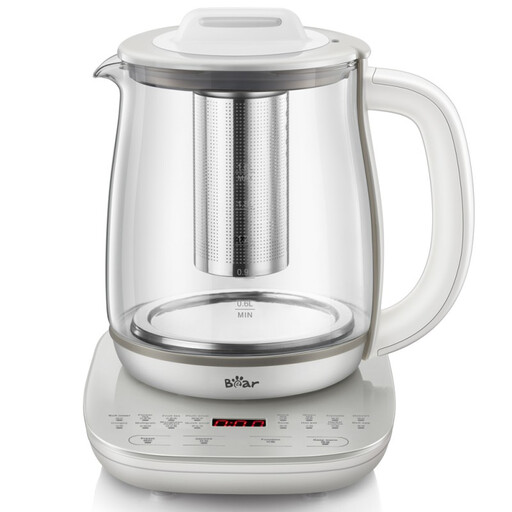 No image available
This model lists a black tea programme and a tea infuser; the product description specifically limits its use to indoor and household settings. Don’t assume it’s suitable for a shared office.
1,8 l capacity; 16 programmes according to the product description.
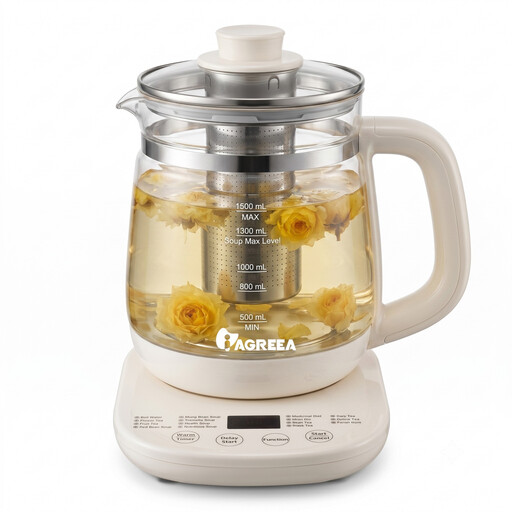 No image available
The removable tea infuser can be detached from the kettle for cleaning; the wide opening is also described as a cleaning feature.
1,5 l capacity; six temperature settings and 14 programmes according to the product description.
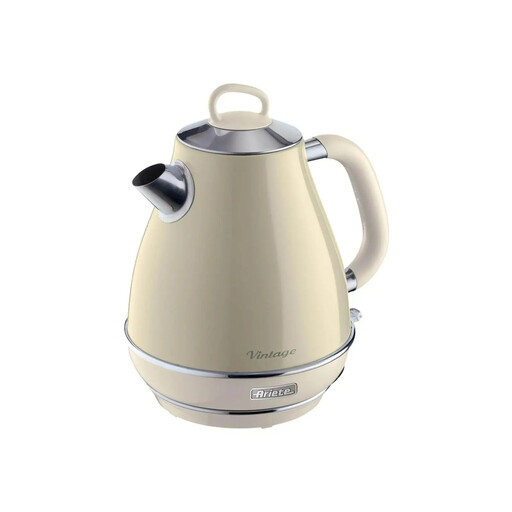 No image available
This kettle is listed as having a tea filter. If you want brewing to stop automatically after a set time, check that it has this feature before buying.
1,7 l capacity; 2.000 W; cordless 360° base according to the product description.
Remove the filter or tea bag at the right time, or choose a model that actually stops the brewing process itself. The right brewing time depends on the type of tea and your taste. The German Tea & Herbal Tea Association gives a brewing time of three minutes with water at 100 °C for one specific Kenyan black tea recipe; this isn’t a rule for all black teas.
Agree as a team who will clean the filter and other used parts after brewing. The DGUV recommends a cleaning rota for shared office kitchens; this is organisational advice, not a statement about a specific cleaning feature on an appliance.
For consumer purchases, statutory rights are against the seller; a manufacturer’s guarantee is separate. The Verbraucherzentrale explains the difference. If the appliance is bought by your company, the people responsible for purchasing should check the specific contract and service terms rather than assuming consumer rights apply to a business purchase.
Check with your employer whether privately owned appliances are allowed. The DGUV points out that approved private electrical appliances also need regular inspections. For work equipment exposed to the harmful effects specified in § 14 Absatz 2 BetrSichV, the regulations require repeat inspections by a qualified person; inspection intervals depend on the conditions in each case.