Teams that eat thickly sliced bread
If you slice your own bread or use thick slices, check first that they fit in the toasting slots. A stated slot width can help you compare measurements.


First, measure the thickness and length of your bread slices, then compare both measurements with the specifications for the exact toaster model. A long slot isn’t automatically wide enough for thick bread. If several people toast at the same time, a higher slice capacity can cut down on waiting; if the toaster is used less often, a two-slice model may be enough. A stop button, crumb tray and suitable spot are also important when it’s shared.
If you slice your own bread or use thick slices, check first that they fit in the toasting slots. A stated slot width can help you compare measurements.
If several people use the toaster one after another, the number of suitable slices it can toast at once matters as well as the slot size. TÜV SÜD notes that a four-slice model can save time when several people need to use it regularly.
If you’re choosing the appliance and where it will go, plan for ease of use, cleaning and how it will be shared. If the employer provides the toaster, you’ll also need to clarify workplace responsibilities.
Start by checking the slice measurements, then the capacity you need, followed by the space available, ease of use and cleaning.
When choosing a toaster for thickly sliced bread in a shared office kitchen, different considerations will matter depending on how it’s used.
| What matters | What to look for when buying | Who should pay particular attention? |
|---|---|---|
| Fit for thick slices | Measure the thickness and length of your usual slices separately, then compare them with the specific slot measurements. | If we use home-sliced or particularly thick bread, we want to know whether it will fit in the slot without getting stuck. Around 33% of consumers put fit first. |
| Capacity per cycle | Take into account how many people typically toast at once and the size of the slices that will fit. | If several people take a break together, we want to toast as many suitable slices as possible in one cycle. Around 27% of consumers prioritise the number of slices that can be toasted at once. |
| Ease of use and cleaning | Check for a stop button, removable crumb tray and straightforward controls. If the employer provides the appliance, clarify who is responsible for it too. | If different people use the toaster, we want to be able to stop and clean it easily. Around 20% of consumers place particular importance on being able to organise shared use and care. |
| Space and handling | Check the appliance’s width, depth and cable length against the worktop and power socket. | If worktop space is limited or the socket isn’t right beside the toaster, we want to check in advance that it can be positioned and used comfortably. Around 20% of consumers consider space and ease of use their top priority. |
Slot length and slot width answer different questions. A long slot doesn’t guarantee that thick slices will fit.
Measure both dimensions of the bread you usually use and check the specifications for the exact model separately.
The number of slices a toaster can hold doesn’t automatically tell you how thick they can be.
Check the capacity against your slice size and confirm the slot width before planning to use fewer toasting cycles.
If thick slices don’t fit, you may still need extra toasting cycles, even with a larger appliance.
Wattage doesn’t tell you whether the slots are the right size or whether the capacity meets your needs. TÜV SÜD considers power alongside the number and size of the toasting slots and other appliance criteria.
Compare wattage only once the fit, capacity and ease of use suit your office routine.
The PC-TA 1193 is a two-slice option if a stated slot width matters more to you than a high capacity.
According to the manufacturer, the HD2637/90 and HD2692/90 models are designed for slices of different thicknesses or lengths.
According to the manufacturer, the AT 2509 is designed for teams that want to toast several or longer slices in one cycle.
According to the manufacturer, the KÜCHENminis long-slot toaster is designed for one extra-long slice or two XXL toasts, while the Bueno Pro has two long slots.
This selection includes toasters with wide or long slots, as well as models whose stated capacity may suit several people. Check that your bread slices will fit each appliance.
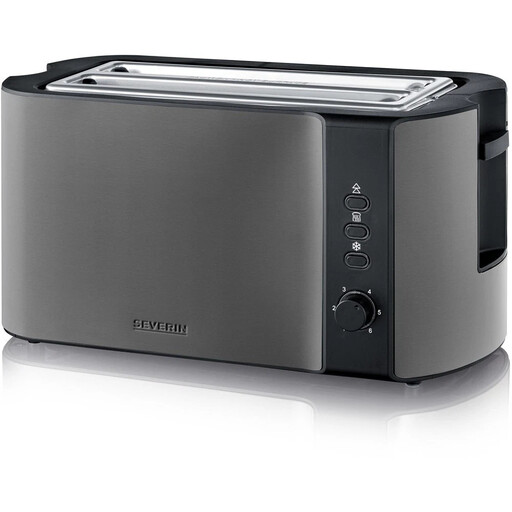 No image available
The stated capacity of up to four slices of bread is worth considering if several people want to toast at once.
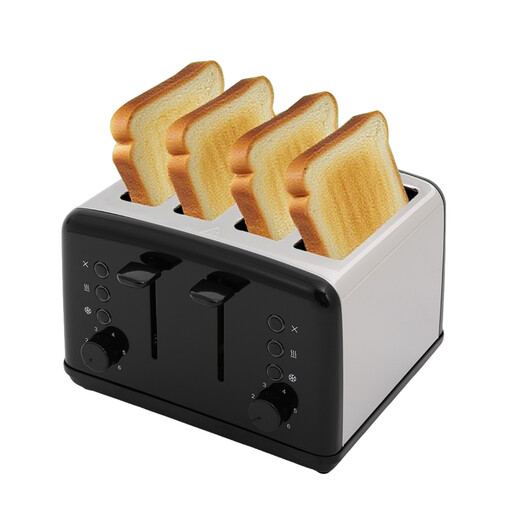 No image available
The stated slot width may suit thicker slices; compare it with the thickness of your bread.
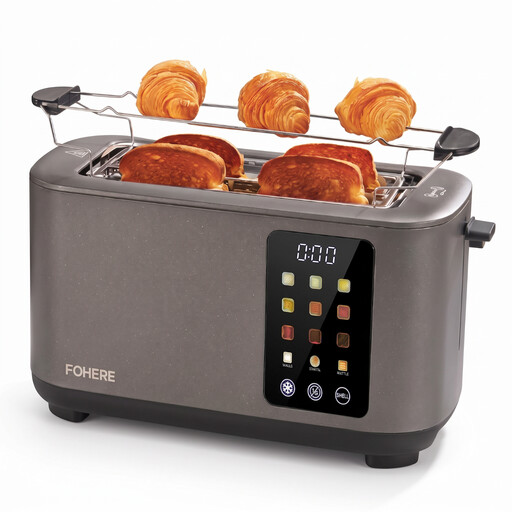 No image available
The product description lists wide slots and capacity for four slices, making this an option for thicker slices and several people.
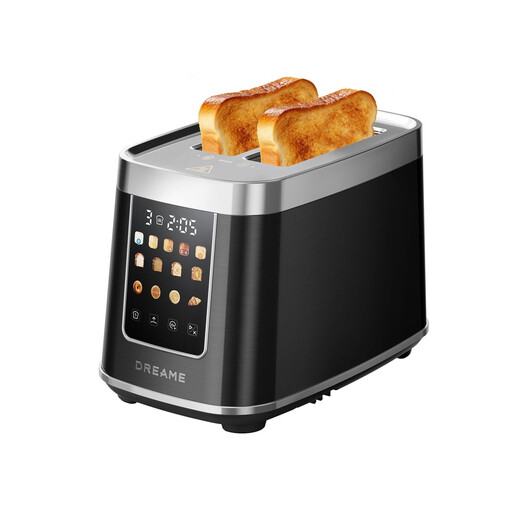 No image available
The stated slot width of 38 mm may suit people who use thicker slices; compare it with your own measurements.
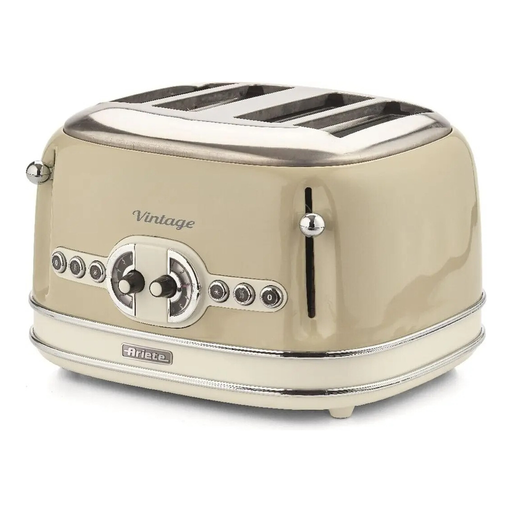 No image available
The four-slice capacity may suit a shared toast break; also check the slot measurements for your thickly sliced bread.
Measure the thickness and length of your usual slices, then compare both measurements with the specifications for the exact toaster model. “Long slot” doesn’t automatically describe the slot width. A relative claim such as “10% wider” doesn’t tell you the maximum slice thickness without an absolute measurement.
TÜV SÜD recommends using dry, unfilled slices of bread in the toasting slots. Whether an appliance is suitable for other foods depends on the manufacturer’s instructions; using a bun warmer is different from using a toasting slot.
Choose a spot where the appliance’s dimensions and cable length work with the worktop and power socket, and follow the manufacturer’s instructions for positioning and cleaning. A removable crumb tray makes maintenance easier; agree with your team who will clean it when needed.
The relevant accident prevention regulations issued by the responsible statutory accident insurance provider apply to electrical equipment used at work. The German Social Accident Insurance (DGUV) describes inspections based on the conditions of use, and refers to the risk assessment when setting inspection intervals. This does not establish a blanket inspection interval specifically for toasters; the responsible person at work should clarify how the toaster is provided and inspected.
No. The Verbraucherzentrale distinguishes between the statutory warranty against the seller and a voluntary guarantee. Check the guarantee terms separately. If a business is buying the toaster, review the specific contractual terms rather than assuming that consumer rights apply to the office purchase.