Presenters using different computers
You want to take files with you without using the cloud and make sure they can be read on the computer at your destination. Check the connector and file system, then open a test copy on the presentation computer.


For moving individual presentation files between devices without using the cloud, a USB stick is usually the simplest place to start. An external SSD is better suited to frequently transferring large media collections, while an HDD is a better choice for extensive local storage. Before buying, check the connections, file system and file size. If your files are confidential, you should also consider access protection and your organisation’s policies.
You want to take files with you without using the cloud and make sure they can be read on the computer at your destination. Check the connector and file system, then open a test copy on the presentation computer.
If you’re copying presentations along with large video or image files, capacity and write speed are key. An external SSD is worth considering if both the source and destination devices support the required connection.
If your presentations contain sensitive information, check who can access the files and which organisational policies apply. Germany’s Federal Office for Information Security highlights the risks of storage devices being lost or stolen.
A good fit if: you mainly want to carry individual presentations between devices in a compact format.
Consider: write speeds and connections vary by model. In its USB stick test, COMPUTER BILD found significant differences in write speeds.
A good fit if: you regularly copy larger presentation and media collections, and both devices support the required connection.
Consider: manufacturers’ maximum speeds depend on having the right connections, cables and host features. For a few small files, the extra speed may not make a noticeable difference.
A good fit if: you need plenty of storage for an extensive local library or an additional backup, as well as something to transport files.
Consider: it’s less convenient than a stick for a single presentation. Germany’s Federal Office for Information Security also recommends keeping a separate backup copy.
| Buying criteria | What to check before buying | Who should consider it? |
|---|---|---|
| Easy to carry | Check the size and shape, connector and available storage for your files. | If I mainly want to take my presentation with me, a compact drive matters more to me than top speed. Around 36% of consumers prioritise easy, mobile file transfer. |
| Compatibility | Check for USB-A or USB-C on both devices and make sure they support the file system. Open a test file before your presentation. | When switching between computers, I want to know that the connector and file system will work at my destination. Around 29% of consumers prioritise device compatibility. |
| Confidential files | Check the security features, how you can unlock the drive on the destination device and which organisational policies apply. | For confidential slides, I want to know who can unlock the drive and which policies apply. Around 21% of consumers prioritise protecting this type of content. |
| Large file collections | Check the total size of your presentation folder and consider read and write speeds separately. | If I’m copying videos or lots of large images, storage capacity and write speed matter. Around 14% of consumers prioritise large files and transferring them. |
Write speeds vary from one model to another. With an external SSD, quoted maximum speeds also depend on the connection and host device being supported.
Compare read and write speeds separately, and don’t assume that manufacturers’ maximum figures reflect everyday performance.
You may notice the wait when repeatedly copying large files.
You may be able to connect a drive but still be unable to write to it as needed because of the file system used by the destination device. Apple notes that formatting a drive erases the files already on it.
Check the connection and file system in advance. Back up any existing files before reformatting a drive.
Depending on your device, you may need an adaptor or to set the drive up again.
Germany’s Federal Office for Information Security lists technical faults, loss and theft among the causes of data loss.
Keep a separate second copy and test that you can open the files you need from it.
An offline storage device can still be lost, and USB drives can also spread malware.
For confidential files, check the required access protection and your organisation’s policies. Don’t connect unfamiliar storage devices without thinking.
The DataTraveler range includes USB sticks for carrying files on the go.
The USB stick range includes models for carrying files on the go.
Portable SSDs such as the T7 Resurrected are designed for local file storage and transfers.
The external X9 SSD is an option for transferring larger files more frequently.
The My Passport HDD is an external hard drive for extensive local storage.
This selection includes USB sticks for carrying files easily, as well as external SSDs and HDDs for storing larger collections locally.
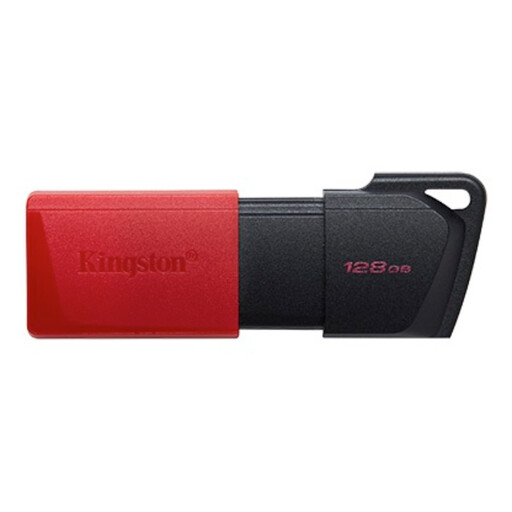 No image available
For carrying presentation files with ease; the stick requires a compatible USB-A port.
128 GB of storage and USB 3.2 Gen 1; the product description lists a write speed of 40 MB/s.
 No image available
For extensive local storage when you need more space for files as well as presentations.
2 TB, USB-C and exFAT; the product description says it’s designed for Windows and macOS and comes pre-formatted as exFAT. It also recommends handling the drive carefully to avoid knocks.
 No image available
For transferring files between devices with USB-A and USB-C ports; the product description lists fingerprint access and AES-256 encryption.
256 GB; according to the product details, read speeds are up to 550 MB/s and write speeds up to 500 MB/s. The product information warns that encrypted data can’t be recovered if both the password and fingerprint recognition fail.
 No image available
For larger collections of files or media that you want to store locally and transfer between devices.
2 TB; the product description lists read speeds of up to 1.050 MB/s and write speeds of up to 1.000 MB/s, as well as USB-C-to-C and USB-C-to-A cables. It says you can set up password protection using Samsung software.
 No image available
For carrying presentation files between devices with USB-A and USB-C ports.
128 GB; the product description lists speeds of up to 100 MB/s, AES-256 encryption software and a weight of 26 g.
Apple lists ExFAT as a formatting option for drives over 32 GB that you want to use with both Mac and Windows. Also check the specific destination device and back up any existing files before formatting, as this will delete them.
Copy a file to the storage device, open it on the destination device and check that it contains everything you need. Germany’s Federal Office for Information Security points out that backed-up data can’t always be read back without issue. Don’t unplug the drive until any write operations have finished.
No. Germany’s Federal Office for Information Security lists faults, loss and theft as reasons to back up regularly. Keep any presentations you need in a separate, suitable storage location too, and test that you can open them.
The guidance available doesn’t establish a blanket requirement to encrypt every personal presentation. For personal data, controllers must consider appropriate technical and organisational measures based on the specific risk under Article 32 of the GDPR. Check which organisational policies apply and what access protection is needed.
For a consumer purchase in the EU, your legal rights are against the seller. Your Europe states that the period is two years from receipt of the goods; this is separate from any voluntary manufacturer’s guarantee.