
Lieferung heute & morgen

Qualitätsgarantie

Willkommens-Angebote freischalten: KOSTENLOSE Lieferung | Bis zu 80 % RABATT | Kostenlose 30-Tage-JoyPlus-Testphase
App herunterladen
Finding the right pens for your artistic projects can be a challenge. Whether you're into hand lettering, illustration, or bullet journaling, the demands are high: you need brilliant colours, versatile tips, and a budget-friendly set. Many creatives and hobby artists face the question of which set best suits their needs without breaking the bank.
This guide is here to help. We'll introduce various sets of Ohuhu Dual Brush Pens and explain their key features to provide you with a solid basis for making an informed decision. Our goal is to clearly outline the differences between the available options, helping you find the perfect brush pen set for your needs.
Before you decide on a set, a few fundamental features are important. These criteria will help you better assess the functionality of the pens.
A key feature of many modern drawing pens for artists is the dual tip. The combination of a fine tip (fineliner) and a flexible brush tip offers maximum versatility.
A set that combines both pens with a brush tip and a fineliner covers a wide range of applications and saves you from buying separate types of pens.
The ink is the heart of any pen. Most Ohuhu brush pens use a water-based ink, which has several advantages:
The size of the set, meaning the number of colours, should be based on your needs. Beginners often don't need a 120-piece Ohuhu marker set, while experienced illustrators benefit from a large colour palette.
Here is a selection of different Ohuhu Dual Tip Brush Pen sets that vary in size and features.
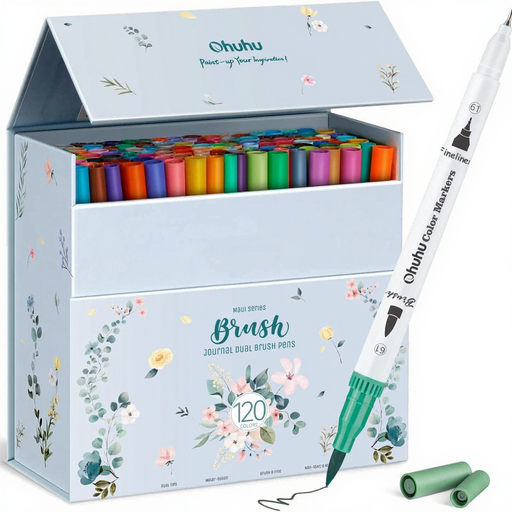
Why It Stands Out: This comprehensive set is designed for users who need the maximum colour selection. With 120 numbered colours and an included DIY colour swatch card, it provides an excellent foundation for complex illustrations and colour gradients.
Pros:
Who It's For: This set is aimed at advanced hobby artists, illustrators, and anyone who regularly uses pens for drawing and colouring and values a large colour selection and organised storage.
Go to the 120-Piece Set on Joybuy.de
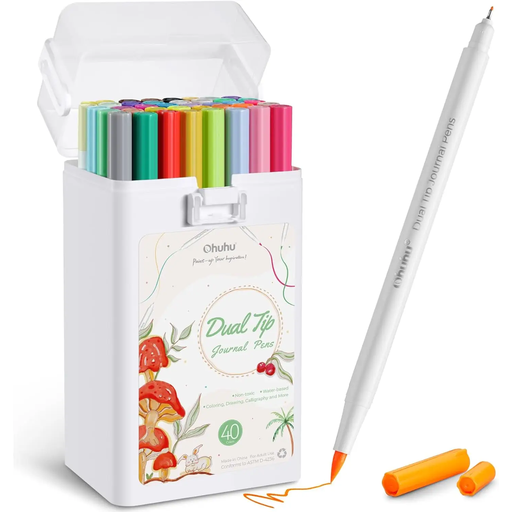
Why It Stands Out: This compact set is a great choice for beginners or for specific projects. It includes a well-curated selection of 40 colours, including pastel and neon shades that aren't always found in larger sets.
Pros:
Who It's For: Ideal for students, bullet journal users, and creatives looking for a handy and affordable starter set or wanting to expand their existing collection with special shades.
Go to the 40-Piece Set on Joybuy.de
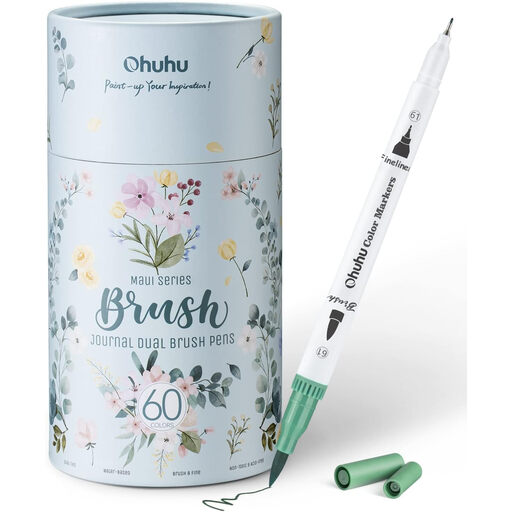
Why It Stands Out: This set represents a great middle ground. With 60 colours, it offers a significantly larger selection than a basic set but remains more manageable and affordable than the 120-piece version. It's an all-rounder for various creative applications.
Pros:
Who It's For: This set is an excellent choice for hobby artists and hand lettering enthusiasts who want more than just a basic kit but aren't ready to invest in a large professional set just yet.
Go to the 60-Piece Set on Joybuy.de
The sets presented here offer a good overview of the possibilities with Ohuhu Dual Brush Pens. If you can't find the right one for your specific project, or if you're looking for pens from other brands or types, you can find a wider selection in our main category.
Discover More Art & Drawing Pens on Joybuy.de Here
1. Are Ohuhu Dual Brush Pens suitable for beginners? Yes, especially the smaller sets with 40 or 60 colours are a great choice for beginners. Handling the dual tips is intuitive, and the value for money allows for a cost-effective entry into techniques like hand lettering or colouring with brush pens.
2. Do Ohuhu brush pens bleed through paper? Since the pens use water-based ink, bleed-through largely depends on the paper quality. On standard printer paper (approx. 80 g/m?), bleeding is likely. For optimal results, it is recommended to use thicker paper, such as mixed-media paper (180 g/m? or higher) or special watercolour paper.
3. How do you create watercolour effects with Ohuhu pens? To achieve a watercolour effect, apply the colour to waterproof paper (watercolour paper). You can then blend the colour using a damp brush or a water brush pen. Alternatively, you can apply some colour to a smooth, non-porous surface (like a ceramic tile or a laminating sheet), dissolve it with water, and pick it up from there with a brush.