
Lieferung heute & morgen

Qualitätsgarantie

Willkommens-Angebote freischalten: KOSTENLOSE Lieferung | Bis zu 80 % RABATT | Kostenlose 30-Tage-JoyPlus-Testphase
App herunterladen
A high-quality oil dispenser is more than just a container; it's an essential tool for a clean, organised, and efficient kitchen. However, the selection can quickly become overwhelming. Many models promise functionality but leave oily rings on the countertop after a short time or are difficult to clean. Before you make a decision, it's important to understand the common pitfalls that often only become apparent with daily use.
The 3 Most Common Problems with Unsuitable Oil Dispensers:
To avoid a bad buy, you should focus on a few crucial features. These determine whether an oil dispenser will prove its worth in your daily kitchen routine.
The choice of material affects both durability and oil quality.
The most important component is the oil bottle with a spout. A good design is crucial for clean handling. Look for models explicitly described as drip-free. This is often achieved through a small return channel or a sharp-edged lip that allows for a clean cut-off of the oil stream. A well-sealing cap or an integrated dust cover further protects the contents from contaminants.
A practical oil dispenser must prove itself in everyday use. A sufficiently large opening is essential for this. It not only makes refilling without a funnel easier but also facilitates thorough cleaning with a bottle brush. Also, check if the model fits well in your hand and allows for one-handed operation, which is especially advantageous while cooking.
Based on these criteria, we have identified several models suitable for different needs and cooking habits.
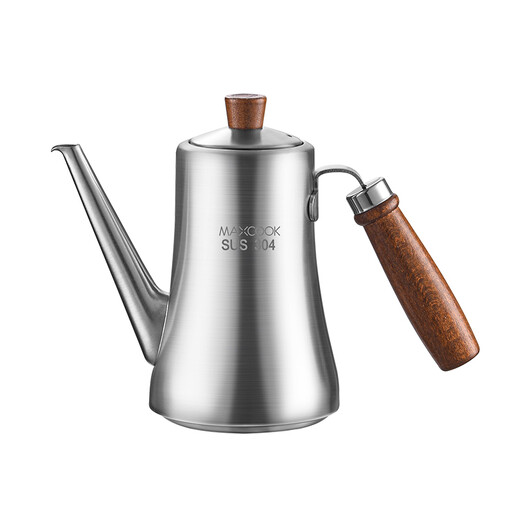
Why This Fits Their Persona: Ideal for families or individuals who cook daily and need a robust, low-maintenance solution with a large capacity. The one-handed operation and durable material are designed for intensive use in the kitchen.
According to the manufacturer, the eagle-beak spout is designed to prevent oil from clinging and flowing back, thus counteracting the dripping problem. The large opening significantly simplifies cleaning.
Large 1000 ml capacity reduces the need for constant refilling. The 304 stainless steel construction protects the oil from light and is very durable.
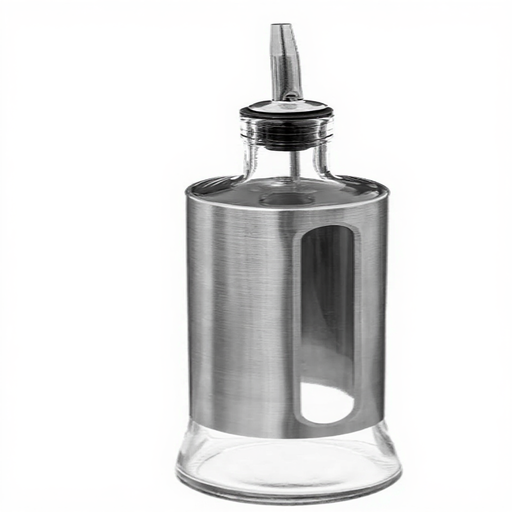
Why This Fits Their Persona: Perfect for those who value a stylish ambiance and prefer kitchen tools that also look great on the dining table. The combination of clear glass and stainless steel appears modern and high-end.
The model is advertised with a clean, controlled, and drip-free spout. The clear glass and stainless steel materials are easy to clean and prevent the build-up of rancid residue.
An elegant design that combines functionality and aesthetics. The clear glass allows for easy monitoring of the fill level. At 500 ml, the dispenser is a good size for daily use.
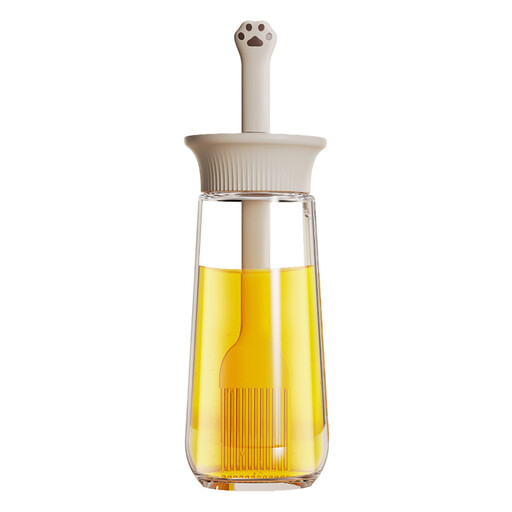
Why This Fits Their Persona: For health-conscious cooks and bakers who want to apply oil precisely and sparingly, for example, when greasing baking pans, basting grilled food, or finishing vegetables in a pan.
The integrated design of the lid and brush prevents splashes and spills. Since the entire model can be disassembled, it allows for thorough and easy cleaning, which prevents residue build-up.
The food-grade silicone brush allows for a very even and controlled application of oil. The funnel-shaped opening makes refilling easy.
We have compiled a complete, up-to-date list of products that fully meet these strict selection criteria and German safety regulations.
Cleaning depends on the material. Most glass and stainless steel dispensers can be cleaned with warm water and a little dish soap. A narrow bottle brush is helpful for reaching all corners. Some models are dishwasher-safe, which should be noted in the manufacturer's specifications. It is important to let the dispenser dry completely before refilling.
Yes, a high-quality vinegar and oil dispenser is typically made from materials that are acid-resistant. Glass and 304 stainless steel are very well-suited for this. Caution is advised with models that have metal parts of unknown quality or coatings, as acetic acid can cause corrosion over time.
This largely depends on your individual consumption. For daily use in an average household, sizes between 250 ml and 500 ml are often sufficient. If you cook a lot or have a large family, a model with 750 ml or 1000 ml may be more practical. However, keep in mind that light-sensitive oils, in particular, should not be stored for excessively long periods to maintain their quality.