What should you look for when buying?
First, assess heat loss and how long you plan to use the heater. Then check whether the output, position and power connection of the specific model are suitable for your workspace.
| What matters |
What to check before buying |
Who it matters most to |
| Suitable heat output |
Consider how enclosed and draughty your conservatory is, as well as the rated output and heat settings of the specific model. |
If my conservatory gets very cold, I want to know whether extra warmth at my desk will be enough. Around 33% of consumers put choosing an output suited to their heating needs first. |
| Safe positioning and power connection |
Check the clearances specified in the manual, ensure the floor is stable and check that the power connection is in good condition and suitable. |
If the heater is near furniture or my desk, I need enough clearance and a suitable power connection. Around 27% of consumers prioritise safe positioning. |
| Quiet working and heater size |
Compare the dimensions, weight, handles or castors, and design of the specific model. |
If I want to work at my desk with as little disturbance as possible, noise levels and finding a suitable spot both matter. Around 20% of consumers prioritise quiet working and saving space. |
| Electricity use over longer periods |
Take account of operating hours, the selected heat setting and the actual time the heater is switched on under thermostat control. |
If I work for regular or long sessions, I want to estimate electricity use in advance. Around 20% of consumers put running costs first. |
Oil-filled radiators at Joybuy
This selection includes oil-filled radiators with several heat settings for occasional supplementary warmth. Check whether the stated suitability of each model matches your room.
 No image available
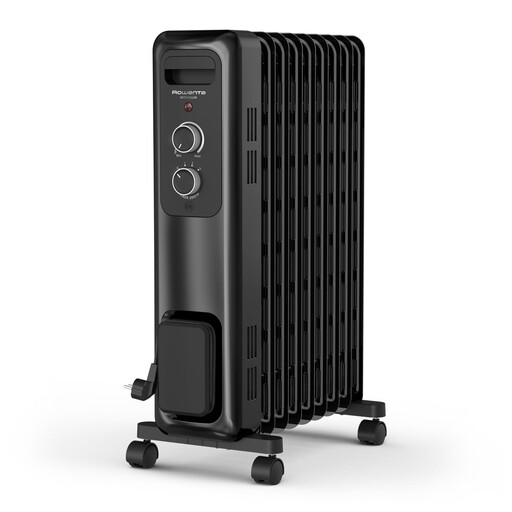
Rowenta Intensium Ultra BU2420
According to the product details, the three heat settings and adjustable thermostat let you choose a setting for occasional supplementary warmth.
The listing specifies 2000 W, 8 fins, castors, tip-over protection and overheat protection.
According to the instructions, place it on a stable, heat-resistant surface and at least 1 m away from flammable materials.
View at Joybuy
 No image available
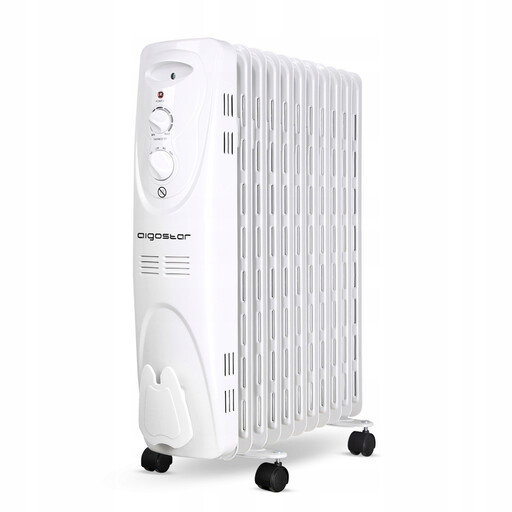
Aigostar 11-fin oil-filled radiator, 2300 W
The listing recommends this model for well-insulated, enclosed rooms or occasional short periods of heating. Check whether these conditions suit your conservatory.
It lists three heat settings of 1000, 1300 and 2300 W, as well as an adjustable thermostat with a temperature range of 5–35 °C.
The castors must be fitted before use. Use the heater upright and indoors only; do not cover it or use it close to a bath, shower or pool.
View at Joybuy
 No image available
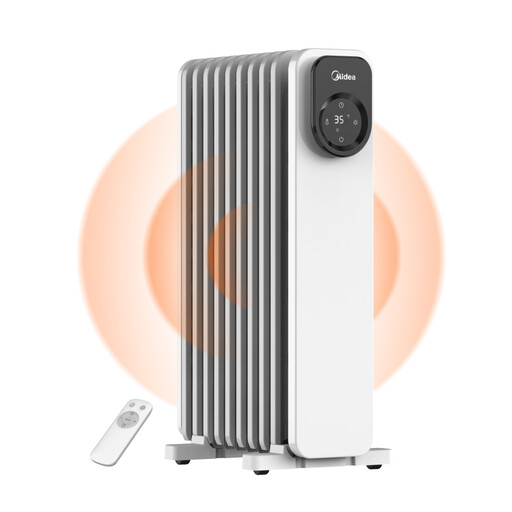
Midea NY2009-24UR
For occasional supplementary warmth, the listing specifies 2000 W, a thermostat and four heating modes. The description recommends the model for well-insulated rooms or occasional use.
The model is listed with 9 fins, a remote control and an LED touchscreen.
Keep it at least 1 m away from flammable materials and do not cover it. Do not use it in damp areas unless the model is specifically rated for them.
View at Joybuy
Frequently asked questions
Can I place an oil-filled radiator right next to my desk and a multiway adaptor?
Position the heater according to the clearance and connection requirements in the manual for your specific model. Check the socket and cable for damage. If you notice a burning smell or discolouration, or the fuse keeps tripping, ask a qualified electrician to check the installation.
Do I need to top up the oil or have an oil-filled radiator specially installed?
The portable, oil-filled electric radiators considered here are not designed to be topped up as part of regular use. Before using one for the first time, follow the instructions for positioning, fitting the castors if necessary, and cleaning. The manual for your chosen model will also clarify whether it is suitable for use in damp areas.
How can I estimate electricity use?
Multiply the power consumption in kilowatts by the actual hours the heater is switched on to estimate usage in kilowatt hours. With thermostat control, the heater may be on for less time than your total working hours. To estimate the cost, also take your own electricity tariff into account.
Does an electric oil-filled radiator need an EU energy label in Germany?
No. The European Commission distinguishes between ecodesign requirements for electric local space heaters and energy-labelling rules, which exclude these appliances. According to the Commission, the revised Ecodesign Regulation (EU) 2024/1103 has applied since 1 July 2025. So, an electric oil-filled radiator’s lack of an energy label alone does not prove that it is non-compliant.
What is the cancellation period for online purchases in Germany?
Consumers generally have a 14-day right to cancel online purchases. The Verbraucherzentrale (German consumer advice centre) explains when the period starts and what exceptions may apply. The terms for your specific case will determine what applies.


