People with a chilly conservatory
If you use a glazed room, consider whether a portable heater can offset heat loss for the way you plan to use the space. Glazing and insulation affect how much heating you need, as Wintergarten Experte explains.


A thermostatically controlled oil-filled radiator could suit a dry, enclosed conservatory if you spend longer periods there occasionally and want extra warmth without a fan. Before buying, check how much heat is lost through the glazing and insulation, as well as whether there’s a suitable spot for the radiator. For short visits or year-round use, targeted heating or a permanently installed system may be worth considering instead.
If you use a glazed room, consider whether a portable heater can offset heat loss for the way you plan to use the space. Glazing and insulation affect how much heating you need, as Wintergarten Experte explains.
If you’re reading or working, you may value an adjustable heat source without a fan running. The ADAC notes that an oil-filled radiator continues to give off heat for a while after it’s switched off.
If you only heat the room at certain times, you can use the heater’s power rating, its actual operating time and your electricity tariff to estimate the cost. How long it needs to run also depends on how much heat the room loses.
A good fit if: you occasionally want extra, adjustable warmth while sitting for longer periods, and the specific model is suitable for a dry, enclosed room and the space where you plan to put it.
Things to weigh up: It continues to give off heat for a while after being switched off, but electricity use depends on its power rating and actual operating time.
A good fit if: you only use the room for short periods or mainly want to warm a particular seat.
Things to weigh up: A fan heater moves air; targeted radiant heat won’t necessarily warm the whole room. Both need a suitable position and add to your electricity bill.
A good fit if: you want to use the conservatory as a living space regularly throughout the year.
Things to weigh up: Planning and installation take more work than setting up a portable heater. The right solution depends on factors including the glazing and the connection to the building.
| Criterion | What should you look for? | Who will find this particularly important? |
|---|---|---|
| Heating needs | Factor in the glazing, insulation and how long you’ll use the room. The rated output alone won’t tell you what temperature the room will reach. | I want to know whether extra heat can make up for heat loss in my glazed room. Around 33% of consumers put their heating needs first. |
| Quiet warmth where you sit | Check the thermostat, heat settings and the amount of space around your seat. | If I’m reading or working for longer, adjustable warmth without a fan running matters to me. Around 27% of consumers prioritise quiet warmth during longer stays. |
| Electricity use | Consider the power rating, actual operating time and your electricity tariff together. How long you’re in the room isn’t automatically the same as how long the heater is on. | I want to estimate what my planned use will mean for my electricity consumption. Around 20% of consumers put running costs first. |
| Positioning and safety | Follow the instructions for the specific model on moisture, positioning and safety clearances. | Before setting up the heater, I want to check that the intended spot meets the requirements. Around 20% of consumers prioritise a suitable, safe position. |
Heating needs depend on factors including glazing and insulation. A model’s stated capacity alone doesn’t prove it will heat your conservatory sufficiently.
Start by assessing the room and how you’ll use it, then compare the stated output of the specific model.
The oil continues to release heat that was previously supplied by electricity for a while after the heater is switched off. This doesn’t mean it saves extra energy.
Compare electric heaters based on your tariff and a realistic estimate of how long they’ll actually be switched on.
Recommended use varies by model. A heater described as suitable for indoor use isn’t automatically suitable for a damp location.
Before buying, check the instructions for the specific model and make sure its requirements match the conditions where you plan to put it.
The Radia-S range may appeal if you’re looking for a heater with mechanical controls and castors.
The TRH range includes a variety of portable oil-filled radiators. For the TRH 20 E, the manufacturer states an output of up to 2000 W and a continuously adjustable thermostat.
According to the manufacturer, the Thermaxx 2500W, item number 10048987, is aimed at buyers looking for digital temperature control, a timer and a remote control.
This selection includes portable oil-filled radiators for adjustable extra warmth, whether you use them occasionally or for longer periods. Compare each model’s output and features with your room, how long you plan to use it and the relevant safety instructions.
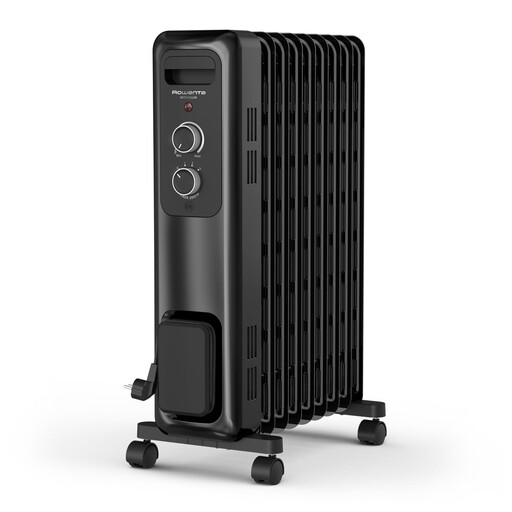 No image available
Could suit you if you want adjustable warmth without a fan when using the room for longer periods.
Specifications include 2000 W, three heat settings and an adjustable thermostat. The product description says to keep it at least 1 m away from flammable materials; don’t use it in the bathroom, near sources of water or outdoors.
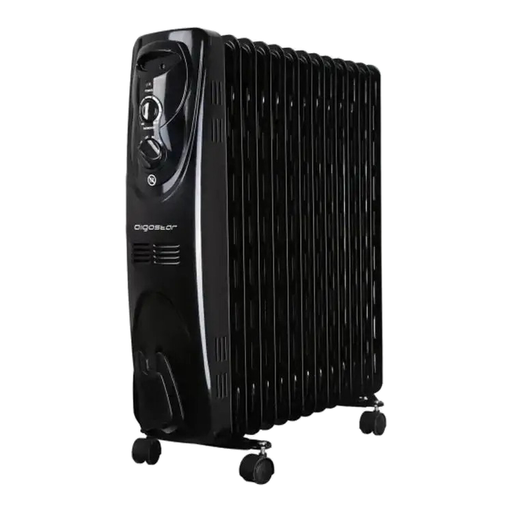 No image available
Could be worth considering for occasional extra warmth if you want to move the heater between rooms.
Specifications include 2500 W and three heat settings of 1000 W, 1500 W and 2500 W. A thermostat, castors and carry handle are listed. According to the product description, it’s for indoor use only; don’t use it near a bath, shower or swimming pool, and don’t cover it while it’s running.
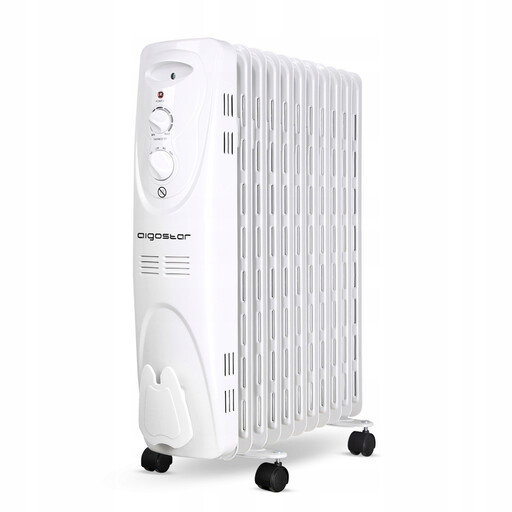 No image available
Could suit occasional use if the room is well insulated and enclosed.
Specifications include 2300 W, three settings of 1000 W, 1300 W and 2300 W, and a thermostat. According to the product description, it’s intended for well-insulated, enclosed rooms or occasional short periods of heating; for indoor use only.
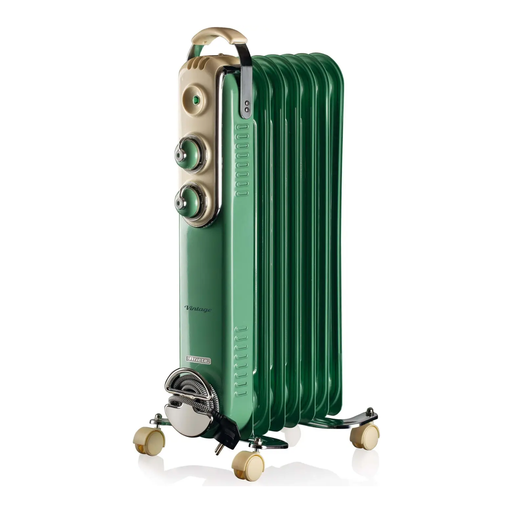 No image available
Could suit you if you want to adjust the heat across several settings and move the heater when needed.
The product title states 1500 W, seven fins and three settings. Four swivel castors and a carry handle are listed. Place it on a stable, level surface, keep it away from flammable materials and don’t cover it while it’s running.
 No image available
Could be worth considering for occasional use if you want thermostat control and a remote.
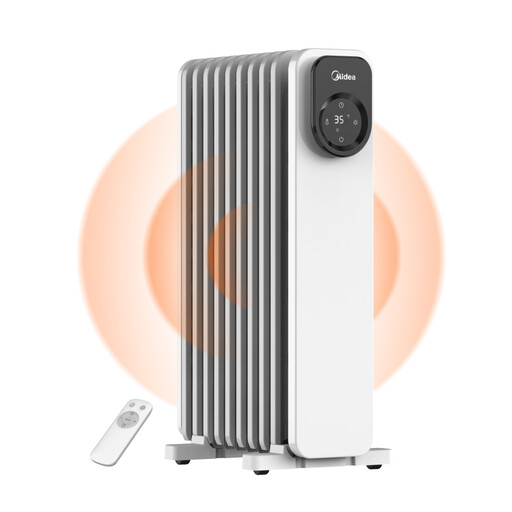
Specifications include 2000 W, four operating modes, a remote control and an LED touchscreen. According to the product description, it’s intended for well-insulated rooms or occasional use; don’t use it in damp areas unless an IPX4 rating or higher is specified.
Don’t base your decision on floor area alone. Glazing, insulation and how you plan to use the room all affect how much heating you need. Then compare the rated output of the specific model. If you’re unsure about the heat requirement, ask a professional to assess it.
Don’t assume it’s suitable just because the space is called a conservatory. Check whether the area is dry and whether the instructions for the specific heater allow it to be used there. For example, Trotec describes the TRH 30 E as suitable for dry, enclosed indoor spaces; this doesn’t mean other models are approved for damp areas.
Take the power rating, actual hours switched on and your electricity tariff into account. If the heater has a thermostat, don’t assume that it will be on for the entire time you’re in the room.
If you use the conservatory regularly as a living space throughout the year, consider a permanently installed system suited to the building. Heating needs and installation depend on factors including the glazing and the connection to the building.
No. According to the German Federal Institute for Occupational Safety and Health, for CE-marked products it is generally the manufacturer or their authorised representative who declares conformity. A CE mark isn’t the same as an independent safety certification mark. A GS mark, by contrast, is based on testing by a GS body, but it doesn’t confirm heating performance or durability.