For occasional extra warmth, a suitably sized oil-filled radiator can be a practical choice in an enclosed, dry conservatory. However, the German Association for Conservatory Construction stresses that a conservatory’s heating load needs to be assessed separately. A high wattage or a room-size rating for ordinary rooms does not prove that a heater will be sufficient on cold winter days. If you use the space regularly or damp keeps coming back, check the underlying building issues and ventilation too, rather than simply choosing a more powerful heater.
Who should consider their options?
Occasional conservatory users
If you use the room for short periods on chilly days, consider its heating load and choose a suitable control system. The German Association for Conservatory Construction recommends taking the specific conditions in a conservatory into account when planning its heating.
People dealing with condensation
If walls or glazed surfaces are cold and repeatedly become damp, you’ll need to consider the source of the moisture and air circulation as well as the heat output. The German Environment Agency lists proper heating and ventilation as ways to help prevent mould.
Year-round conservatory users
If you want to use your conservatory regularly, even when there’s no sunshine, have the heating planned for peak winter conditions. The heating load of the specific room matters more than a general room-size rating on a heater.
What should you look for when buying?
The German Association for Conservatory Construction recommends calculating the heat output needed for the specific conservatory. The German Environment Agency highlights proper heating and ventilation as ways to help prevent mould.
Portable oil-filled radiator
A good fit if: you want occasional extra heat in an enclosed, dry conservatory, and the heater’s output, position and power connection are suitable.
Bear in mind: A thermostat and heat settings are no substitute for a heating-load calculation or for investigating cold, damp building elements.
Planned permanent heating
A good fit if: you use the conservatory all year round or a portable supplementary heater cannot reliably meet the calculated heating demand.
Bear in mind: A system designed for the conservatory needs careful planning and may involve building work. The German Association for Conservatory Construction lists connecting to the existing heating system as one option.
Investigate damp and building issues
A good fit if: walls or glazing are repeatedly damp, or mould appears. You should also check for sources of moisture and cold surfaces.
Bear in mind: Changing the radiator alone will not remove moisture ingress or necessarily warm up cold surfaces. The German Environment Agency recommends ventilating appropriately to remove moisture outdoors.
| What matters? |
What to check when buying |
Who should pay particular attention? |
| Will it provide enough heat? |
Compare winter use, glazing and room size with the heating load of the specific conservatory and the model’s rated output. |
If I want to use the room comfortably on cold days too, the heat output needs to match the actual demand. Around 31% of consumers prioritise sufficient heat output. |
| Will the walls stay damp? |
Check for condensation, mould, possible sources of moisture and ventilation options; investigate any recurring damp. |
If the glass or walls keep getting damp, I want to understand the cause, not just warm up the air. Around 25% of consumers focus on protecting against damp and cold surfaces. |
| How much will it cost to run? |
To estimate the maximum cost, multiply the output in kilowatts by the hours of use and your electricity price per kilowatt-hour; allow for the actual time the heater is switched on. |
If the radiator runs regularly, I want to estimate the electricity it will use during the hours I need it. Around 25% of consumers consider ongoing running costs their top concern. |
| Is the location safe? |
Check the condition of the appliance, the power connection, cable route and clearances against the instructions for the exact model variant. If you’re unsure about the installation, consult a qualified electrician. |
If I’m setting up the heater in the conservatory, I need a suitable spot and a safe connection. Around 19% of consumers pay particular attention to safe positioning and use. |
Common misconceptions
-
The room-size rating automatically applies to a conservatory too
A conservatory’s heating demand depends on its specific conditions and cannot necessarily be worked out from a general room-size rating.
If you plan to use the room in winter, compare its heating load with the output of the specific heater.
If the heater is too weak for the actual heat demand, the room may still feel too cold despite the purchase and electricity costs.
-
The heat from the oil is free extra energy
An oil-filled radiator uses electricity to generate heat. A thermostat can affect how long it runs, but it does not change where the heat comes from.
To work out running costs, take account of the selected output, the actual heating hours and your electricity tariff.
-
A more powerful heater will solve condensation on its own
Cold building elements, ventilation and sources of moisture can all play a part. More heat alone will not identify the cause of recurring damp.
Check for sources of moisture and ventilation options as well as choosing your heating. The German Environment Agency recommends ventilating regularly and sufficiently to remove moisture outdoors.
Brands to consider
De’Longhi
The Radia-S range includes oil-filled radiators with different output ratings. The TRRS1225 is one model to compare if you’re looking for adjustable supplementary heat.
- De’Longhi lists a maximum output of 2,500 W, three heat settings and twelve fins for the TRRS1225.
- The manufacturer’s specifications do not prove that this model will meet the heating load of a particular conservatory.
Trotec
The TRH 21 E is a portable oil-filled radiator with mechanical controls.
- Trotec lists an output of up to 2,500 W, eleven fins and a continuously adjustable thermostat.
- A stated room size cannot be applied to a conservatory with cold walls without first checking its heating load.
Midea
The NY2513-22MR is an oil-filled radiator with digital controls and a remote control.
- Midea lists three heat settings up to 2,500 W, a timer, a tip-over switch and overheat protection for this model.
- Midea states that the model is suitable only for well-insulated rooms or occasional use. This is particularly important to bear in mind in a poorly insulated conservatory.
Clatronic
The RA 3737 is an example of an oil-filled radiator with mechanical controls.
- Clatronic lists eleven fins, three heat settings of 1,000, 1,300 and 2,300 W, and a continuously adjustable thermostat.
- These manufacturer’s specifications are not a measure of how well the heater will warm cold conservatory walls.
Olimpia Splendid
The Caldorad 9TT combines an oil-filled radiator with a turbo function that can be switched on when needed.
- The manufacturer lists an output of 1,000 to 2,000 W plus 400 W for the turbo function, along with a timer, thermostat and tip-over protection.
- The additional turbo function does not prove that running costs will be lower or that the heater will provide enough heat for a particular conservatory.
Oil-filled radiators at Joybuy
This selection features portable oil-filled radiators for adjustable supplementary heat. Whether a model will be sufficient for your conservatory depends on its heating load and the conditions where you plan to use it.
 No image available
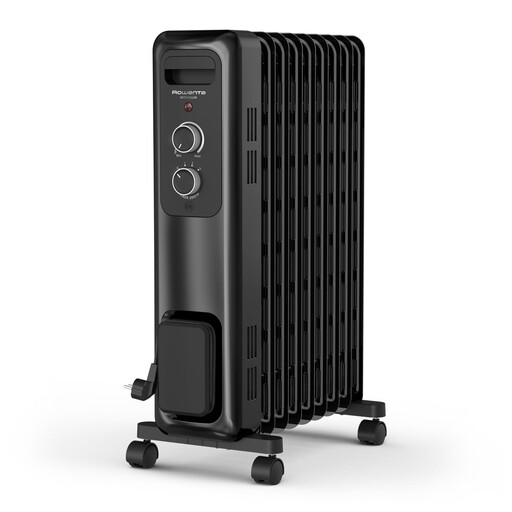
Rowenta Intensium Ultra BU2420 oil-filled radiator
This could suit you if you’re looking for a portable supplementary heater with several heat settings and thermostat control.
2,000 W, three heat settings and an adjustable thermostat.
Eight heating columns and castors; this model is listed as having tip-over and overheat protection. According to the product manual, keep it at least 1 m away from combustible materials. Do not use outdoors, in a bathroom or near sources of water.
View at Joybuy
 No image available
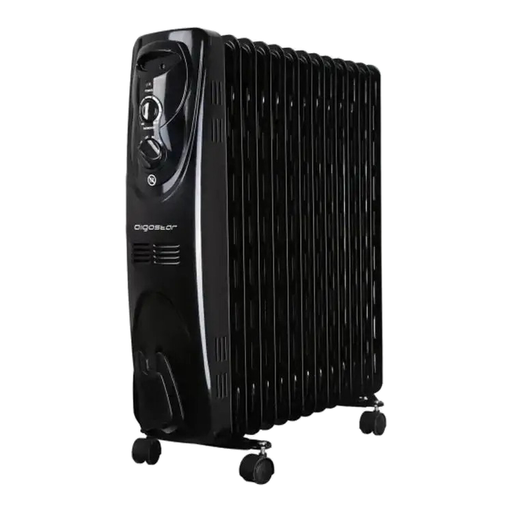
Aigostar oil-filled radiator with 13 fins
This could suit you if you want to compare portable models with several heat settings and thermostat control.
2,500 W, three heat settings and adjustable thermostat control.
13 fins, castors and a carry handle; overheat and tip-over protection are listed. The stated room size of 21–25 m² does not prove that the heater will be sufficient for a particular conservatory. For indoor use only; do not use outdoors or close to a bath, shower or swimming pool.
View at Joybuy
 No image available
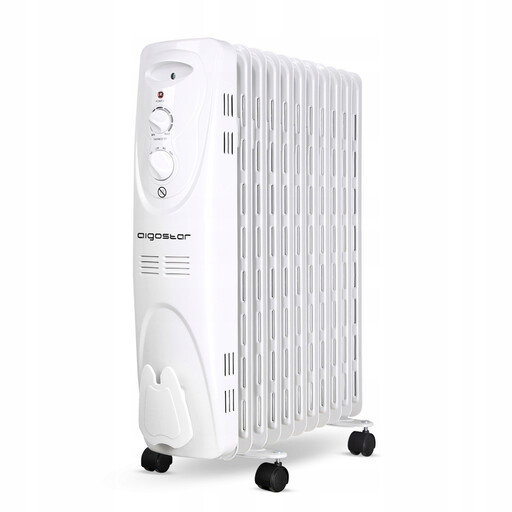
Aigostar oil-filled radiator with 11 fins, 2,300 W
This may be an option for occasional extra warmth, provided it is suitable for the specific room and its heating load.
2,300 W, three heat settings and an adjustable thermostat.
Features 11 fins and castors, with tip-over and overheat protection listed. According to the product description, it is suitable only for well-insulated rooms or occasional heating. Do not use outdoors or close to a bath, shower or swimming pool.
View at Joybuy
 No image available
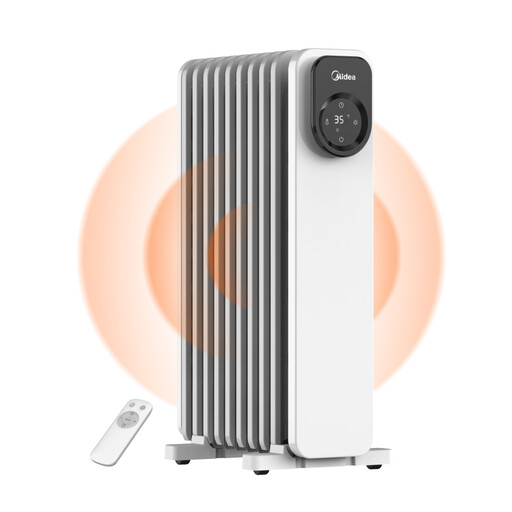
Midea NY2009-24UR oil-filled radiator
This could suit you if you’d like a remote control and several operating modes for occasional supplementary heating.
2,000 W, nine fins, four modes, remote control and LED touchscreen.
Overheat and tip-over protection are listed for this model. According to the product description, it is suitable only for well-insulated rooms or occasional use. Keep it at least 1 m away from combustible materials.
View at Joybuy
Frequently asked questions
How do I work out the wattage I need for my conservatory?
If you use it all year round, have the heating load calculated with the glazing, construction and peak winter conditions taken into account. Don’t rely on general recommendations for ordinary living rooms or a radiator’s general room-size rating without checking first.
Will an oil-filled radiator on its own prevent condensation on cold walls?
Not reliably, as cold surfaces and moisture need to be considered together. Ventilate in a way that suits how you use the room, and if damp keeps returning, investigate possible building-related or other causes.
How can I use and clean a portable oil-filled radiator safely?
Follow the instructions for the exact model variant when positioning, connecting and cleaning the heater. Stop using it if the cable is damaged or there are visible scorch marks.
How can I estimate the running costs?
To estimate the maximum cost, multiply the output in kilowatts by the hours of use and your electricity price per kilowatt-hour. Actual consumption also depends on how long the heater is actively heating under thermostat control.
What should I do if the appliance I bought is faulty?
If goods are faulty, the retailer you bought them from is generally your first point of contact for your statutory rights. The European Union’s consumer information states that goods bought in the EU come with a minimum two-year legal guarantee from the date you receive them; the applicable terms and conditions should be checked.


