Who is an oil-filled radiator at your desk suitable for?

A hobby room with limited space

If there’s little floor space free by your desk, plan for the heater’s footprint, cable route and clearance from furniture together. A compact model can make it easier to find a suitable spot, provided its output is enough for the room.

Anyone using a cold hobby room

If you want to warm more than just the area around your seat and need to heat a distinctly cold room, consider the heater’s output, insulation and how long you’ll use it together. Wattage alone won’t tell you whether the room will get warm enough.

Longer working or hobby sessions at your desk

If you sit for long periods, you may value adjustable warmth without fan-driven air. For longer use, electricity consumption and running time also become important factors when choosing a heater.

What should you consider when choosing one?

Compact, low-output oil-filled radiator

A good fit if: You only want to add occasional heat to a small, well-insulated hobby room.

The trade-off: Its output may be too low for a larger or cold room. The manufacturer describes the Tristar KA-5103, rated at 500 W, as suitable for well-insulated rooms or occasional use.

Adjustable, medium-output oil-filled radiator

A good fit if: You want to adjust the output to meet a greater need for heat. The manufacturer lists settings of 600, 900 and 1500 W for the Clatronic RA 3735.

The trade-off: Compared with a compact model, it may use more power and take up more space.

Higher-output model with timer

A good fit if: You need more heat and want to set when the heater runs. For the Caldorad 9TT, Olimpia Splendid lists a 24-hour timer and an additional 400-W turbo function.

The trade-off: A timer and higher selectable output don’t prove that a room will heat up faster or that electricity costs will be lower. Also check the space required and the connection requirements.

Criterion What to look for Who is this especially important to?
A safe place for the heater Check the available floor space, cable route and socket, as well as the clearances specified in the manual for your particular model. Safety features don’t remove the need for a clear space around the heater. With little floor space free by my desk, I want to plan a safe spot for the heater, cable and clearance from furniture. Around 36% of consumers put safe placement first.
Enough extra heat Assess the room’s condition and how much extra heat you need, then compare the rated output and usage guidance for the specific model. If my hobby room is cold, I want to check whether the output will be enough for its insulation and the time I plan to use the heater. Around 29% of consumers prioritise heating the room in question.
Electricity costs For an initial estimate, factor in the rated output in kW, planned running hours and your own price per kWh. Thermostat cycles and actual running time will affect consumption. For longer sessions, I want to estimate running costs using my tariff rather than relying on heat retention. Around 21% of consumers focus primarily on running costs.
Adjustable heat without fan-driven air Check whether the thermostat and heat settings are enough, or whether a timer would suit your routine. Controls don’t prove that a heater is economical to run. For focused work, I want warmth without fan-driven air and controls that suit my needs. Around 14% of consumers prioritise this combination of quiet use and ease of operation.

Common misconceptions

  • Retained heat automatically means lower electricity costs

    Heat given off after you switch the heater off isn’t an extra source of energy. Electricity consumption depends on the power it draws and how long it runs.

    Work out the cost of your planned use with your electricity tariff, and don’t rely on savings claims based on comparisons without clear measurement conditions. The North Rhine-Westphalia Consumer Advice Centre highlights the consumption involved when electric heaters are used for longer periods.

  • A small model is enough for every hobby room

    The manufacturer describes the 500-W Tristar KA-5103 as suitable for well-insulated rooms or occasional use. That doesn’t mean it will adequately heat a larger or cold hobby room.

    First assess the condition of the room and how much extra heat you need. Then compare the output and suitability guidance for the specific model.

  • Safety features make the heater’s position unimportant

    Tip-over or overheat protection doesn’t replace the required clearances or the guidance on positioning and connecting the heater. Hot surfaces and obstructed placement remain important safety considerations.

    Measure the space available and check the clearances and connection requirements in the manual for the model you’re considering before you buy. Trotec and Clatronic manuals stress the importance of following the safety instructions.

Key brands at a glance

Clatronic

The RA 3735 is one example of an adjustable oil-filled radiator for occasional extra heat.

  • The manufacturer lists three heat settings of 600, 900 and 1500 W, a thermostat, castors, and tip-over and overheat protection.
  • The manufacturer describes it as suitable for well-insulated rooms or occasional use; this doesn’t guarantee enough heat for every hobby room.

Tristar

The KA-5103 is a compact 500-W model that the manufacturer describes as suitable for well-insulated rooms or occasional use.

  • Tristar lists a thermostat, overheat protection and dimensions of 24 × 14 × 38 cm.
  • The manufacturer says this model isn’t suitable for damp rooms. Its output may be too low if you need more heat.

De’Longhi

The Nano TRNS0808M and Radia S TRRS0920 demonstrate different output levels within the oil-filled radiator range.

  • De’Longhi lists a maximum output of 800 W for the TRNS0808M and 2000 W for the TRRS0920. The manufacturer says both models have a room thermostat.
  • These details apply to the models named and shouldn’t be assumed to apply to every heater from the brand.

Olimpia Splendid

The Caldorad 9TT is an option if you value timed operation and several heat settings.

  • The manufacturer lists two heat settings, a 24-hour timer and an additional 400-W turbo function, with maximum heating output of 2000 W.
  • A timer and turbo function alone don’t prove that the heater runs more quietly or uses less electricity.

Klarstein

The Thermaxx, article number 10048987, is a digitally controlled 2500-W oil-filled radiator with a timer and remote control.

  • The manufacturer lists three heat settings, with control via remote or touch controls.
  • The manufacturer describes it as suitable for well-insulated rooms or occasional use; claims of faster heating aren’t an independent comparison.

Oil-filled radiators at Joybuy

The Joybuy products below are oil-filled radiators designed to provide extra heat indoors. Output, controls and positioning guidance vary by model.
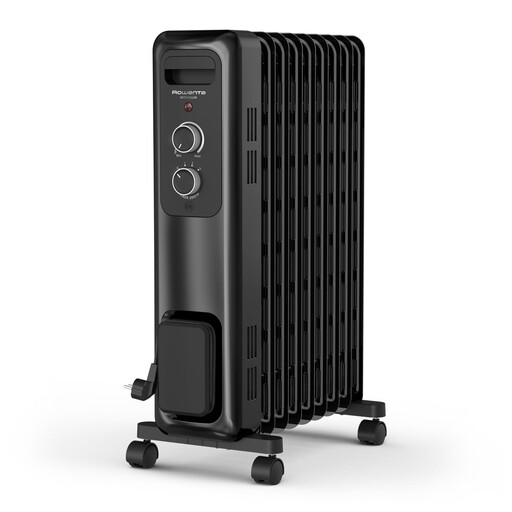
Rowenta Intensium Ultra BU2420 oil-filled radiator

Rowenta Intensium Ultra BU2420

For extra heat with adjustable output. Before setting it up, check the required clearance from flammable materials.

2000 W, three heat settings, adjustable thermostat and eight fins. With castors and tip-over and overheat protection.

According to the product description, connect it to an earthed socket and keep it at least one metre away from flammable materials.

View at Joybuy
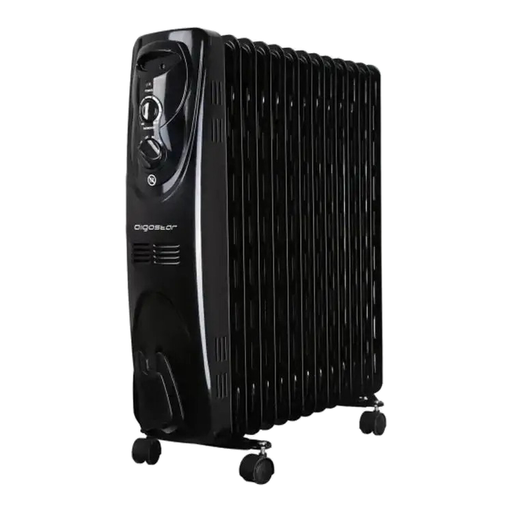
Aigostar oil-filled radiator with 13 fins

Aigostar oil-filled radiator with 13 fins

An option if you’re looking for several heat settings and a portable heater. Follow the guidance on indoor use.

Three heat settings up to 2500 W and thermostatic control. With four castors, a carry handle, and tip-over and overheat protection.

According to the product description, don’t cover it while in use or use it outdoors or near a bath, shower or swimming pool.

View at Joybuy
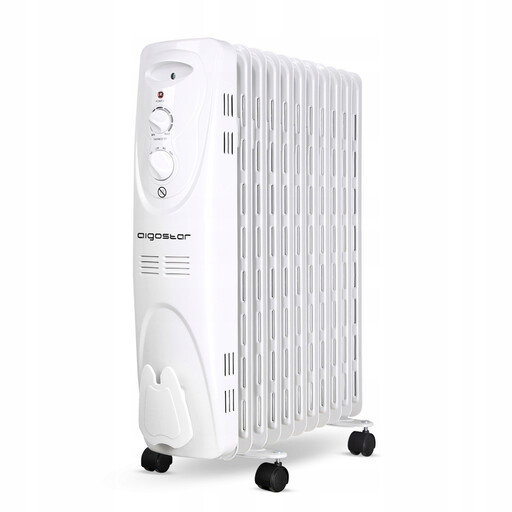
Aigostar oil-filled radiator with 11 fins and 2300 W output

Aigostar oil-filled radiator with 11 fins, 2300 W

For extra heat with adjustable output. Check the manufacturer’s guidance against the condition of your room and how long you plan to use it.

Three heat settings of 1000, 1300 and 2300 W, plus an adjustable thermostat. Dimensions: 530 × 280 × 640 mm. With castors, cable storage, and tip-over and overheat protection.

According to the product description, it’s intended only for well-insulated enclosed spaces or occasional, short-term heating. Don’t cover it or use it alongside other high-powered appliances on the same socket.

View at Joybuy
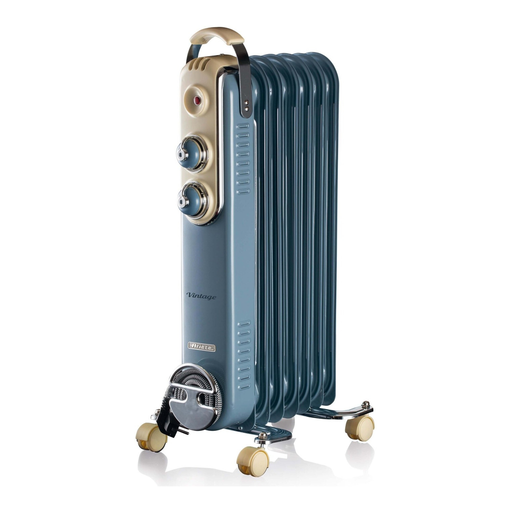
Ariete Vintage oil-filled radiator, 1500 W, seven fins and three heat settings

Ariete Vintage oil-filled radiator, 1500 W, 7 fins, 3 heat settings, blue

An option if you want three heat settings for extra warmth. Make sure you have a stable, level surface for it.

1500 W and three heat settings. Dimensions: 33 × 12 × 67 cm. The description lists overheat protection and automatic shut-off.

Don’t cover it while in use and keep it away from flammable materials.

View at Joybuy
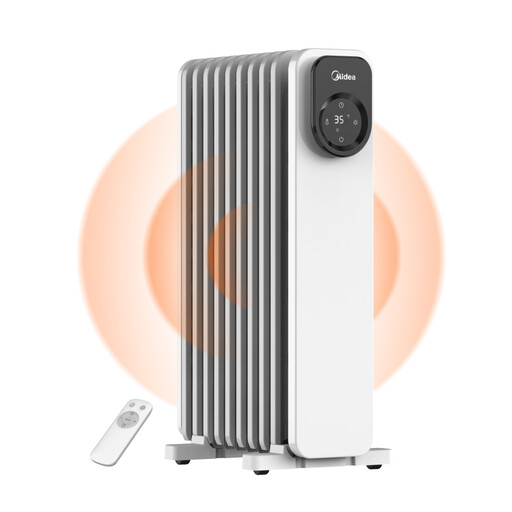
Midea NY2009-24UR oil-filled radiator, 2000 W, with remote control

Midea NY2009-24UR oil-filled radiator, 2000 W

If you want to adjust the settings from your desk, the remote control and touchscreen are useful features to consider.

2000 W, nine fins, four operating modes, thermostat control, remote control and LED touchscreen. The description also lists tip-over and overheat protection.

According to the product description, it’s intended for well-insulated rooms or occasional use. Keep it at least one metre away from flammable materials; commercial use is not permitted.

View at Joybuy

Frequently asked questions

How can I safely position an oil-filled radiator beside my desk?

Choose a clear, stable spot and plan a suitable route for the cable. Check the safety clearances and connection requirements in the manual for your specific model. Hot surfaces and obstructed placement remain risks that an automatic shut-off won’t eliminate.

How can I estimate the extra electricity costs?

For a rough estimate, multiply the output in kilowatts by the planned running hours and your price per kilowatt-hour. This assumes continuous operation at the selected setting; thermostat cycles and actual usage time will affect consumption.

Do I need to top up or change the oil in an oil-filled radiator?

According to the manufacturer, the oil system in the Tristar KA-5103 is sealed and the oil doesn’t need changing. Don’t assume the same applies to other models, and don’t open a heater for supposed maintenance.

Can I put a broken oil-filled radiator in my household rubbish?

No. The German Environment Agency explains that waste electrical equipment must be collected separately. A local collection point or recycling centre may be able to take it.

What are my rights if the heater develops a fault?

In Germany, the retailer is responsible for the statutory warranty when goods are faulty; a guarantee is separate and voluntary. The Consumer Advice Centre explains that the retailer covers the necessary costs of putting things right, whether through repair or replacement.