What should you look for when buying?
First decide whether you want to warm just your seat or the whole living room. You can then weigh up warm-up time, controls, electricity consumption and the space available.
| Priority |
What to check when buying |
Who it matters to |
| Warmth during long work sessions |
Compare the thermostat, heat settings and planned warm-up time for the specific model. |
If I spend a long time at my desk, adjustable warmth matters more to me than an instant burst of heat. Around 33% of consumers prioritise sustained warmth at their desk. |
| Heating needs in the living room |
Use the rated power and any stated room volume only as comparison figures for the exact model variant. |
In a large living room, I want to know whether a supplementary heater will meet my actual heating needs. Around 20% of consumers prioritise suitability for the room. |
| Ongoing electricity costs |
Calculate the cost for your tariff: power in kW × actual operating hours × unit rate in €/kWh. |
If I plan to run the appliance for longer periods, I want to weigh up the costs using my electricity tariff beforehand. Around 27% of consumers put ongoing electricity costs first. |
| A safe place to put it |
Check the space required, cable routing and clearances stated in the instructions; keep combustible items away. |
If the radiator is near my desk, I need enough space and safe clearance from paper and furniture. Around 20% of consumers prioritise a practical, safe location. |
Oil-filled radiators at Joybuy
This selection includes oil-filled radiators for portable supplementary heat, such as at your desk. For models described as suitable for well-insulated rooms or occasional use, check that this limitation suits your intended use.
 No image available
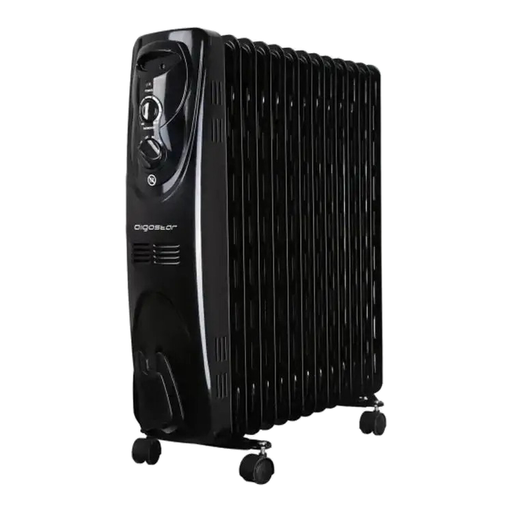
Aigostar oil-filled radiator with 13 fins
For longer periods at your desk, the thermostat and three heat settings let you adjust the warmth to suit your needs.
Specifications include 2,500 W, 13 fins, castors and a carry handle.
The description says it continues to give off heat after being switched off.
View at Joybuy
 No image available
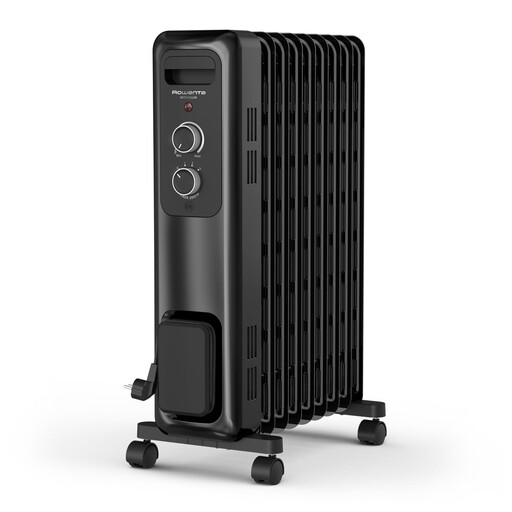
Rowenta Intensium Ultra BU2420 oil-filled radiator
For longer work sessions, you can use the thermostat and three power settings to adjust the warmth.
Specifications include 2,000 W, eight columns and integrated castors.
The description says it continues to give off heat after being switched off.
View at Joybuy
 No image available
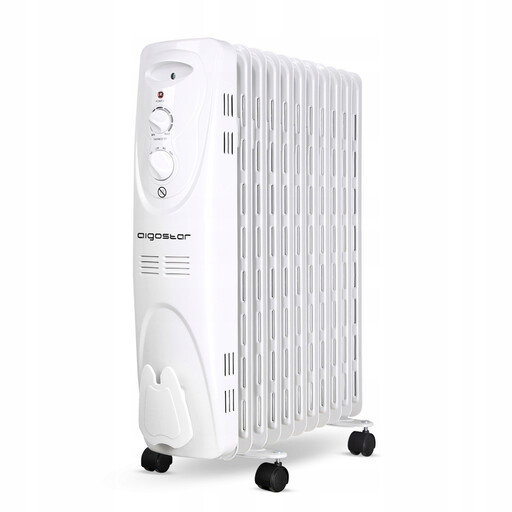
Aigostar oil-filled radiator with 11 fins, 2,300 W
Three heat settings and an adjustable thermostat provide options for controlling supplementary heating.
Specifications include 2,300 W, overheat and tip-over protection, and four castors.
According to the description, this model is intended for well-insulated rooms or occasional, short-term heating.
View at Joybuy
 No image available
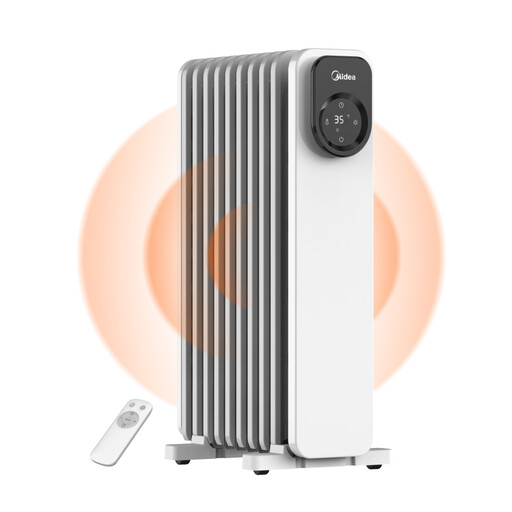
Midea NY2009-24UR oil-filled radiator
The thermostat, four modes and remote control give you options for adjusting the warmth at your desk.
Specifications include 2,000 W, nine fins, an LED touchscreen, and overheat and tip-over protection.
According to the description, this model is intended for well-insulated rooms or occasional use.
View at Joybuy
 No image available
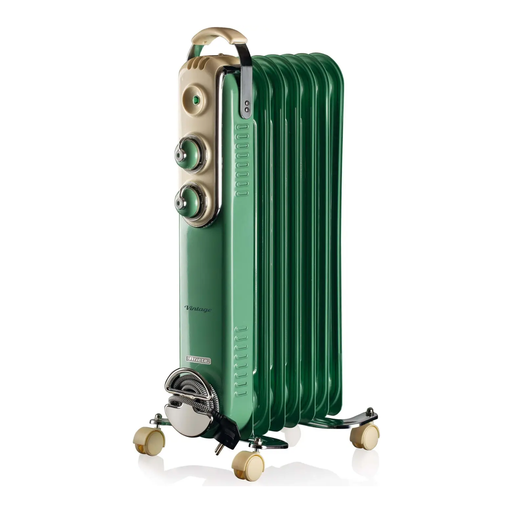
Ariete Vintage oil-filled radiator, 1,500 W, seven fins
Three heat settings let you choose the level of portable supplementary warmth for your living space.
Specifications include 1,500 W and seven fins; a handle and four swivel castors make it easier to move.
View at Joybuy
Frequently asked questions
Can I tell from the wattage whether an oil-filled radiator will warm my large living room?
No. The wattage alone does not tell you what temperature the appliance will reach in your room or with your level of insulation. Decide whether you need supplementary heat just at your desk or warmth for the whole room, and treat stated room volumes as manufacturer figures for the specific model.
How should I position and maintain an oil-filled radiator at my desk?
Place the appliance on a stable surface, leaving the clearances specified in its instructions; keep paper, curtains and furniture away from hot surfaces. Check the cable and plug for damage, and let hot parts cool before touching or moving the radiator. Electrical Safety First recommends following the safety instructions for the specific appliance. For the Tristar KA-5103, the manufacturer describes a sealed oil system that does not need to be changed; do not assume this applies to other models without checking.
How do I calculate running costs?
Multiply the actual power drawn in kW by the operating hours and your unit rate in €/kWh. If it runs continuously at full power, for example, 2 kW for one hour uses 2 kWh; the thermostat switching the appliance off will affect actual consumption.
What should I look for when buying an electric heater in Germany?
Check the exact model name, the manufacturer’s information, the CE marking and German-language instructions with safety warnings. The Bundesnetzagentur lists these as market surveillance criteria; the CE mark alone is not an independent safety certification. Keep the exact model name and seller details in case you have questions or need to make a warranty claim.
Does an electric oil-filled radiator need an EU energy label?
Electric local space heaters are exempt from the energy labelling rules for this product group, as explained by the European Commission. However, ecodesign requirements also apply to electric local space heaters; the Commission states that the revised rules began to apply on 1 July 2025.


