If you’re choosing a cereal bar for the journey or your visit to Oktoberfest and want to keep an eye on fat content, first compare the nutrition information per 100 g, then check the amount per bar. For the chocolate varieties without added sugar compared here, REWE and EDEKA list 7,6 to 9,4 g of fat per 100 g; according to EDEKA, the classic GUT&GÜNSTIG chocolate bar contains 13,9 g. However, ‘no added sugar’ tells you nothing about the ingredients and allergens, or whether the portion size is right for you.
Who is this comparison for?
Visitors comparing fat content
You want to take a cereal bar with you for the journey or while you’re out and about, and you’re particularly interested in fat per 100 g. The amount per bar is only useful as a second step, because the bars being compared come in different sizes.
Shoppers looking to avoid added sugar
You’re looking for a chocolate variety with no added sugar and want to know what else is in the recipe. As well as checking ‘of which sugars’, look at the ingredients and, where relevant, the information on polyols.
Anyone buying for people with dietary requirements
If you’re buying bars for several people, cereal ingredients, milk or peanuts may affect your choice. Always check the ingredients and allergen information on the specific pack.
What should you look for when buying?
For a snack on the go, start by comparing the fat content using the same measure. Then decide which bar suits your plans by checking its recipe, allergens and individual portion size.
| Criteria |
What to check before buying |
Who it matters to |
| Fat content |
Compare fat per 100 g within the same product type, then check the amount per bar. |
If I mainly want to keep my fat intake lower, I need to compare products using the same measure rather than judging by the product name. Around 36% of consumers put this comparison first. |
| Added sugar |
Check ‘of which sugars’, the ingredients and, where relevant, polyols separately. |
A bar with no added sugar is only right for me if I also take the rest of its recipe into account. This is a priority for around 29% of consumers. |
| Ingredients and allergens |
Check the highlighted allergens and any ‘may contain’ warnings on the specific pack. |
If I’m taking bars for other people, I need to know which ingredients matter to them. Checking ingredients and allergens is a priority for around 21% of consumers. |
| Individual portion |
Check the grams per bar, number of bars and nutrition information per portion. |
For the journey, I want to know how much is in an individual bar and how many to take with me. Around 14% of consumers prioritise planning their portions. |
Common comparison mistakes
-
Assuming ‘lower in fat’ means ‘low fat’
A lower fat content than another bar is only meaningful in relation to that comparison. On its own, it says nothing about sugar, energy or the rest of the recipe.
Check the actual fat content per 100 g rather than relying on terms such as ‘Free’ or ‘no added sugar’.
-
Comparing only the amounts per bar
A 20-g bar and a 25-g bar are different portion sizes. A lower amount per bar may therefore be partly down to the smaller size.
Compare per 100 g first, then check how much your planned portion actually contains.
-
Choosing ‘no added sugar’ without checking the ingredients
The varieties with no added sugar included in this comparison still list sugar content. Some recipes also contain sweeteners or polyols.
If this distinction matters to you, read the nutrition information and ingredients list together.
-
Overlooking allergens when buying for a group
The varieties considered here include cereals containing gluten, milk and peanuts. Which allergens are present depends on the specific variety.
Before sharing, check the current pack, including any ‘may contain’ warnings, rather than relying on the brand name or product photo alone.
Brands to help you compare
Corny
The Corny Free varieties considered here include chocolate options with no added sugar. The individual recipes and portion sizes are key when choosing between them.
- REWE lists 8,8 g of fat per 100 g for Corny Free White Chocolate and 9,4 g for Corny Free Chocolate.
- For the Corny Free varieties considered here, you should check the ingredients and allergens as well as the fat content.
ja!
The ja! chocolate cereal bar with no added sugar included here is another chocolate option to consider when comparing nutrition information.
- REWE lists 7,6 g of fat per 100 g and 1,9 g per 25-g bar.
- According to the product information available, the recipe contains sweeteners and polyols. Remember to check the allergens too.
GUT&GÜNSTIG
The chocolate cereal bars considered here include a classic variety and one with no added sugar.
- EDEKA lists 9,1 g of fat per 100 g for the variety with no added sugar and 13,9 g for the classic chocolate bar considered here.
- Check the exact variety and its ingredients before buying; the values for these two recipes are not interchangeable.
Golden Bridge
The peanut cereal bar considered here offers a different flavour option if low fat content isn’t your main priority.
- ALDI SÜD lists 11,7 g of protein and 8,3 g of fibre per 100 g for this peanut variety.
- ALDI SÜD lists 24,7 g of fat per 100 g and notes that nutritional values may vary depending on the supplier.
Cereal bars at Joybuy
This selection includes Corny cereal bars for snacking on the go, including smaller Corny Free portions, Haferkraft Zero varieties and a chocolate and banana bar. Check the information on the individual pack before making your choice. For two of the varieties in particular, compare the pack contents before buying.
 No image available
Corny Haferkraft Zero Cocoa cereal bar
A cocoa variety if you’re looking for a cereal bar to enjoy on the go. Compare the pack contents and grams per bar before buying, as the portion size information differs.
View at Joybuy
 No image available
Corny Haferkraft Zero Peanut Butter Oat, 12 × 50 g
A peanut and oat option for shoppers who prefer this flavour to a chocolate bar. The product title specifies twelve bars, each weighing 50 g; check the latest ingredients and allergen information when choosing.
View at Joybuy
 No image available
Corny Free White Chocolate, 6 × 20 g
The 20-g individual portion makes it easy to compare with bars of other sizes. REWE lists 8,8 g of fat per 100 g and 1,8 g per bar for Corny Free White Chocolate. Also check the ingredients and allergens on the current pack.
View at Joybuy
 No image available
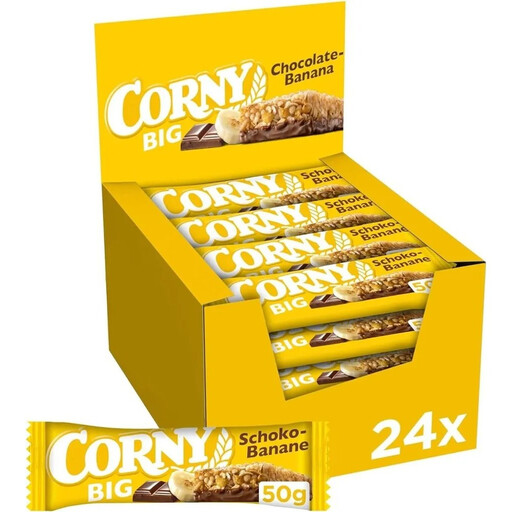
Corny Big Chocolate Banana cereal bar
A chocolate and banana option if this flavour matters more to you than choosing one of the varieties with no added sugar considered here. Check the pack contents and individual portion before buying, as different information is available.
View at Joybuy
Frequently asked questions
Is a cereal bar with less fat than another automatically ‘low fat’?
No. Having less fat than another bar doesn’t, by itself, mean that a product can be described as ‘low fat’. Check the fat content per 100 g and consider the other nutritional information separately.
Does ‘no added sugar’ mean ‘sugar-free’ for cereal bars?
No. The varieties with no added sugar considered here still list sugar content; some also contain sweeteners or polyols. Check ‘of which sugars’ and the ingredients list for the variety in question.
Should I compare fat per bar or per 100 g?
Use both figures for different purposes: per 100 g lets you compare varieties on the same basis, while per bar shows the amount in an individual portion. The products considered here include, among others, 20-g and 25-g portions.
What should I check before taking a bar with me?
Check the ingredients, allergens, ‘may contain’ warnings, individual portion and storage instructions on the current pack. If you’re taking bars for other people, the specific variety matters more than general information about the brand.


