If you prep several portions
Compare your usual quantity of olives per batch with the instructions for the specific appliance. Available worktop space and operating instructions may also matter if you’re preparing several batches.


Choose a chopper based on how much you actually process at a time and how easily you can control the texture you want. A manual chopper may suit small batches when you don’t want to rely on a plug socket; a compact electric model can be handy for repeated smaller batches. A larger bowl is worth considering if it suits your usual quantities and the space you have available. Bowl capacity alone doesn’t tell you how many olives you can process or what the result will be.
Compare your usual quantity of olives per batch with the instructions for the specific appliance. Available worktop space and operating instructions may also matter if you’re preparing several batches.
If you want to check the texture as you go, look for a model that lets you work in stages. Tefal describes this feature for the transparent bowl of the K13304.
Weigh up storage space and cleaning against the effort of using a manual model. Tefal and GEFU both offer manual choppers. With an electric model, you’ll also need space for the appliance and its accessories.
A good fit if: You want to process smaller portions without a plug socket and check the texture after each pull. Tefal lists a transparent 500-ml bowl for the K13304; GEFU gives the SPEEDWING 13600 a capacity of 800 ml.
The trade-off: Each additional pull takes manual effort. Both models have specific care instructions for the pull-cord lid.
A good fit if: You regularly prepare smaller quantities and have access to a plug socket. Kenwood lists a 500-ml bowl and two speed settings for the Easy Chop CHP61.100WH; KitchenAid lists an 830-ml bowl and pulse operation for the 5KFC3516EOB.
The trade-off: The motor and accessories need storage space. Speed settings alone don’t tell you how chunky the olives will be.
A good fit if: You regularly prepare larger quantities that suit the model and have space for a bigger appliance. Rommelsbacher lists a 1.5-litre glass bowl for the MZ 500.
The trade-off: A large bowl isn’t automatically practical for chopping just a few olives. Rommelsbacher recommends pulses of 2–3 seconds or a maximum of 20 seconds of continuous operation for the MZ 500.
If you’re preparing several meals, start by deciding how much you usually process at a time and how chunky you want the olives. You can then compare ease of use, space requirements and cleaning.
| Priority | What to check when buying | Who it matters to |
|---|---|---|
| Batch size | Compare the quantity you usually process with the filling instructions and operating details for the specific model. Don’t assume bowl capacity equals an approved quantity of olives. | If I’m preparing several meals, I want to get through my usual amount of olives in a practical number of batches. Around 36% of consumers say batch size is their top priority. |
| Texture | Check whether you can see the contents and whether the appliance can be operated in separate pulls or pulses. | If I want chunky olives rather than a dip, I want to be able to check the texture as I go. Around 29% of consumers say texture is their top priority. |
| Cleaning | Check the care instructions for the bowl, blades and lid separately. If you’re processing several batches, factor in cleaning the parts that come into contact with food. | If I use the appliance repeatedly, I want to know how to clean each part. Around 21% of consumers say cleaning is their top priority. |
| Space and power | Compare the appliance’s dimensions with the space you have for using and storing it, and consider whether a manual model suits the way you’ll use it. | If my kitchen is short on space or I want to work without a plug socket, the appliance needs to suit my storage space and routine. Around 14% of consumers say space or not needing electricity is their top priority. |
Figures such as 500 ml or 1.5 l describe the bowl, but don’t guarantee a particular quantity of ingredients per batch or a certain result when chopping just a few olives.
Use your usual portion as a guide and check the filling instructions for the specific appliance.
The pull-cord lids on the Tefal K13304 and GEFU SPEEDWING 13600 have different care instructions from the other parts listed for each model.
Check the instructions for the bowl, blades and lid separately before choosing a model.
Despite the MZ 500’s 1.5-litre bowl, Rommelsbacher recommends pulses of 2–3 seconds or a maximum of 20 seconds of continuous operation.
Factor the operating and rest instructions for your chosen model into your routine.
Kenwood describes the Easy Chop CHP61.100WH as a compact electric chopper with a 500-ml bowl for smaller quantities, dips and sauces.
According to Tefal, the manual 5-second chopper K13304 has a transparent 500-ml bowl and allows you to chop in stages.
GEFU describes the electricity-free SPEEDWING 13600 as having a capacity of 800 ml and several attachments for different food-preparation tasks.
According to Rommelsbacher, the electric MZ 500 has a 1.5-litre glass bowl. It’s a larger option if the batch size and available worktop space suit you.
KitchenAid describes the 5KFC3516EOB mini chopper as having an 830-ml bowl for smaller quantities, dips and sauces.
This selection includes manual, compact electric and larger electric choppers for different food-preparation routines. Before using a model for olives, check its filling and usage instructions.
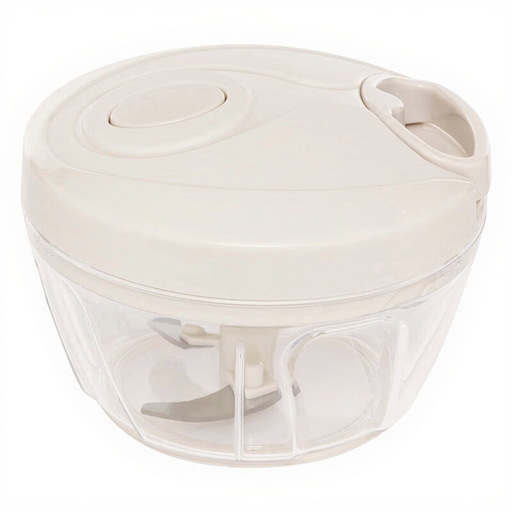 No image available
The manual pull mechanism may suit you if you want to work without electricity and watch the texture through the transparent bowl.
 No image available
The two glass bowls, with capacities of 0.6 L and 2 L, give you different bowl sizes for food preparation. According to the product details, the bowls and lids are not heat-resistant or microwave-safe. Avoid temperature changes of more than 50 °C.
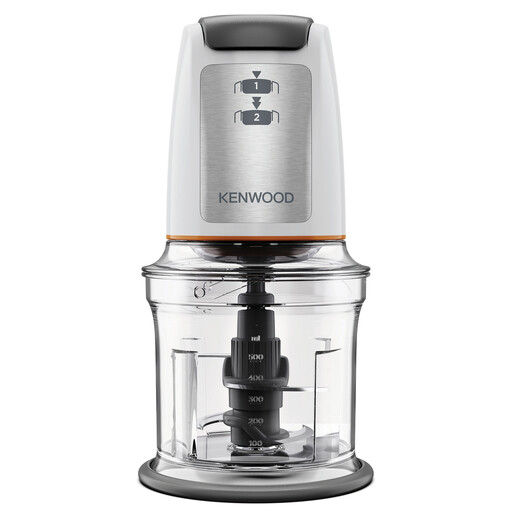 No image available
The 0.5-L bowl and two speed settings make this a compact electric option for preparing smaller quantities in repeated batches. Bowl capacity doesn’t tell you how many olives you can process at a time.
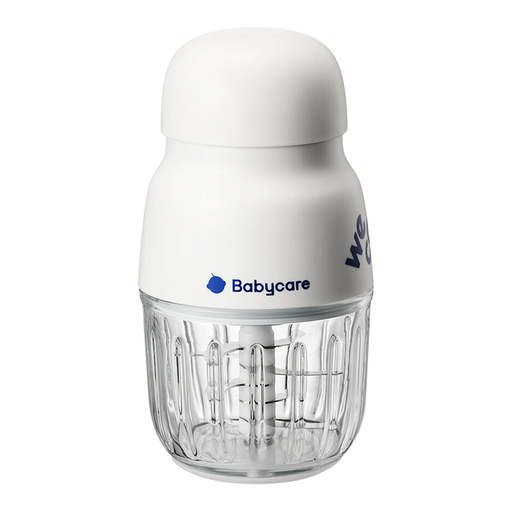 No image available
This electric food processor is one option for food preparation. Before using it for olives, check the usage instructions and consider whether the batch size suits your needs.
 No image available
The 2-L glass bowl is listed for food preparation using a larger bowl. According to the product details, continuous operation is limited to a maximum of 40 seconds, followed by a rest of at least 2 minutes. After three cycles, a cooling period of 15 minutes is recommended. Take care when cleaning and assembling the sharp blades.
No. Bowl capacity alone doesn’t tell you how many olives you can process per batch. Kenwood lists a capacity of 500 ml for the CHP61.100WH, while Rommelsbacher lists 1.5 l for the MZ 500. Also check the filling and usage instructions for your chosen model against the quantity you plan to process.
Not necessarily. Tefal says the lid of the K13304 should be wiped clean; GEFU also excludes the pull-cord lid of the SPEEDWING 13600 from dishwasher cleaning. Check the instructions for the specific appliance.
Whether a prepared dish is perishable also depends on its other ingredients. For perishable foods, the German Federal Institute for Risk Assessment recommends storing them covered in the fridge at between 2 °C and no more than 7 °C. This is food-safety advice, not a guarantee of how long a particular recipe will keep.
If you buy from a retailer, your statutory rights relating to the goods are against the seller; a voluntary manufacturer’s guarantee is separate. Under § 438 BGB, the limitation period for a typical new item purchased is generally two years from delivery. Different rules may apply in specific cases.
No. GS and CE are different marks. The German Federal Institute for Occupational Safety and Health distinguishes the GS mark from CE; according to information from the European Union, CE rules apply to certain product groups. The requirements a particular appliance must meet depend on the product rules that apply to it. A mark doesn’t prove a particular chopping performance.