
Lieferung heute & morgen

Qualitätsgarantie

Willkommens-Angebote freischalten: KOSTENLOSE Lieferung | Bis zu 80 % RABATT | Kostenlose 30-Tage-JoyPlus-Testphase
App herunterladen
By Joybuy, your Product Recommendation Officer
The selection of olive oils on the supermarket shelf can be overwhelming. Different origins, quality grades, and price ranges often make the decision difficult. Which oil is best for salads, which for cooking, and how can you recognise good quality?
This guide is designed to offer you clear direction. Instead of overwhelming you with marketing promises, we focus on objective criteria and facts. Our goal is to help you find the perfect extra virgin olive oil for your kitchen and your palate.
To make an informed decision, three aspects are particularly important: the quality grade, the origin, and the intended use.
The term extra virgin olive oil signifies the highest quality grade. According to EU regulations, it is obtained directly from olives using solely mechanical means. A crucial feature is cold pressing or cold extraction, where the processing temperature does not exceed 27°C (80.6°F). This gentle process ensures that the valuable aromas and nutrients of the olive are preserved. Look for this designation on the label, as it is a fundamental mark of quality.
The origin has a significant impact on the taste of the olive oil. Seals can help verify its quality and origin.
Not every olive oil is equally suited for every purpose.
Based on these objective criteria, we have compiled a selection of products that cover different needs and applications.
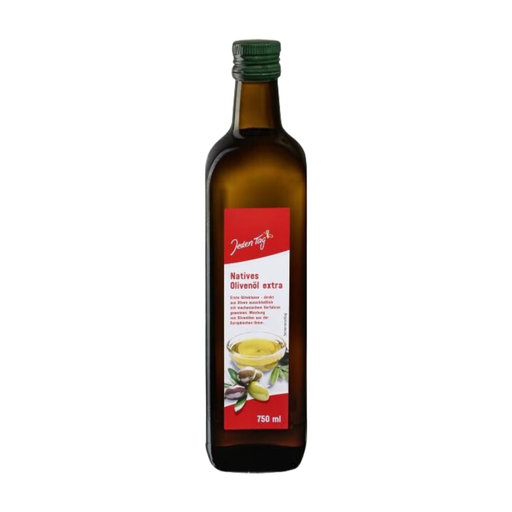
Why it stands out: This 'extra virgin' grade olive oil is declared as a blend of olive oils from the European Union. It is obtained directly from olives using exclusively mechanical methods. With its 750 ml bottle, it provides a solid foundation for daily kitchen use.
Advantages:
Who is it for? For budget-conscious consumers looking for a reliable everyday oil for a variety of dishes and who use it frequently.
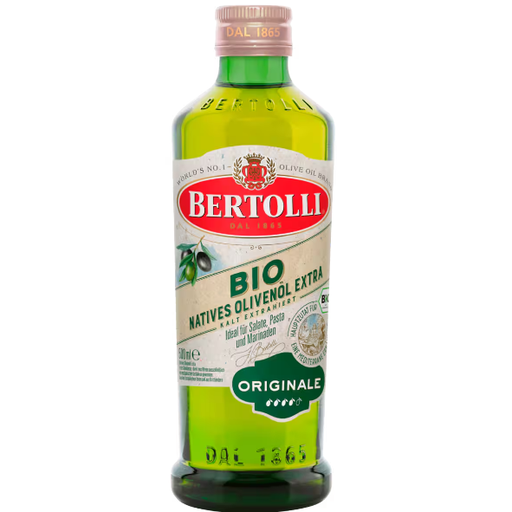
Why it stands out: This extra virgin olive oil from Bertolli carries the organic seal, meaning it comes from certified organic farming. The Bertolli brand is well-known to many consumers and stands for consistent quality in Mediterranean products.
Advantages:
Who is it for? For health-conscious consumers who are specifically looking for an organic olive oil for their daily cooking and prefer a well-known brand.
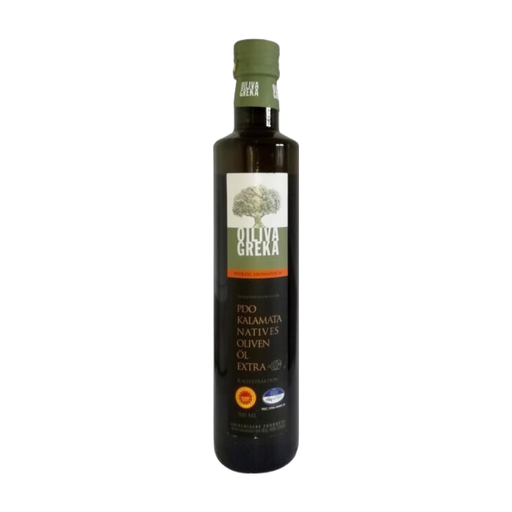
Why it stands out: This oil is distinguished by its Protected Designation of Origin (PDO Kalamata). This means it is produced exclusively from olives from the famous Kalamata region in Greece. Such oils are known for their specific, often intensely fruity flavour profile.
Advantages:
Who is it for? For fans of Greek cuisine and quality-focused connoisseurs who appreciate an authentic Greek olive oil with a traceable origin and a special taste.
This selection represents just a small sample of the available products. If you are looking for different bottle sizes, specific regions of origin, or more organic products, it's worth taking a look at our broader assortment.
Discover more products in our Virgin Oil category.
'Extra virgin olive oil' is the highest quality grade for olive oil as defined by the EU. It must be obtained directly from olives and solely through mechanical means (like pressing or centrifugation) at low temperatures. Additionally, it must meet specific chemical parameters, such as a very low acidity level, and have no sensory defects.
Yes, extra virgin olive oil can be used for cooking. Its smoke point is around 180°C (356°F), which is sufficient for most common cooking methods like sautéing, stewing, and gentle frying. However, at very high temperatures, such as those reached during high-heat searing or deep-frying, the delicate aromas can dissipate and undesirable compounds can form.