For cooks with limited worktop space
If you work in a single cooking space, consider the bowl, how the appliance operates and where you’ll store it afterwards as a whole. Tefal and Kenwood offer a manual model and an electric mini chopper.


For the occasional small batch, a compact chopper that’s easy to store and gives you control as you chop is a sensible place to start. A larger appliance may be a better fit if you regularly prepare bigger quantities or work with other ingredients, and have room for it. Compare your usual recipe quantity with the bowl capacity, check how each individual part should be cleaned, and choose based on the texture you want rather than wattage or stated capacity alone.
If you work in a single cooking space, consider the bowl, how the appliance operates and where you’ll store it afterwards as a whole. Tefal and Kenwood offer a manual model and an electric mini chopper.
If you want to control how finely everything is chopped as you work, a visible bowl and adjustable operation are worth considering. Tefal says you can pull the cord more times to change the chopping texture; Kenwood lists two speed settings for its model.
If you often process several ingredients or larger portions, weigh up the bowl size, cleaning requirements and extra space the appliance will take up. Gaumenfreundin’s tapenade recipe suggests using a food processor or hand blender; Rommelsbacher describes the MZ 500 as having a 1.5-l bowl.
First check that the appliance and bowl will suit your cooking space and usual recipe quantities. Then choose based on the texture you want and how much cleaning is involved. For parts that come into contact with food, Regulation (EC) No 1935/2004 is also relevant; the European Commission cites this legislation for food contact materials.
| What matters when buying | What to look for | Who is this important to? |
|---|---|---|
| Worktop space and storage | Check the dimensions of the complete appliance, as well as the space needed for operation and the cable. Bowl capacity alone tells you nothing about the appliance’s overall dimensions. | If I only have one cooking space, I want to know whether the appliance and accessories will be easy to store without the bowl being too small for my recipe. Around 31% of consumers put worktop space and storage first. |
| The texture you want | Look for adjustable controls and check whether you can see inside as you chop. Tefal says you can pull the cord more times to change the chopping texture; Kenwood lists two speed settings for the CHP61.100WH. | If I prefer my olives chunky, I want to keep an eye on the progress rather than assume wattage alone will determine the result. Around 31% of consumers say texture matters most to them. |
| Cleaning | Check the care instructions for the bowl, blade and lid separately. Tefal says the bowl and blade of the K13304 are dishwasher-safe, but not the lid; WMF lists removable, dishwasher-safe parts for the KÜCHENminis chopper. | If I want to minimise hand-washing after preparing food, I need to know the instructions for each part. Around 23% of consumers prioritise cleaning. |
| Portion size and other uses | Compare your usual recipe quantity with the bowl capacity and think about which other ingredients you’ll actually want to process. Kenwood lists a 500 ml bowl for the CHP61.100WH, while Rommelsbacher lists 1.5 l for the MZ 500; these are bowl capacities, not confirmed tapenade quantities. | If I regularly prepare larger batches or other ingredients, a larger appliance could be useful, provided I have room for it. Around 15% of consumers say extra capacity and uses matter most to them. |
The stated capacities of 500 ml for the Kenwood CHP61.100WH and 1.5 l for the Rommelsbacher MZ 500 don’t prove that both appliances will process the same small quantity of olives equally well.
Compare your usual portion with the capacity and usage guidance for the specific model.
The Tefal K13304 has different care instructions for the bowl and blade, on the one hand, and the lid, on the other.
Check the instructions for your chosen model to find out how to clean each part.
According to the manufacturer, the lid of the Tefal K13304 must be wiped clean by hand.
F.A.Z. Kaufkompass recognised the Rommelsbacher MZ 500 in a general chopper test, not in a dedicated comparison of small tapenade portions.
Consider the result in the context of the chopper tested, and also take your portion size, available space and cleaning requirements into account.
Manual choppers for chopping in stages without electricity; the K13304 model was considered.
Electric Easy Chop mini choppers for smaller quantities; the CHP61.100WH model was considered.
The 0.3-l KÜCHENminis chopper is aimed at shoppers short on space who need a smaller bowl.
The MZ 500 is a larger electric option with a 1.5-l glass bowl, also suited to other food preparation.
The MMR08A1 universal chopper is an electric option with a pulse switch.
This selection includes manual and electric choppers, as well as a food processor for making tapenade and preparing other ingredients.
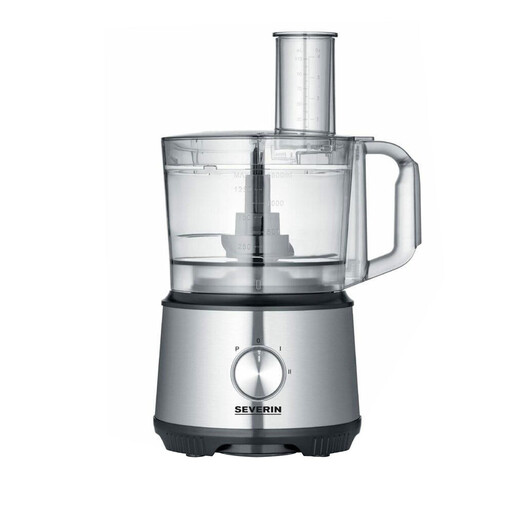 No image available
An option if you want to prepare other ingredients and dishes as well as tapenade.
The bowl holds 1.5 l and includes an emulsifying disc for sauces. The description also lists a chopping function.
Unplug before cleaning or changing accessories; don’t immerse the motor base, cable or plug in water.
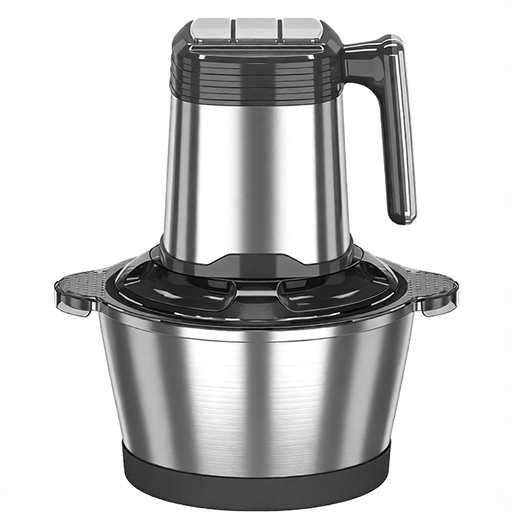 No image available
A larger electric option if you’d also like to prepare bigger batches or sauces.
The bowl holds 2 l; the appliance has four blades and three speed settings. The description lists chopping and blending sauces among its uses.
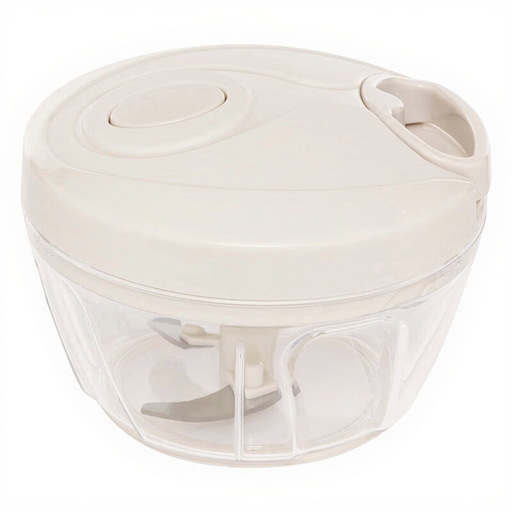 No image available
A manual option if you don’t want to use an electrical socket in your cooking space and want to see inside the bowl.
The pull-cord mechanism works without electricity, and the bowl is transparent. The description lists herbs, nuts, garlic, onions, salsas and dressings as possible uses.
Operation involves pulling the cord repeatedly.
 No image available
An electric option with a clear glass bowl if you want to watch the contents as you prepare them.
The bowl holds 2 l; the specifications list 300 W, two speeds and four stainless steel blades.
Each operating cycle is limited to 40 seconds, followed by a 2-minute break. The description recommends letting the appliance cool for 15 minutes after three cycles. The blades are sharp; the motor unit must not be immersed in water.
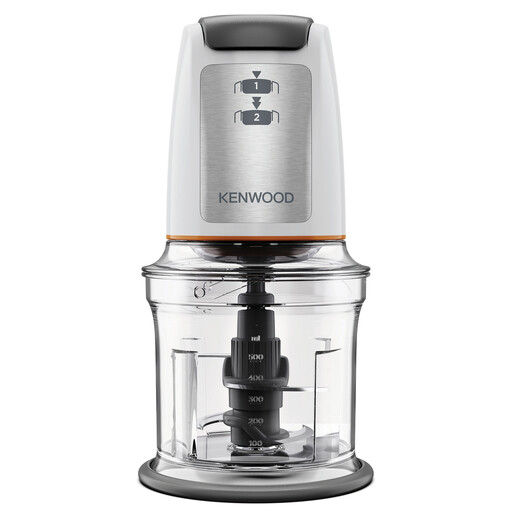 No image available
An electric mini option if you often make smaller dips and want to choose between two speed settings.
The bowl holds 0.5 l; the model has two speed settings and a rated power of 500 W. The description lists dips as a possible use.
Yes. A tapenade recipe from Gaumenfreundin suggests using a hand blender or food processor to chop the olives. It doesn’t tell you what texture your appliance will produce with your quantity, so check the result as you prepare it.
No, it depends on the model and the part. For the K13304, Tefal says the bowl and blade can go in the dishwasher, but the lid must be wiped clean. Always follow the instructions for the model you buy.
Regulation (EC) No 1935/2004 is among the legislation relevant to food contact materials, as the European Commission explains. Check the information for the specific appliance; a general statement about the regulation doesn’t confirm that an individual product listing complies with it.
Not simply because it’s a kitchen utensil. According to Your Europe, CE marking is only required for products covered by harmonised EU rules that explicitly require it. Manual and electric appliances shouldn’t therefore be treated as the same without checking.
If a product is faulty, you have statutory rights against the seller; these are separate from any manufacturer’s warranty. Verbraucherzentrale explains that you can first ask for the issue to be put right, either by repair or replacement.