
Lieferung heute & morgen

Qualitätsgarantie

Willkommens-Angebote freischalten: KOSTENLOSE Lieferung | Bis zu 80 % RABATT | Kostenlose 30-Tage-JoyPlus-Testphase
App herunterladen
Anyone looking to buy omega-3 capsules will find a wide range of fish oil, krill oil and algae oil products. The front of the pack often highlights high milligram values, long-lasting supplies or terms such as “high strength”. However, these details alone are not enough to make an informed purchasing decision. What matters is how much EPA and DHA the product actually contains per daily serving, which ingredients are used and whether it suits your diet.
For many products, this figure refers to the amount of fish oil or algae oil, rather than the omega-3 fatty acids it contains. For example, a product labelled Omega-3 1000 mg might provide 180 mg of EPA and 120 mg of DHA per capsule. Other capsules may contain considerably more EPA and DHA despite having a similar quantity of oil.
So always compare these three figures:
400 softgel capsules may seem like a substantial supply at first glance. However, the number of daily servings is what matters. If you take two capsules a day, for example, a pack of 240 capsules will last 120 days. A smaller product with one capsule a day may be cheaper or more expensive per daily serving, even if the pack size suggests otherwise.
Fish oil and krill oil capsules contain animal-derived ingredients and are generally unsuitable for vegans. Krill oil is also classed as a source of crustaceans and must therefore be considered an allergen. For a vegan diet, algae oil omega-3 is a suitable option. If you would rather not swallow capsules, you could also consider an enriched edible oil such as Becel ProActiv Plant Oil with Omega-3. This product is not a capsule, but a blend of sunflower, rapeseed and linseed oils.
The European Food Safety Authority permits approved nutrition and health claims for certain products only under specific conditions. For normal heart function, a daily intake of 250 mg of EPA and DHA is often cited as a reference value. This is not an individual intake recommendation and does not replace medical advice.
Therefore, check the nutrition table rather than just the front of the packaging. For example, one product may provide 485 mg of EPA and DHA per capsule, while another requires two capsules for a similar daily amount.
Check the ingredients list:
For vegans and vegetarians, algae oil products with a plant-based capsule shell are particularly relevant. If you have allergies, the information provided by the relevant manufacturer should be the deciding factor.
Many omega-3 capsules are taken with water alongside a meal. Follow the usage instructions on the packaging and do not exceed the stated daily dose. Food supplements are not a substitute for a balanced diet.
It is also helpful to have clear information about:
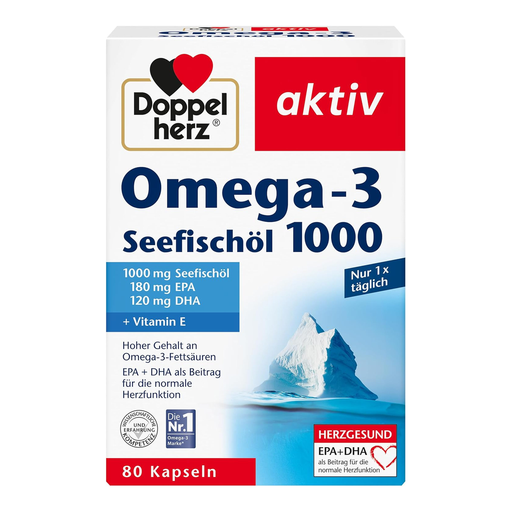
Why this product suits this profile: The recommended daily intake is one capsule. Each serving provides 180,76 mg of EPA and 120,51 mg of DHA, making it easy to fit the dosage into your daily routine.
The table lists EPA and DHA separately. This makes it easier to assess the actual active ingredient content than relying on the “1000 mg” label alone.
80 capsules, one capsule a day, vitamin E and stated content of 301,27 mg of omega-3 fatty acids per serving.
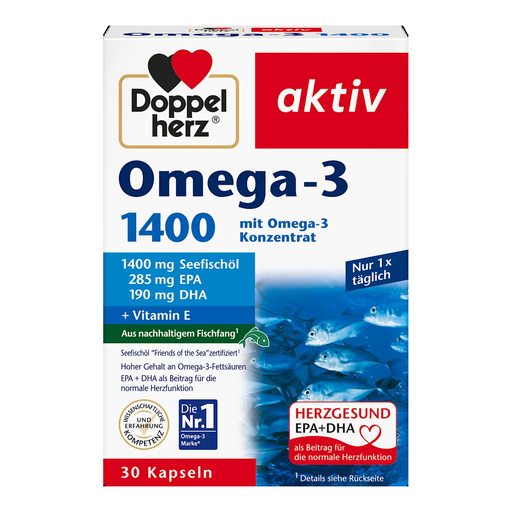
Why this product suits this profile: According to the product information, one capsule contains 285 mg of EPA and 190 mg of DHA. This concentrated format is ideal for people who want to compare the individual values closely.
The EPA-DHA content is stated per capsule, rather than only as the total amount of fish oil concentrate. The ingredients list also specifies gelatine, glycerine and vitamin E.
30 capsules, 285 mg of EPA and 190 mg of DHA per capsule, plus vitamin E as an additional ingredient.
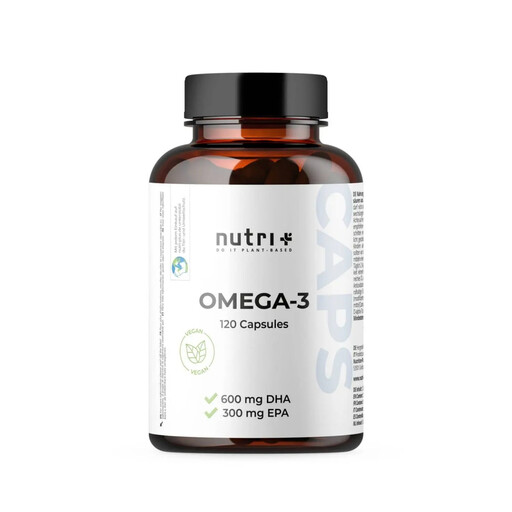
Why this product suits this profile: This product uses algae oil from Schizochytrium sp. and a plant-based capsule shell. According to the product information, two capsules a day provide 600 mg of DHA and 300 mg of EPA.
The source and capsule components are clearly specified. This makes it possible to check whether fish, crustaceans or animal gelatine are excluded.
120 capsules, algae oil as the source, plus 900 mg of EPA and DHA per stated daily serving of two capsules.
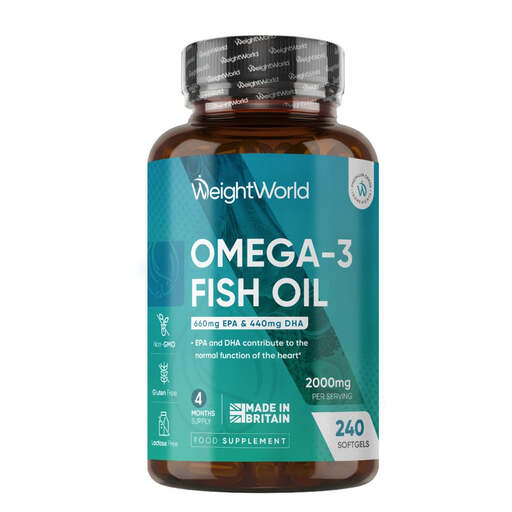
Why this product suits this profile: The daily serving consists of two softgels and, according to the product description, contains 660 mg of EPA and 440 mg of DHA. With 240 capsules, it provides a supply that can be planned over a longer period.
The pack size is considered together with the daily serving: 240 capsules correspond to 120 servings at two capsules a day. The product description also states that it contains fish oil, provides allergen information and has IFOS certification.
1.100 mg of omega-3 fatty acids per daily serving, including 660 mg of EPA and 440 mg of DHA, plus a supply of 240 softgels.
We have put together a complete, regularly updated list of products that fully meet these strict selection criteria and the safety regulations applicable in the EU.
Children’s products should not simply be replaced with lower-dose adult products. Check the stated age limit, dosage form and any additional ingredients. According to the product information, the Doppelherz Active Omega-3 Kids chewable tablets are intended for children aged four and over. One chewable tablet provides 90 mg of EPA, 60 mg of DHA and 5 µg of vitamin D. Flavour, sweeteners and any potential intolerances should be checked before purchase.
For children, during pregnancy or breastfeeding, when taking medication or in the presence of existing medical conditions, it is advisable to consult a doctor or pharmacist.
This depends on your diet, the product and your individual circumstances. For comparison purposes, the total daily amount of EPA and DHA is the key figure. Check the nutrition table and follow the usage instructions stated on the product. If you have health-related questions, your personal dosage should be discussed with a medical professional.
Both sources provide EPA and DHA, depending on the product. Fish oil is unsuitable for vegans and people with a fish allergy. Algae oil omega-3 is a plant-based alternative, although the exact EPA-DHA composition can vary. Krill oil capsules are also animal-derived and contain crustacean ingredients.
The best-before date on the packaging is the decisive factor. Once opened, the capsules should be stored in accordance with the manufacturer’s instructions, in a dry, cool place protected from light. A pack containing many capsules is only economical if it can be used within the stated shelf life and at the appropriate daily dosage.