
Lieferung heute & morgen

Qualitätsgarantie

Willkommens-Angebote freischalten: KOSTENLOSE Lieferung | Bis zu 80 % RABATT | Kostenlose 30-Tage-JoyPlus-Testphase
App herunterladen
Anyone looking to buy an omega-3 supplement will find fish oil, algae oil, krill oil, capsules and even fortified cooking oils on the market. Product names often sound similar, but their actual composition can vary considerably. If you eat little fish in particular, it is therefore worth taking a closer look at the nutritional information.
The omega-3 1000 mg stated on the packaging may refer to the amount of fish oil or algae oil. What matters, however, is how much of this consists of EPA and DHA. For example, a product containing 1000 mg of fish oil may provide 180 mg of EPA and 120 mg of DHA. These figures are more meaningful than the total amount of oil.
400 omega-3 capsules may initially appear to offer good value. For a fair comparison, however, you should calculate the daily serving and the amount of EPA and DHA it contains. Some products recommend one capsule per day, while others recommend two. The concentration per serving also affects how long the pack will last.
Fish oil omega 3 contains fish ingredients, and the capsule shell is often made from gelatine. Krill oil is not suitable for people with a shellfish allergy. Vegan omega-3 from algae oil may be an alternative in this case. You should also check the storage instructions, best-before date and the manufacturer's guidance.
EPA and DHA are the two best-known long-chain omega-3 fatty acids. The quantities should ideally be listed separately on the label. According to the product information, one Sunlife Omega-3 1000 mg capsule provides 180 mg of EPA and 120 mg of DHA. Doppelherz Sea Fish Oil Omega 3 lists 180.76 mg of EPA and 120.51 mg of DHA per serving.
When choosing a product, this means you should compare more than just “1000 mg fish oil”. Look at the specific amount of EPA and DHA per daily serving.
Omega-3 capsules are convenient for daily use and easy to portion. Liquid oil or fortified cooking oil is more suitable for people who want to incorporate a supplement into their meals. With capsules, check whether one or two softgels are intended per day and whether taking them with a meal is recommended.
Do not exceed the dosage stated on the packaging. Food supplements should not be used as a substitute for a balanced and varied diet.
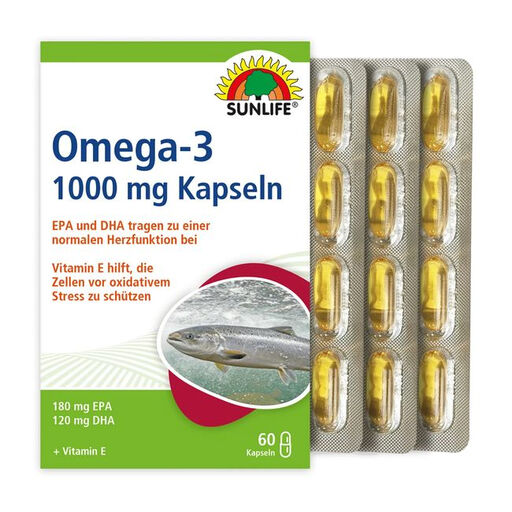
Why this product suits this profile: The capsule is intended for adults and offers a straightforward daily serving with clearly stated EPA and DHA values.
The product information lists not only 1000 mg of fish oil, but also 180 mg of EPA and 120 mg of DHA per capsule.
The product description recommends one capsule daily; vitamin E is listed at 5 mg per capsule.
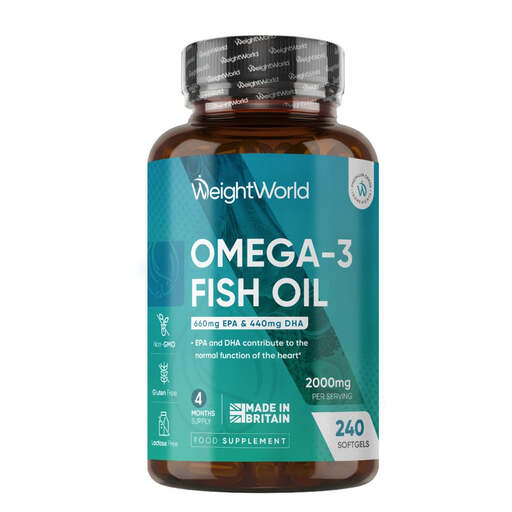
Why this product suits this profile: The product description lists a serving of two softgels containing 2000 mg of fish oil and 1100 mg of omega-3 fatty acids.
EPA and DHA are listed separately: 660 mg of EPA and 440 mg of DHA per daily serving.
According to the description, 240 softgels provide 120 servings; IFOS certification and GMP manufacturing are also mentioned.
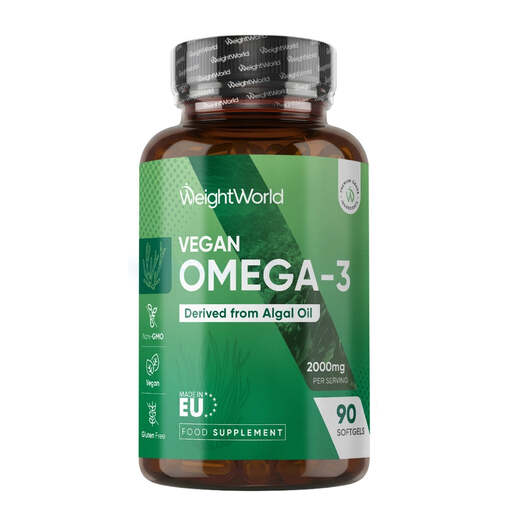
Why this product suits this profile: Algae oil from Schizochytrium sp. provides a plant-based source, and according to the product information, the softgel shell is also plant-based.
The source is stated as marine algae oil; according to the description, it contains no fish, shellfish, gluten or dairy.
The recommended intake is one to two softgels daily; EPA and DHA are listed as components of the algae oil.
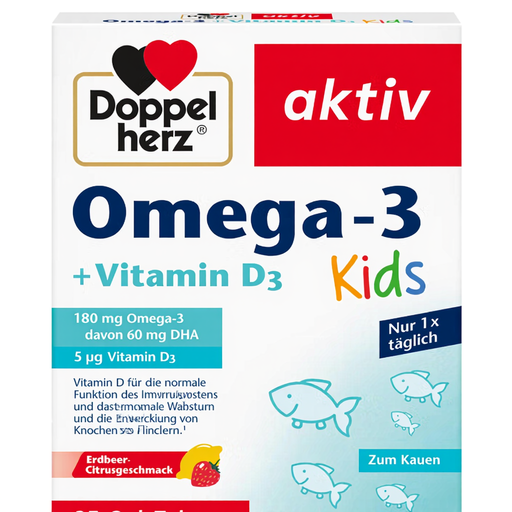
Why this product suits this profile: According to the product description, the chewable tablets are intended for children aged four and over and combine omega-3 with vitamin D.
The age limit, daily serving and quantities are clearly stated: one chewable tablet contains 180 mg of omega-3, 90 mg of EPA and 60 mg of DHA.
According to the product information, one tablet also contains 5 µg of vitamin D and is lactose- and gluten-free.
According to the product description, Becel ProActiv Plant Oil with Omega-3 500 ml combines 59% sunflower oil, 34% rapeseed oil and 7% linseed oil. It can be used for salad dressings, everyday cooking and brief, gentle frying. Each 100 ml contains 92.0 g of fat and 8.7 g of saturated fatty acids. The oil is salt-free and contains vitamin E.
This is not a capsule, so it should not be compared using the same serving logic. It is better suited to households that want to obtain omega-3 fatty acids through their everyday cooking. Once opened, the oil should be stored in a cool place, protected from light and away from heat.
We have put together a complete, regularly updated list of products that fully meet these strict selection criteria and the safety regulations applicable in the EU.
The best-before date is shown on the packaging. Once opened, capsules should be stored in a dry, cool place in accordance with the manufacturer's instructions. Heat, moisture and direct sunlight can affect product quality.
Many products recommend taking them with a main meal. The information on the relevant label is decisive. Do not exceed the recommended daily serving.
There are special products such as omega-3 chewable tablets for children aged four and over. Adult capsules are not automatically suitable for children. Therefore, check the stated age group and, if you are unsure, consult a medical professional.