
Lieferung heute & morgen

Qualitätsgarantie

Willkommens-Angebote freischalten: KOSTENLOSE Lieferung | Bis zu 80 % RABATT | Kostenlose 30-Tage-JoyPlus-Testphase
App herunterladen
Anyone looking to buy Omega-3 capsules will find products containing fish oil, algae oil or krill oil in a wide range of concentrations. The figure “1000 mg” may initially seem clear, but it often refers only to the amount of oil, rather than the actual EPA and DHA content. The recommended daily intake, number of capsules and source of the oil also affect the price per serving.
This buying guide helps you avoid common marketing traps and choose a suitable Omega-3 food supplement for your everyday routine.
A capsule containing 1,000 mg of fish oil does not automatically contain 1,000 mg of Omega-3 fatty acids. What matters is the breakdown into EPA (eicosapentaenoic acid) and DHA (docosahexaenoic acid). In some products, these two fatty acids make up only part of the total oil content.
For a meaningful comparison, the following three figures should be considered side by side:
400 softgels can provide a long-lasting supply. However, whether the pack offers good value depends on the recommended intake. A pack will run out much sooner if you take two capsules a day rather than one. It therefore makes sense to calculate the price per daily serving, rather than simply comparing pack prices.
Traditional fish oil capsules are unsuitable for people with a fish allergy or those following a vegan diet. Krill oil capsules also contain crustaceans and often have a gelatine capsule shell. Vegan Omega-3 from microalgae may be an alternative if you want to avoid fish and animal-derived ingredients. Check the ingredients list and allergen information before buying.
The European Food Safety Authority lists authorised claims for EPA and DHA relating to normal heart function. For DHA, authorised claims also relate to normal brain function and the maintenance of normal vision, in each case subject to the applicable conditions of use. This does not imply any therapeutic benefit.
The combined EPA-DHA quantity can be used as a practical comparison figure. According to the product information, for example, the Doppelherz product provides 285 mg of EPA and 190 mg of DHA per capsule. The WeightWorld product, with 2,000 mg of fish oil per serving, lists 660 mg of EPA and 440 mg of DHA. These figures are only meaningfully comparable when the same serving size is used.
You should also check the capsule shell. Gelatine usually comes from animal sources, while vegan softgels may, for example, be made from modified starch, glycerine or carrageenan.
Vitamin E is added to some fish oil products. It may be included in the formulation as an antioxidant; however, no additional health effect beyond the authorised labelling claims should be inferred from this. Statements such as “gluten-free”, “lactose-free” or “non-GMO” are product-specific characteristics and should be checked against the relevant product description.
Omega-3 products should be stored in a dry, cool place and protected from direct heat, in accordance with the manufacturer’s instructions. Once opened, observe the recommended period for use.
The following selection categorises products according to specific requirements. It is not a substitute for individual medical advice and is based solely on the product data provided.
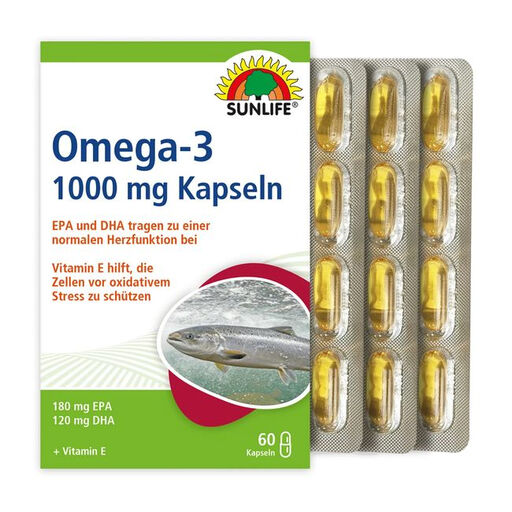
Why this product suits this profile: A simple routine of one capsule a day and 80 g total content is suitable for people who want to incorporate fish oil into their everyday routine with ease.
Alongside 1,000 mg of fish oil, the product information lists 180 mg of EPA and 120 mg of DHA per capsule. This makes it easier to assess the actual active ingredient content.
One capsule a day; additionally, 5 mg of Vitamin E according to the nutritional information.
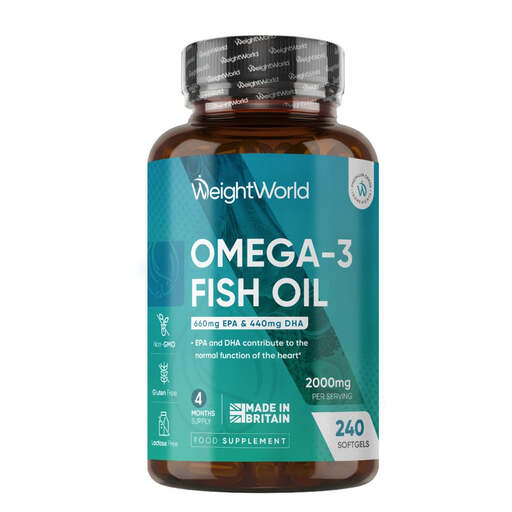
Why this product suits this profile: The combination of a high EPA-DHA content, 240 softgels and stated IFOS certification appeals to buyers who compare product information and supply length particularly carefully.
The product description distinguishes between 2,000 mg of fish oil, 1,100 mg of Omega-3 fatty acids, and 660 mg of EPA and 440 mg of DHA per serving of two softgels.
240 softgels, or 120 servings; according to the product information, gluten-free, lactose-free and non-GMO.
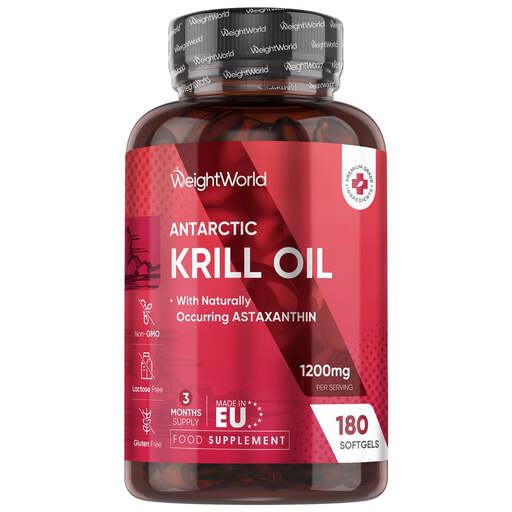
Why this product suits this profile: Krill oil is a distinct product category for users who want to consider, in addition to Omega-3, the accompanying nutrients astaxanthin and choline mentioned in the description.
The information states that two softgels provide 264 mg of Omega-3 fatty acids, including 144 mg of EPA and 65 mg of DHA. This makes the lower concentration compared with some fish oil products clear.
180 softgels; according to the product description, made with Antarctic krill oil, astaxanthin, phospholipids and choline.
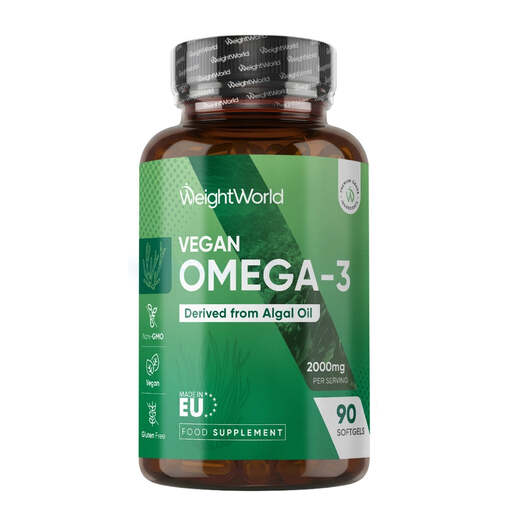
Why this product suits this profile: According to the description, this product is based on algae oil from Schizochytrium sp. and uses a plant-based softgel shell. It is therefore aimed at people who want to avoid fish and animal-derived capsule shells.
The source and the stated absence of fish, crustaceans, gluten and dairy products help when checking vegan and allergen-related requirements.
Algae oil source; depending on the desired amount, one to two softgels daily according to the manufacturer’s instructions.
We have compiled a complete, regularly updated list of products that fully meet these strict selection criteria and the safety regulations applicable in the EU.
The correct way to take the product depends on its label. Many Omega-3 capsules are recommended with a meal and plenty of water. If you regularly forget to take them, you could use a weekly pill organiser for food supplements. Unless the manufacturer specifies a different storage method, capsules should only be removed from their original packaging shortly before taking them.
An opened pack does not remain suitable for use indefinitely. The best-before date, storage instructions and any changes in smell or taste are the key factors. Do not continue using the product if it smells rancid. You can calculate the approximate supply as follows:
Number of capsules ÷ capsules per day = approximate number of days’ supply.
If you are pregnant or breastfeeding, take blood thinners, have an existing medical condition or are under medical supervision, seek medical advice before taking the product. Food supplements are not a substitute for a balanced and varied diet.
This depends on the specific product and its EPA-DHA content. Some supplements recommend one capsule a day, while others recommend two softgels. The manufacturer’s instructions on the label are decisive. Do not exceed the recommended daily dose.
Algae oil capsules may be of interest to people who want to avoid fish and animal-derived ingredients. Before buying, check the source, EPA and DHA content, and capsule shell. Not all algae oil products have the same composition.
The best-before date applies only when the product is stored correctly and within the manufacturer’s stated conditions. Once opened, fish oil capsules should be kept in a dry, cool and dark place, and should no longer be used if they develop an unusual smell. The specific period for use may vary from one product to another.