Taking gravy to work for lunch
If you bring a portion with you on weekdays, you need room for your container and a way to control how it heats. The BfR recommends thinking about how you’ll keep food chilled at work, and stirring it while reheating.


For individual portions of onion gravy brought in for lunch, a suitable solo microwave with adjustable power is usually the obvious place to start. What matters is whether your lunchbox fits and whether the interior is easy to reach and clean, not whether the microwave has a grill. A combination model makes sense if you also want to bake or brown food. The German Federal Institute for Risk Assessment (BfR) recommends transporting and storing food chilled, stirring it while reheating, and ensuring it reaches at least 70 °C throughout for two minutes.
If you bring a portion with you on weekdays, you need room for your container and a way to control how it heats. The BfR recommends thinking about how you’ll keep food chilled at work, and stirring it while reheating.
If you’re short on worktop space, compare the appliance’s external dimensions with the space available, and its internal dimensions with your lunchbox. The capacity in litres alone won’t tell you whether your container will fit.
If you regularly want to bake or brown food as well as heat your lunch, a grill or convection function may be useful. These extras aren’t automatically necessary just for reheating gravy.
The BfR recommends heating reheated food to at least 70 °C throughout for two minutes, stirring it in between. If you’re choosing a microwave for onion gravy you bring in for lunch, you’ll also want to consider whether your container fits, how easy the appliance is to clean and which features you’ll actually use.
| What matters | What to check when buying | Who is this important to? |
|---|---|---|
| Controlled reheating | Check the power settings and timer. Stir the food between heating intervals, and don’t rely on the wattage alone to determine whether it’s hot enough. | If you bring gravy in for lunch, you’ll want it to be hot enough throughout after stirring. Around 36% of consumers say controlled reheating is their main priority. |
| Container and appliance fit | Compare your lunchbox dimensions with the cavity and turntable; check the external dimensions and ventilation clearances against the space available. | If you want to keep using your existing lunchbox and have limited space for the appliance, you’ll need to check that both fit. Around 29% of consumers say this is their main priority. |
| Cleaning up splashes | Check how easy it is to reach the cavity and read the care instructions. A removable turntable can make it easier to clean. | If you often heat gravy, you’ll want to wipe away splashes without a fuss. Around 21% of consumers put ease of cleaning first. |
| Features and cost | Choose a solo or combination model based on how you plan to use it, and check the guarantee and statutory rights separately. | If you only want to reheat food, you won’t want to pay for features you don’t use. If you also want to bake or brown food, they may be worth having. Around 14% of consumers say this is their main priority. |
Microwaves with the same cavity capacity can have different internal dimensions and turntable sizes. So a wide lunchbox may not fit, or may not be able to turn freely.
Measure your lunchbox and a suitable cover, then compare the dimensions with the cavity and turntable of the specific model. Depending on your container, you may need to use a different microwave-safe one.
Gravy can heat unevenly, leaving some areas cooler than others. The wattage and programme alone don’t prove that the whole portion has been heated sufficiently.
Heat it in intervals, stirring in between. The BfR recommends reaching at least 70 °C throughout the food for two minutes.
These functions are designed for other ways of cooking. They don’t replace stirring or keeping your lunch chilled.
Choose a combination model only if you also want to bake or brown food. A suitable solo microwave may be all you need for individual lunch portions.
The MS2082H is a 20-litre solo microwave with 700 W and two dials. The MH6565CPS grill range is aimed at a wider range of cooking needs.
According to the manufacturer, the MW 7770 is a 20-litre solo microwave with 700 W, five power settings and dials.
The M 20 electronic is a 20-litre solo microwave with 800 W, five power settings and a digital display.
The MC32DB7746KDE1 is a 32-litre combination microwave with 900 W microwave power, plus grill and baking functions.
This selection includes solo microwaves with adjustable power settings for lunch portions, as well as a combination model with grill and convection functions for other ways of cooking.
 No image available
It could suit a lunch portion if your container fits inside the cavity.
19 l, 700 W and six power settings, according to the product name.
 No image available
It could suit a lunch portion if your lunchbox and cover fit inside the cavity.
20 l, 700 W and six power settings. The product name also lists a 30-minute timer and a turntable.
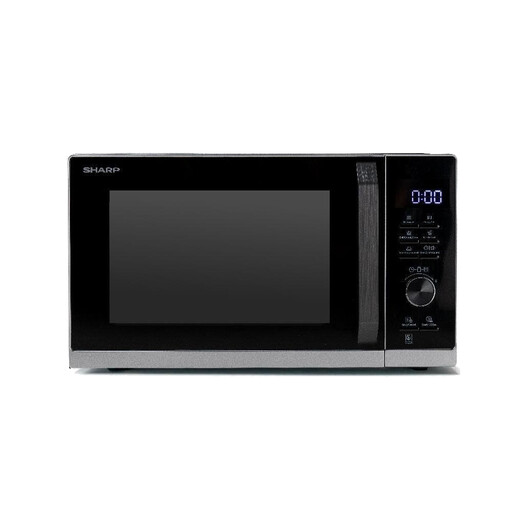 No image available
It could suit you if you want to grill or cook with convection as well as reheat food.
27 l; the product name lists 900 W microwave power, 1000 W grill power and 2100 W convection power.
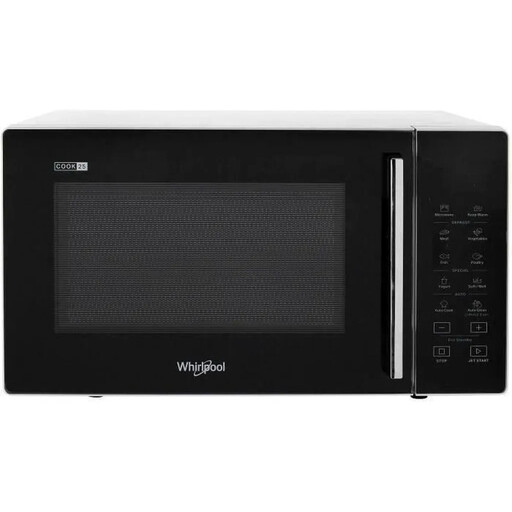 No image available
It’s an option for regular lunch portions if you’ll make use of the additional programmes.
25 l and 900 W; the product name lists Jet Start, a keep-warm function and Auto Clean.
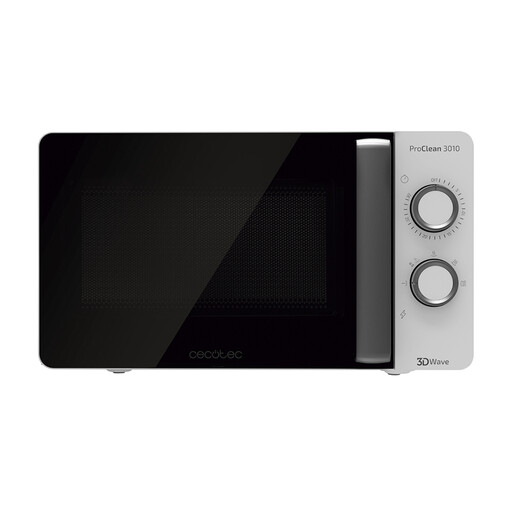 No image available
It could suit a lunch portion, provided your container and cover fit inside the cavity.
20 l, 700 W and six power settings; the product name describes the coating as Easy-Clean.
Make sure you leave the specified clearances when positioning it: 10 cm at the back, 5 cm at the sides and 20 cm above.
Keep prepared food properly chilled, and make sure you have somewhere to store it at work too. The BfR recommends using a cool bag for transport. Stir the gravy while reheating. The BfR recommends heating food to at least 70 °C throughout for two minutes; the wattage setting alone doesn’t prove this has been achieved.
Only if the container’s instructions say it’s suitable for microwave use at the temperature and power you intend to use. The consumer advice centre recommends staying within the stated temperature and wattage limits.
Check that your available space and the ventilation clearances meet the instructions for the specific model. HEA recommends keeping the door frame and sealing surfaces clean; don’t use an appliance if its sealing surfaces are damaged.
No. If a product is faulty, your statutory rights are against the seller. A guarantee is an optional extra with its own terms and conditions. Check the specific offer to see who is responsible for what.
No. As explained by the German Federal Ministry for the Environment, old electrical appliances should be taken to an authorised collection point, such as a local recycling centre. Under § 17 of the ElektroG, retailers who are required to do so must, on request, take back certain old appliances free of charge if none of their external dimensions is greater than 25 cm.