For hosts cooking on a large tray
If you want to bake a large tray for a group, check the tray dimensions against the usable oven cavity. Dr. Oetker’s onion tart recipe calls for a deep 40 × 30 cm baking tray or a roasting pan.


For a large tray of onion tart, a built-in oven is a good fit if the tray will actually fit in the oven cavity. A countertop oven is better suited to smaller tins. Dr. Oetker’s recipe calls for a deep 40 × 30 cm baking tray or a roasting pan. If you want to bake several topped tarts at once, check the instructions for the specific model: a claim such as ‘up to three shelf levels’ does not, on its own, mean it is suitable for onion tart.
If you want to bake a large tray for a group, check the tray dimensions against the usable oven cavity. Dr. Oetker’s onion tart recipe calls for a deep 40 × 30 cm baking tray or a roasting pan.
If you want to bake several trays at once, check which shelf levels and types of food the instructions for the specific model allow. AEG notes that multi-level baking should follow the instructions and is generally suitable for flat, small baked goods.
If you don’t have space for a built-in oven and are happy to use smaller tins or bake in several batches, a countertop oven may be worth considering. The Rommelsbacher BG 1805/E is listed as accommodating tins up to 31.5 cm in diameter; this does not confirm that a 40 × 30 cm tray will fit.
A good fit if: You want to use the recipe tray in one go and have a suitable space for a built-in oven.
Things to consider: Cavity capacity alone does not confirm that a specific tray will fit. Check the niche dimensions and connection requirements too.
A good fit if: You regularly want to bake on several trays and the instructions for your chosen model allow this for the type of food you’re cooking.
Things to consider: Manufacturer claims about baking on several shelf levels are no guarantee of even results when baking several topped onion tarts.
A good fit if: You don’t have a built-in oven niche and smaller tins that fit the appliance will be enough for your gathering.
Things to consider: The space available, tin dimensions and instructions for the appliance all need to work together. A stated round tin size does not confirm that a large tray will fit.
| Buying priority | What to check before buying | Who is it important to? |
|---|---|---|
| Tray size and quantity | Compare the usable tray dimensions and included accessories with the recipe; Dr. Oetker specifies a deep 40 × 30 cm tray or a roasting pan. | If I need a large tray to feed a group, I don’t want to decide based on the litre capacity alone. Around 33% of consumers put tray size and quantity first. |
| Several trays at once | Check the heating method, approved shelf levels and baking chart for the specific model and comparable foods. AEG recommends multi-level baking only in accordance with the operating instructions. | If I want to bake several topped tarts at once, I want to know whether the instructions specifically allow this. Around 25% of consumers have this as their main priority. |
| Built-in or countertop space | Compare the niche or appliance dimensions, available counter space and connection requirements with the specifications for the model. | If there isn’t a suitable space for a built-in oven in my kitchen, the available counter space will determine the type of appliance I can choose. Around 17% of consumers prioritise space or installation. |
| Cleaning after baking | Check the cleaning method and instructions for the specific model, while also taking your preferred heating method and tray fit into account. | If I want to keep cleaning to a minimum after frequent baking, I’m interested in the cleaning method used by the specific appliance. Around 17% of consumers have this as their main priority. |
| Energy use and features | For built-in ovens, compare the energy use per standard cycle for fan and conventional cooking; only consider features you actually need. | If I want to compare running costs and the features I need for my recipes first, the specific energy consumption figure matters. Around 8% of consumers focus on this. |
An oven can have a large capacity without being able to accommodate the tray specified in your recipe. The onion tart tray specified by Dr. Oetker measures 40 × 30 cm and has a deep rim; countertop ovens may instead list the size of a round tin.
Before buying, compare your specific tray with the usable interior dimensions and check which accessories are included. You may need a different tin or to bake in several batches.
A multi-level baking feature does not automatically mean that several topped onion tarts will bake evenly. AEG recommends using this feature only if the instructions for the specific model allow it, and says it is generally intended for flat, small baked goods.
Read the baking chart for comparable foods and check how well the tarts are browning as they bake. You may need to bake them in separate batches.
The energy label shows energy use per standard cycle for fan and conventional cooking; this is not necessarily the amount of energy your onion tart recipe will use. The Verbraucherzentrale recommends taking the appliance’s specific energy consumption into account.
Compare the energy consumption figures and choose heating methods and extra features to suit the dishes you actually bake.
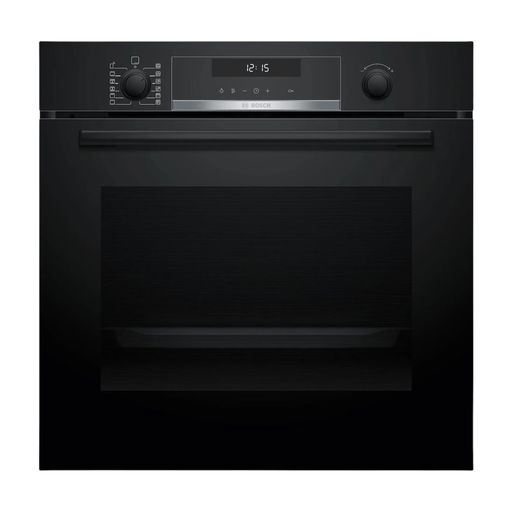
The HBA514BS3 is a documented example of a 60 × 60 cm built-in oven with 3D Hotair.
AEG Germany describes the OU5AB20SM as a built-in oven with a 72 l cavity, ring heating element and Aqua cleaning function.
According to Siemens Home Appliances Germany, the HR776G1B1 is a built-in oven with 4D Hotair, a steam boost, and pyrolytic and hydrolytic cleaning.
The BG 1805/E is a freestanding countertop oven. Rommelsbacher lists a 42 l cavity and says it accommodates tins up to 31.5 cm in diameter.
According to Severin, the TO 2068 is a compact oven and toaster with a fan function and a 20 l cavity.
This selection features built-in ovens for baking for a group. For each model, check that your tray will fit and consult the instructions for your preferred heating method and baking on multiple levels.
 No image available
This built-in oven is listed with 3D Hotair and conventional top and bottom heat; check that your recipe tray fits in the usable interior.
3D Hotair on up to three levels and pyrolytic self-cleaning are listed. If baking several topped tarts at once, follow the instructions for the specific model.
 No image available
A built-in oven listed with 3D Hotair and conventional top and bottom heat; follow the instructions when planning how to bake.
Nine heating methods and pyrolytic self-cleaning are listed. Don’t assume you can bake several topped tarts at once based solely on the multi-level feature.
 No image available
3D Hotair and conventional top and bottom heat are listed. Check that the tray specified in your recipe will fit in the usable oven cavity.
This model is listed with ten heating methods and pyrolytic self-cleaning. For baking several topped tarts, follow the guidance in the operating instructions for this specific model.
 No image available
This built-in oven is listed with a 78 l cavity and nine cooking functions. Check the specified heating methods and the dimensions of the baking tray for your recipe.
A baking tray accessory and an A+ energy rating are listed. Cavity capacity alone does not confirm that the 40 × 30 cm recipe tray will fit.
For this specific recipe, Dr. Oetker recommends about 200 °C with conventional top and bottom heat or 180 °C with fan cooking, on the lower third of the oven, for around 35 minutes. These timings and temperatures apply to that recipe and are not a general guide for every dough, topping or oven.
Not without checking the instructions for the specific model. AEG recommends multi-level baking only if the operating instructions include relevant guidance, and says this option is generally intended for flat, small baked goods. Check the recommended shelf levels and how well the tarts are browning.
As the Federal Environment Agency explains, the energy label includes information such as the oven cavity volume and average energy use per standard cycle for fan and conventional cooking. It does not show the specific energy use for your onion tart recipe.
Under § 13 of the Low Voltage Connection Ordinance, work on the electrical installation downstream of the service fuse may only be carried out by the network operator or an installation company listed in its register of approved installers. This does not mean that plugging in every oven automatically counts as this kind of work; the connection type and the installation instructions for the specific appliance should be considered separately.