Families making several cups of tea
If you want to serve several people at breakfast, compare the actual tea capacity with the water capacity.


When making several cups of oolong in the morning, first check the stated tea capacity – it may be lower than the water capacity – then see whether you can set the temperature to suit your tea. An automatic lifting tea basket stops the leaves steeping once the set time is up, while with a removable infuser or separate teapot, you’ll need to take action yourself. The recommendations on your tea’s packaging are more useful than a generic oolong programme; Friends of Tea, for example, recommends 85 °C for floral flavours and 95 °C for more robust flavours.
If you want to serve several people at breakfast, compare the actual tea capacity with the water capacity.
If you make both lighter and more robust oolongs, check that the temperature and steeping time suit the recommendations for each variety.
If you’re getting breakfast ready at the same time, check whether the tea basket lifts automatically when the steeping time is up, or whether you’ll need to remove the infuser yourself.
A good choice if: you make loose-leaf oolong for several cups and don’t want to remember to remove the infuser while you’re having breakfast.
The trade-off: The extra basket mechanism saves you a step, but a preset programme can’t replace the recommendations for your particular tea.
A good choice if: you want to heat the water and brew the tea in one appliance, while deciding for yourself when to stop the leaves steeping.
The trade-off: A steeping timer won’t remove the infuser for you; according to WMF, the WMF Lono has four temperature settings: 70, 80, 90 and 100 °C.
A good choice if: you already have a teapot or want to keep the leaves separate for further infusions.
The trade-off: You’ll need to pour the water, time the brew and separate the leaves yourself; according to the manufacturer, the Severin WK 3418 offers temperatures from 40 to 100 °C in 5 °C increments.
| What you’re looking for | What to check | Who it matters most to |
|---|---|---|
| Enough brewed tea | Check the stated tea capacity and minimum fill level; don’t assume the water and tea capacities are the same. | If several people are drinking at once, I want to know how much tea the appliance makes, not just the water level. Around 27% of consumers prioritise tea capacity. |
| Suitable temperature | Compare the available temperature settings and steeping time with the recommendations for your oolong. | When I switch between oolongs, I want to be able to adjust the brewing to suit each variety. Around 27% of consumers put temperature control first. |
| Steeping without constant supervision | Check whether the basket moves automatically or whether the timer simply reminds you to remove the infuser. | If I’m doing other things while breakfast is being prepared, I don’t want to have to stop the brew at just the right moment myself. For around 20% of consumers, automatic control of the steeping time is the top priority. |
| Further infusions | Check whether the infuser can be removed and whether the appliance suits the way you prepare your tea. | If I want to infuse the same leaves again, I want to be able to keep them separate after the first brew. Further infusions are a priority for around 13% of consumers. |
| Cleaning and care | Compare the removable parts and care instructions for the infuser, basket and water reservoir. | For everyday use, I want to know which parts can be removed for cleaning. Around 13% of consumers prioritise cleaning and care. |
According to WMF, the WMF Lono holds 1.7 l of water but makes 1.4 l of tea. If you only look at the highest litre figure, you may end up expecting more brewed tea than the appliance can make.
Check the stated tea capacity and compare it with the amount you want to serve at breakfast.
Depending on your needs, you may need to brew a second batch or use an additional teapot for breakfast.
A timer doesn’t necessarily stop the tea leaves steeping in the water. With a removable infuser, you’ll need to take it out yourself; automatic lifting baskets move once the set steeping time is up.
Check exactly how the basket works, rather than relying on the word “timer” alone.
Different oolong varieties and brewing methods may need different temperatures and steeping times. Friends of Tea, for example, recommends 85 °C for floral flavours and 95 °C for more robust flavours.
Compare the programme and available temperature settings with the recommendations for your tea, and adjust them if needed.
The Design Tee Automat Advanced Plus 42440 combines a 1.5-litre glass jug with an oolong programme and an automatically moving tea filter.
According to Sage, The Tea Maker STM800BSS4EEU1 lowers the tea basket once the water reaches the set temperature, then raises it again when the steeping time is up.
The Lono 2-in-1 tea and water kettle combines a kettle with a tea basket.
The Attentiv 26200-70 is a glass kettle with a removable tea infuser and steeping timer.
The WK 3418 heats water for making tea in a separate teapot.
This selection includes water dispensers with tea infusers and variable-temperature kettles for brewing in a separate teapot. For each model, check whether you can brew the tea in the appliance or will need a separate vessel.
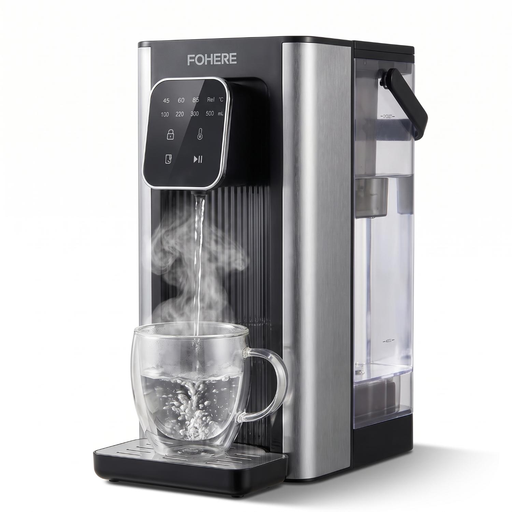 No image available
This model could work as a water dispenser with a separate teapot; you’ll need your own tea vessel to time the brew and separate the leaves.
The product name lists a 2.5 l tank, four temperature settings, 2,600 W and a child lock. The product description lists 85 °C as one of the selectable temperatures.
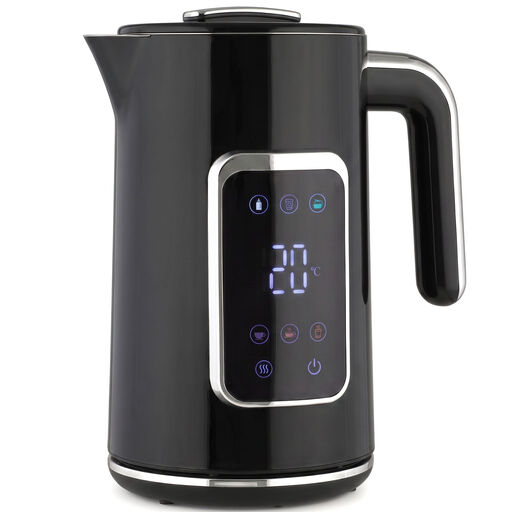 No image available
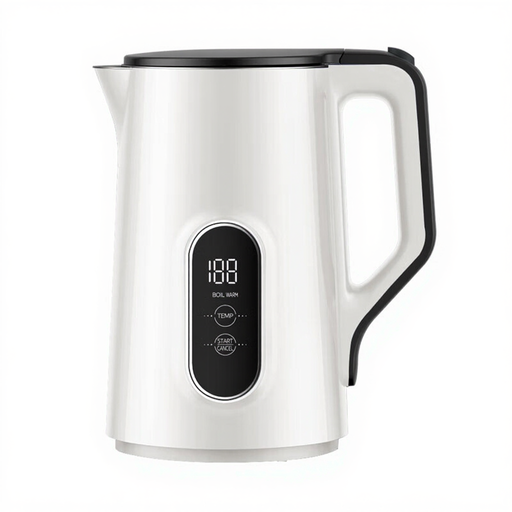
This model is designed for use with a separate teapot; you won’t brew the tea or separate the leaves in the kettle.
The product name lists a 1.7 l capacity, adjustable temperature, LED display and keep-warm function.
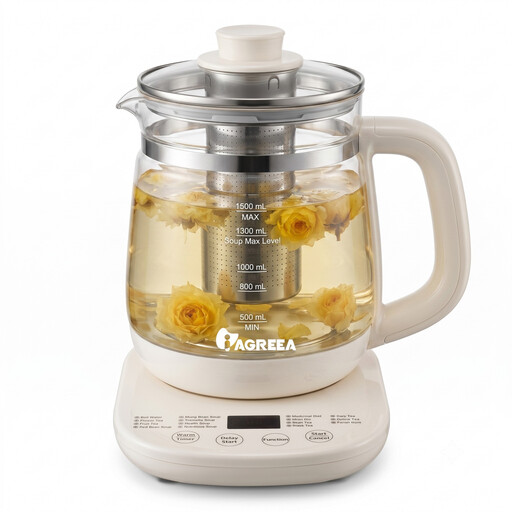 No image available
The integrated infuser is a useful option if you want to brew loose-leaf tea directly in the appliance.
The product name lists borosilicate glass, 14 preset programmes, six temperature settings and a large stainless steel infuser.
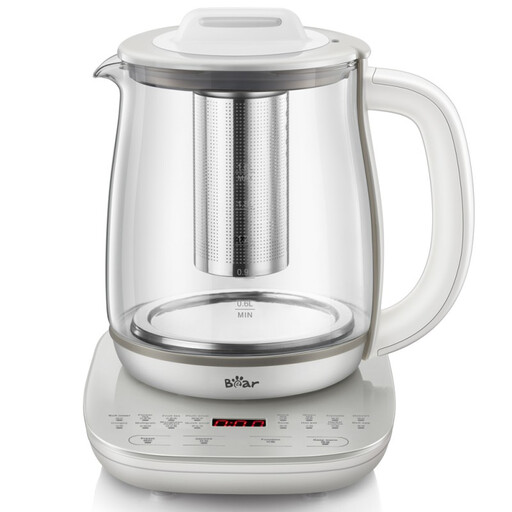 No image available
The listed tea infuser lets you brew loose-leaf tea in the appliance.
The product name lists a 1.8 l capacity, 1,000–1,200 W and 16 Smart Presets.
 No image available
This kettle is designed for use with a separate teapot, so you’ll take care of brewing and separating the leaves yourself.
The product name lists a 1.5 l water capacity, variable temperature settings from 45 to 100 °C, 2,200 W, a digital temperature display and a double-wall design.
No. Follow the recommendations for the specific tea leaves you’re using. Friends of Tea gives different starting temperatures for floral and robust flavours; a programme on an appliance won’t automatically account for these differences in every variety.
Compare the stated tea capacity with the amount you want to serve. For the WMF Lono, WMF lists 1.4 l of tea from 1.7 l of water.
Not necessarily: a timer may only display the time or sound an alert, leaving you to remove a removable infuser yourself. Check whether the tea basket actually lifts automatically, as Gastroback describes for the Design Tee Automat Advanced Plus 42440 and Sage for The Tea Maker.
Electrical appliances covered by relevant harmonised EU rules must meet the applicable product requirements, including mandatory CE marking. Your Europe notes that CE marking is not approval by a central EU testing body; the German Environment Agency also describes the manufacturer registration required under the ElektroG for products placed on the German market. This alone isn’t enough to determine whether an individual product listing is compliant.
Don’t put it in your household rubbish; use a separate collection point for waste electrical equipment. The German Environment Agency says local authority collection points generally accept items free of charge; retailers are also subject to take-back obligations under certain conditions.