Editing alongside other people
If you’re editing rehearsal recordings while others work in the room, or need to monitor during a recording, isolation and a good fit are important factors to consider.


If you work alongside other people or need to monitor while recording, a well-fitting pair of closed-back studio headphones is usually the obvious place to start. If you’re checking sound critically in a quiet spot, an open-back model could also be an option. Whichever design you choose, check the tuning of the specific model, how it connects to your device, the cable routing and the fit – ‘studio’ alone doesn’t guarantee a neutral sound.
If you’re editing rehearsal recordings while others work in the room, or need to monitor during a recording, isolation and a good fit are important factors to consider.
If you mostly assess edits and sound balance in a quiet spot, and sound escaping from your headphones isn’t a problem, the tuning of the specific model is particularly important.
If you want to keep cables tidy at your desk or put your headphones away after a session, check the cable routing and whether the specific model version folds.
A good fit if: you edit in a shared space or need to monitor while recording. beyerdynamic recommends closed-back designs for recording and monitoring.
The trade-off: Isolation doesn’t tell you whether the tuning will suit your sound decisions; fit and the specific model still matter.
A good fit if: you’re assessing edits and sound details on your own in a quiet environment. beyerdynamic lists the open-back DT 990 PRO for critical listening and editing.
The trade-off: Their lower level of isolation makes open-back models less suitable if sound escaping could be a problem in a shared space or near a live microphone.
The figures below relate to consumers editing rehearsal recordings at a small desk that may be shared; each row describes their main purchasing priority.
| Priority | What to check before buying | Who is this most important for? |
|---|---|---|
| Isolation while editing or recording | Check the closed-back design and how it fits you; if recording at the same time, watch out for sound leakage. | If I’m editing alongside others or need to monitor during a recording, I want to limit sound leakage and find a good fit. Around 33% of consumers put isolation first. |
| Assessing edits and sound balance | Listen to familiar sections of your recordings and, where possible, check important sound decisions on a second listening setup. | If I’m assessing edits and sound details in a quiet spot, sound reproduction matters more to me than storage. Around 27% of consumers make sound monitoring their top priority. |
| Cable routing and storage | Check that the connector and cable routing work with your device; confirm whether the exact model version folds and has a detachable cable. | If my desk has limited space, I want to route the cable neatly and put my headphones away after work. Around 20% of consumers put space and cable routing first. |
| Fit and how long you wear them | If possible, try them on for a longer period, check which replacement ear pads are available, and plan your volume and listening breaks. | If I’m editing for long periods, a comfortable fit matters more to me than the other criteria listed. Around 20% of consumers make long-term comfort their top priority. |
The label alone doesn’t tell you how a particular model sounds. HIFI.DE criticises the pronounced bass emphasis on the Audio-Technica ATH-M50x it tested; this assessment applies to that model.
Listen to familiar sections of your recordings on the specific headphones, and check important decisions about bass and sound balance on another listening setup too.
An open-back model could suit critical listening in a quiet spot, but it provides less isolation. If you’re working alongside others or during a recording, sound escaping from the headphones could be disruptive.
First decide whether you’ll be editing alone in a quiet space or working in a shared area or near a live microphone.
Impedance, connectors and cable routing vary between models and versions. A cable can also get in the way at a small editing desk.
Before buying, check the full model name, impedance version, connector, any adapter you need and cable routing against your device and workspace.
The closed-back DT 770 PRO and open-back DT 990 PRO suit different listening situations; the specific version matters when checking connections and cable details.
The wired ATH-M50x combines a closed-back design with a foldable build and detachable cable.
The closed-back HD 280 PRO is worth considering for monitoring and editing if foldable storage and replaceable ear pads are important to you.
The closed-back, foldable K371 and the open-back, non-foldable K702 are designed for different editing environments.
The MDR-7506 is a closed-back, foldable model designed for studio and broadcast applications.
Foldable headphones for limited desk space; before using them for editing, check that the specific model connects properly to your listening device.
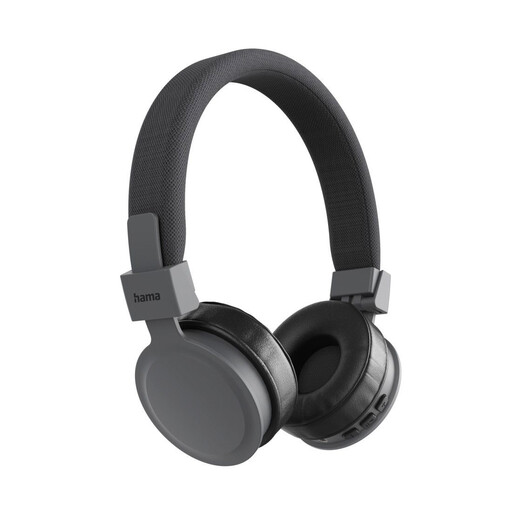 No image available
The foldable on-ear design makes these headphones easy to store in a small space. The product name specifies Bluetooth®; before editing, check that they connect to your listening device.
First, you’ll need to make sure you have the right physical output. For the 80-ohm DT 770 PRO, beyerdynamic lists a 3.5 mm jack plug and a 6.35 mm adapter. Check whether your specific output provides enough volume with your device.
Check which replacement ear pads are designed for your exact model. The DT 770 PRO and HD 280 PRO are documented as having replaceable ear pads; after replacing them, check the fit again.
The World Health Organization recommends limiting both volume and listening time, and taking breaks. As an example, it recommends an average of 80 dB for no more than 40 hours a week; this isn’t a specification for the output volume of any of the models mentioned here.
For a consumer purchase, the seller’s statutory liability for defects is separate from any voluntary guarantee. The Verbraucherzentrale describes the first step for a fault as requesting a remedy, such as a repair or replacement.
No. Electrical waste must be collected separately; the Federal Environment Agency lists local collection points, such as recycling centres, as places to return it.