Dialogue editors with a quiet, private workspace
If you compare edited sections of speech with the original recording, and neither background noise nor sound leakage is a problem, an open-back model could be a good choice.


For checking noise-reduced dialogue in a quiet, private workspace, wired open-back headphones are a sensible starting point, provided sound leakage won’t disturb anyone. If you’re recording at the same time, want to avoid disturbing others in the room or need to block out background noise now and then, a closed-back model is more practical. In either case, compare edited sections with the original and check the connection and fit.
If you compare edited sections of speech with the original recording, and neither background noise nor sound leakage is a problem, an open-back model could be a good choice.
If you sometimes need to block out room noise, avoid disturbing others or monitor microphone recordings as well, a closed-back model may be more practical.
For longer listening sessions, sound tuning isn’t the only thing that matters. Fit, connectivity and whether you can replace the ear pads or cable later are important too.
A good fit if: you’re checking dialogue in a quiet place and sound leakage won’t disturb anyone.
Things to consider: you’re more likely to hear background noise, and sound may leak out. The manufacturer also notes that the DT 990 PRO has relatively bright treble.
A good fit if: you need passive isolation, want to avoid disturbing others or also use your headphones while recording.
Things to consider: isolation and sound quality also depend on the fit and the specific model. A closed-back design alone doesn’t prove that the sound is neutral.
| What matters | What to check when buying | Who should pay particular attention? |
|---|---|---|
| Editing artefacts | Compare familiar sections of the original and edited audio; don’t treat manufacturers’ sound claims as independent measurements. | If I want to spot residual noise and newly introduced artefacts, I compare edited sections with the original. Around 36% of consumers put this comparison first. |
| Isolation and sound leakage | Consider your working environment, whether you might be recording with a microphone and how well closed-back ear cups fit. | If other people are within listening distance or a microphone is recording, I want less sound leakage and good isolation. Around 29% of consumers prioritise this. |
| Connectivity | Check that the plug, adapter and full model variant match the output on your computer, recorder or audio interface. | If I first need to make sure the headphones will work with the output I already have, the specific connections included matter. Around 21% of consumers put compatibility first. |
| Fit and care | Try the fit for yourself if possible, and check replacement parts against the exact model name. | For longer listening sessions, I want to consider the fit and whether replacement parts are available. Around 14% of consumers give this the highest priority. |
An open-back design doesn’t block out background noise, and sound tuning varies from model to model. The manufacturer itself describes the DT 990 PRO’s treble as relatively bright.
Choose an open-back model only if your workspace is quiet and sound leakage won’t be a problem. Compare critical sections with original recordings you know well.
A manufacturer’s claims about a closed-back design or isolation don’t prove that a model is tuned appropriately for every dialogue edit.
Assess the fit and sound of the specific model separately, and choose the level of isolation to suit your actual working environment.
Plugs, adapters and impedance can vary between versions. For example, the DT 990 PRO is available in 80 and 250 Ω variants.
Check the full model variant and what’s included against the headphone output you already have.
The DT 990 PRO is an open-back model; the DT 770 PRO is the closed-back option in the range.
The HD 560S is an open-back model for listening comparisons in a quiet workspace.
The ATH-M50x is a closed-back, wired monitor headphone.
The HPH-MT5 is a closed-back, foldable monitoring option.
Sony lists the MDR-7506 for studio and broadcasting environments.
This selection from Joybuy includes over-ear models with wired connection options. Before buying, check which connection and playback mode are right for your workspace.
 No image available
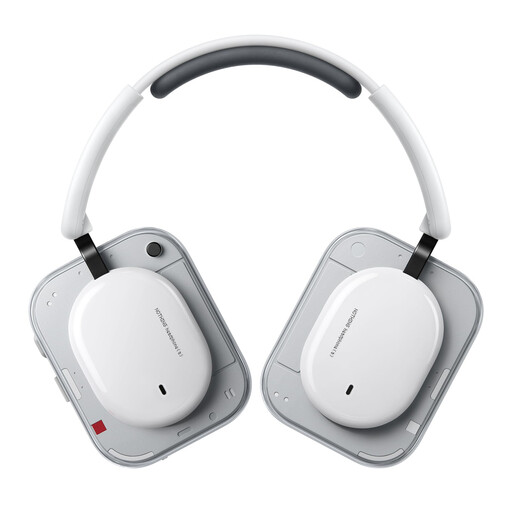
A closed-back option for checking dialogue with wired playback.
The product description lists wired audio support, passive isolation and replaceable ear pads. The title specifies 40 mm drivers and Bluetooth 5.4.
 No image available
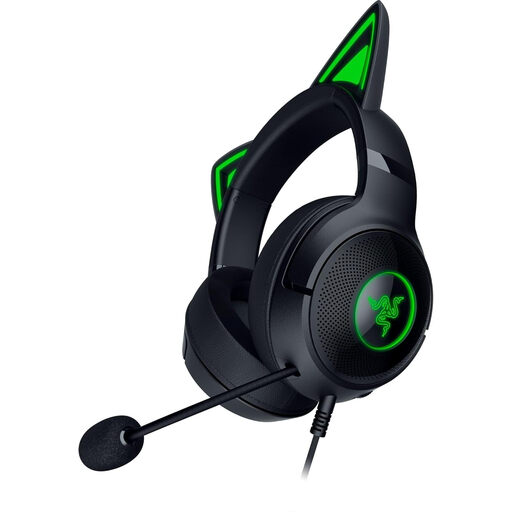
An option if you want wired playback using a compatible 3.5 mm or USB-C connection.
The listing specifies 40 mm drivers, a detachable 1.2 m cable, and 3.5 mm, USB-C and Bluetooth connections.
 No image available
This closed-back, wired over-ear headset is worth considering if your device has a compatible USB-A connection.
The description specifies USB-A 3.0, a 2 m cable and 40 mm drivers. Check your device’s connection before choosing.
Compare the edited section with a copy of the original, listening for any remaining noise and newly introduced artefacts. iZotope recommends comparing the audio with the original to identify over-processing; this isn’t a performance guarantee for any particular headphone model.
Check that the output socket matches the plug and, if needed, the adapter supplied with the specific model. The Yamaha HPH-MT5 is listed with a 3.5 mm plug and a 6.3 mm adapter; the impedance variant you choose also matters for the DT 990 PRO.
Keep the volume low and take regular listening breaks. The World Health Organization lists volume, listening time and frequency as factors that affect exposure to loud sounds. A percentage on the volume control doesn’t correspond to a reliable sound pressure level across all devices.
Your statutory rights are against the seller; any additional guarantee is voluntary and subject to its own terms. The EU’s Your Europe consumer information states that goods have a minimum two-year guarantee from the date of receipt and that, for a covered fault, you’re initially entitled to a free repair or replacement.
For a qualifying distance purchase from a trader, you generally have 14 days from delivery to cancel. The EU’s Your Europe consumer information notes that return costs may apply and that there are exceptions, so check the terms of your specific purchase. This distance-selling right to cancel doesn’t apply to purchases from a private seller.