Who are these headphones for?

Dialogue and effects mixers

If you want to judge speech against music and effects, you need more than suitable headphones: you also need to check the intended playback system. The EBU Technical Review on speech intelligibility in television explains that playback conditions and the listening environment also play a part.

Mixers working at a shared recording workstation

If you work alongside others or record at the same desk, background noise and sound leakage may influence your choice of headphone design. Musikhaus Korn describes closed-back studio headphones as offering more isolation than open-back models.

Mixers working long hours at a desk

For longer sessions, a comfortable fit, practical cable routing and the availability of replacement parts for the specific model all matter. Manufacturers such as beyerdynamic, Sennheiser and Austrian Audio list replaceable earpads or cables for certain models.

What should you look for when buying?

Open-back studio headphones

A good fit if: your workspace is quiet and you want to judge balance and spatial positioning.

Bear in mind: the open-back design lets in more background noise and allows more sound to leak from the headphones.

Closed-back studio headphones

A good fit if: you work alongside others or record with a microphone at the same workstation.

Bear in mind: isolation alone does not tell you whether the sound tuning is right for your mixing decisions.

Buying priority What to look for when buying Who it matters most to
Judging dialogue against music and effects Listen to familiar dialogue passages and, where possible, check the finished mix through the intended playback system. When I need to balance dialogue against music and effects, speech intelligibility comes first for me; around 28% of consumers say dialogue balance is their top buying priority.
Assessing spatial placement Check whether the workspace is quiet enough and whether you can cross-check spatial decisions through the intended playback system. I need positions and depth in the soundtrack to remain clear; around 22% of consumers put spatial assessment first.
Isolation at a shared workstation Check the fit of the earpads and background noise at your actual workstation; when recording, also look out for possible sound leakage into the microphone. If I work alongside others or record at the same desk, I want to limit background noise and sound leakage; around 22% of consumers prioritise isolation for this reason.
Fit and maintenance Check the fit, comfort when wearing glasses and availability of replacement earpads for the exact model version. For long sessions, I need a comfortable fit and replaceable parts for the exact model version; around 17% of consumers focus on comfort and ease of maintenance.
Connection and cable routing Check the audio output, adapter, available volume and cable route at your own desk. At a small desk, I want to connect the right cables and adapters to the output I have; around 11% of consumers prioritise connection and cable routing.

Mistakes to avoid

  • Assuming an open-back design guarantees a convincing mix in the venue

    Open-back headphones can be an option for spatial listening, but they do not prove that dialogue and effects will sound clear on the eventual playback system.

    Choose the design that suits your workspace and check critical passages through the intended playback system as well.

  • Confusing isolation with neutral sound tuning

    HIFI.DE describes pronounced bass emphasis on the closed-back beyerdynamic DT 700 PRO X and Audio-Technica ATH-M50x as a possible drawback when making studio decisions.

    Assess isolation and sound separately, and compare familiar material on the specific model.

  • Leaving connections, cable routing and spare parts until after you buy

    Connections and cable lengths vary by model, and a long cable can be impractical on a small desk.

    Check the audio output you have, what comes in the box and the spare-part designation for the exact model version.

    Depending on the connection, you may need a suitable adapter. For future repairs, spare parts must match the specific model version.

Notable brands and models

beyerdynamic

The open-back DT 900 PRO X is an option for quiet mixing workstations; the closed-back DT 700 PRO X combines monitoring and mixing with greater isolation.

  • beyerdynamic lists an impedance of 48 ohms and detachable cables for both models.
  • HIFI.DE describes the DT 900 PRO X as fairly neutral, but notes strong bass emphasis on the DT 700 PRO X for studio work. These assessments relate to the specific models.

Sennheiser

According to the manufacturer, the open-back HD 490 PRO is designed for mixing and production where an open-back design is practical in your workspace.

  • Sennheiser lists two types of earpad, replaceable earpads and the option to route the cable to the left or right.
  • The open-back design provides less isolation than a closed-back model. The manufacturer's claims about precision and comfort are not the result of independent comparisons.

AKG

According to the manufacturer, the open-back K702 is designed for mixing and critical listening, making it an option for a quiet mixing workstation.

  • AKG lists a replaceable cable and replaceable earpads.
  • The stated impedance of 62 ohms alone does not tell you what volume your existing headphone output can reach; the open-back design lets in ambient sound.

Audio-Technica

According to Audio-Technica, the closed-back ATH-M50x is a wired monitoring option if passive isolation is important at your workstation.

  • Audio-Technica lists a detachable cable and passive isolation.
  • HIFI.DE criticises the specific model for its pronounced bass emphasis and small earcups, which may not suit everyone. You should judge the sound and fit for yourself.

Austrian Audio

According to the manufacturer, the open-back Hi-X65 is designed for mixing and mastering, with key components that can be replaced.

  • Austrian Audio describes the earpads and cables as replaceable, and says the headphones are suitable for longer sessions.
  • The manufacturer's claims about neutral tuning and comfort do not mean the model is better in every situation; at a shared workstation, the open-back design is still worth bearing in mind.

Joybuy products

The following Joybuy products are closed-back over-ear headphones with a listed 3.5-mm audio connection, making them an option for a shared mixing workstation if they are compatible with your audio output.
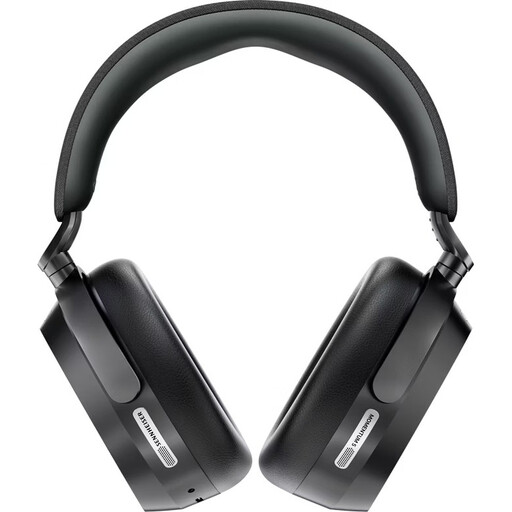
Sennheiser Momentum 5 Wireless over-ear headphones in black

Sennheiser Momentum 5 Wireless over-ear headphones, black

The closed-back design may be useful if you need isolation; a 3.5-mm audio connection is listed for wired listening. Check that it is compatible with your audio output.

  • Closed-back design and rotating earcups
  • Bluetooth 5.4 and 3.5-mm audio connection
  • Active noise cancellation with 8 microphones; Dolby Atmos
  • Up to 57 hours of battery life; replaceable battery
View at Joybuy

Frequently asked questions

Are open-back headphones enough to judge dialogue intelligibility in a theatre?

No, not on their own. The EBU Technical Review on speech intelligibility in television explains that playback conditions and the listening environment also play a part. So check your theatre mix through the intended playback system as well; this does not imply a theatre-specific measurement requirement.

What should I check before connecting to my audio interface?

Check that the output matches the connection and accessories supplied with the exact model version, and test the available volume cautiously to begin with. beyerdynamic lists a 3.5-mm plug with a 6.35-mm adapter for the DT 900 PRO X; AKG lists a 3.5-mm plug with a 6.3-mm adapter for the K702.

How can I make long headphone sessions easier on your hearing?

The World Health Organization (WHO) recommends considering volume and listening time together, and taking listening breaks. As an example, it gives 80 dB for up to 40 hours per week; this is not a guaranteed volume on your own device or a buying limit for studio headphones.

What are the rules on cancellations and faulty goods when buying online in Germany?

For an applicable distance contract with a business seller, you generally have a 14-day right to cancel from the date of delivery; exceptions and possible return costs should be taken into account. For faulty goods, the EU Your Europe portal explains that the legal guarantee lasts for at least two years from receipt. A voluntary guarantee is separate from this.

Do headphones need to measure the loudness or True Peaks of the finished soundtrack?

No. The November 2023 ITU-R Recommendation BS.1770-5 describes algorithms for measuring programme loudness and true-peak level; you need a suitable metering function for this, not a headphone specification. The target level for a performance depends on its requirements.