
Lieferung heute & morgen

Qualitätsgarantie

Willkommens-Angebote freischalten: KOSTENLOSE Lieferung | Bis zu 80 % RABATT | Kostenlose 30-Tage-JoyPlus-Testphase
App herunterladen
As your Joybuy Product Recommendation Officer, I'm here to filter the facts from the marketing jungle for you. My goal is to provide objective and practical advice so you can make an informed decision. Today, we're focusing on open-ear headphones—a category that's growing in popularity but also comes with a few pitfalls.
Many people are looking for a way to listen to music or podcasts while jogging, in the office, or on their commute without completely tuning out their surroundings. Headphones that let you hear ambient sounds offer a solution. However, the market is flooded with models whose promises often don't hold up in practice. Before you invest, you should know the three most common traps that lead to disappointment and unnecessary expense.
To avoid a bad purchase, don't be dazzled by marketing terms. Instead, focus on verifiable technical features. Three factors are critical for the performance and longevity of open-ear headphones.
The way the headphones attach to your ear is the most important factor for comfort and stability, especially for true wireless headphones for sports. There are two main designs:
The choice depends on your primary use. For the office, a lightweight clip is often sufficient, while for intense sports, an ear hook or neckband is recommended.
The IP rating indicates how resistant a device is to the ingress of foreign objects (first digit) and water (second digit). For headphones, the second digit is the most relevant.
Ensure that any "water-resistant" claim is backed by an official IP certification like IPX4 or higher.
Two figures are crucial for battery life:
Also, look for a recent Bluetooth version (e.g., Bluetooth 5.3 or 5.4). Newer standards offer a more stable and energy-efficient connection, which is particularly important for non-in-ear Bluetooth headphones to ensure uninterrupted playback.
Based on the objective criteria above, we have identified a few models that represent a smart choice for specific user profiles.
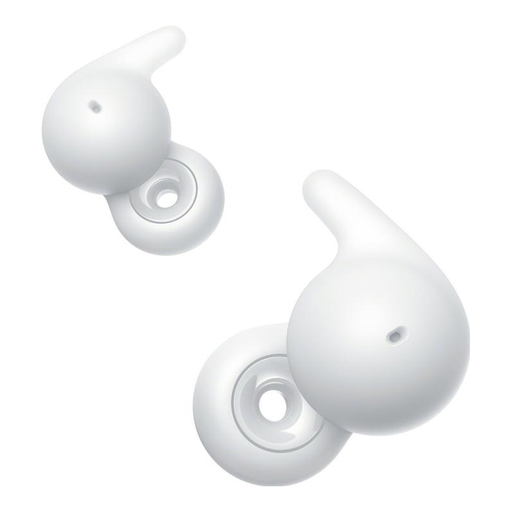
Why This Fits Their Persona: Ideal for use in the office and on public transport. The unique ring driver design allows ambient sounds like announcements or traffic to come through clearly, while multipoint connection enables seamless switching between a work phone and a laptop.
The design is specifically engineered for a balance between audio and ambient awareness, thus avoiding the pitfall of uncontrolled sound leakage. The ergonomic fit with support arcs ensures a stable fit without slipping during daily use.
8-hour runtime per charge; Bluetooth 5.3 with multipoint function; IPX4 protection.
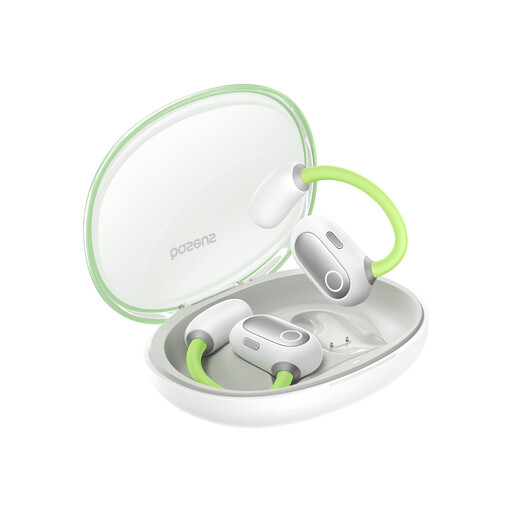
Why This Fits Their Persona: Designed for intense workouts. The detachable neckband provides maximum stability for high-impact sports like running or CrossFit. The long battery life is ideal for extended training sessions or competitions.
This model directly addresses the pitfall of an unstable fit with its optional neckband. It offers a level of security that simple ear-clip models cannot guarantee during fast movements.
Detachable neckband for versatile fit; 7.5-hour runtime per charge; IPX4 protection.
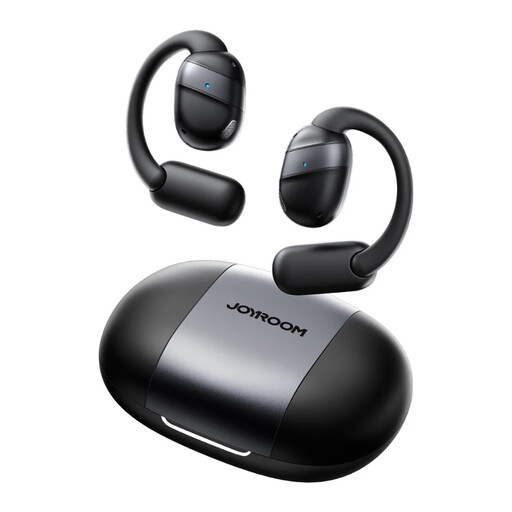
Why This Fits Their Persona: A solid option for users who want to try open-ear technology without a large investment. The very long battery life per charge is remarkable in this price range and makes the headphones practical for long days.
This model sidesteps the misleading battery life trap by offering a high runtime of 12.5 hours per charge. This is a clear, user-focused value that far exceeds the average of many more expensive models.
Very high battery life per charge (12.5 hours); Bluetooth 5.4 for a stable connection; IPX4 protection.
We have compiled a complete, up-to-date list of products that fully meet these strict selection criteria and German safety regulations.
Yes, there is an inherent design difference. Open-ear headphones are designed not to block the ear canal. This allows for awareness of ambient sounds but can also mean that bass reproduction is less intense than with in-ear models that seal the ear canal. High-quality open-ear models compensate for this with larger drivers and special bass-enhancement algorithms to create a balanced sound profile. The decision is a trade-off between sound immersion and situational awareness.
In most cases, yes. Ear clip headphones attach to the auricle and typically do not conflict with the area where the arms of glasses rest. However, models with very thick frames or a particularly tight fit could cause pressure points. It is advisable to look for a headphone design that is lightweight and slim.
Since open-ear headphones are not inserted into the ear canal, cleaning is simpler and hygiene is generally better. Wipe the headphones regularly with a soft, dry, and lint-free cloth. For heavier soiling, such as from sweat after sports, the cloth can be lightly dampened with water. Avoid aggressive cleaning agents or immersing the devices in water, even if they have an IP certification. The charging contacts should always be kept clean and dry to ensure proper function.