
Lieferung heute & morgen

Qualitätsgarantie

Willkommens-Angebote freischalten: KOSTENLOSE Lieferung | Bis zu 80 % RABATT | Kostenlose 30-Tage-JoyPlus-Testphase
App herunterladen
Enjoying music or podcasts while remaining fully aware of your surroundings—what long sounded like a contradiction has become a reality with open-ear headphones. Unlike traditional in-ear or over-ear models that block the ear canal or cover the ear, these headphones sit outside the ear. The result is a listening experience where you can still hear traffic noise, announcements, or conversations with colleagues.
This article serves as a guide. It explains the key features of open-ear headphones and presents a selection of models for various use cases, from the daily commute to intense workout sessions.
The decision for a suitable model depends on your individual needs. Three criteria are particularly relevant.
The design is crucial for comfort and stability, especially during movement. Common form factors include:
The central feature of these headphones is the ability to perceive ambient sounds. This is usually achieved through air conduction, where sound is directed towards the ear canal without sealing it. Look for information on directional audio technology. This aims to minimise sound leakage and maintain privacy by directing the sound primarily to your ears and not your surroundings.
Designed as open-ear Bluetooth headphones, battery life is a key factor for on-the-go use. Check the specified playback time per charge and the additional capacity provided by the charging case. For use as headphones for sports, a certification against water and sweat, such as IPX4, is also a relevant indicator of the device's longevity.
Based on the criteria mentioned, we have compiled a selection of models that cover different strengths and use cases.
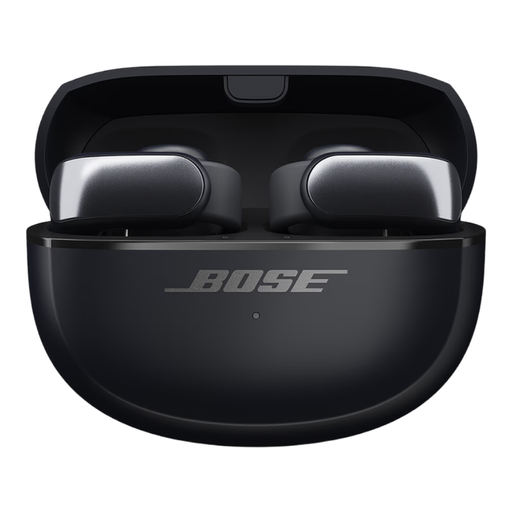
What sets them apart: The Bose Ultra Open Earbuds use a clip-on design that sits comfortably on the outside of the ear. According to the manufacturer, Bose Immersive Audio technology provides a spatial and detailed soundscape. Another feature is Bose SimpleSync, which allows the headphones to be paired with compatible Bose soundbars for synchronized TV audio. The battery life is up to 7.5 hours per charge.
Advantages:
Who it's for: Users who want to combine a discreet design with advanced sound technology. Suitable for the office, commuters, and light athletic activities.
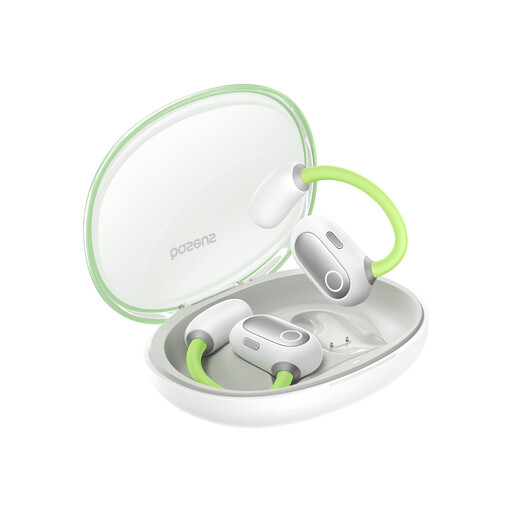
What sets them apart: The Baseus Eli Sport 1 are specifically designed for athletic activities. They feature flexible ear hooks made of titanium memory wire and a detachable neckband for extra stability during intense training sessions. The 16.2 mm drivers and the manufacturer's bass enhancement algorithm aim for powerful audio reproduction. With an IPX4 certification, they are protected against sweat and splashes. The total playback time with the charging case is up to 30 hours, according to Baseus.
Advantages:
Who it's for: Sports enthusiasts and gym-goers looking for extremely secure and robust headphones for intense workouts.
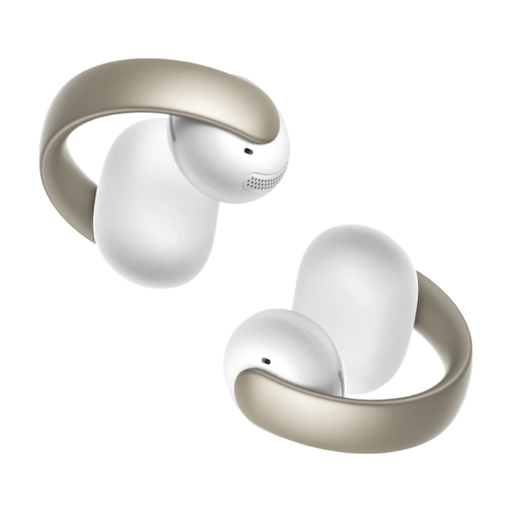
What sets them apart: The Soundcore AeroClip feature a flexible open-ring design that, according to Anker, provides all-day comfort without pressure. They support Hi-Res Audio and use a virtual bass technology to enhance low tones. For clear voice transmission during calls, four microphones with an AI noise reduction algorithm are integrated. This makes them a versatile companion for work and leisure.
Advantages:
Who it's for: Individuals looking for headphones for all-day use that are suitable for both music and frequent phone calls in the home office or on the go.
Haven't found the right model for you yet? The market for open-ear headphones offers a growing variety of designs, features, and price points. To find more alternatives tailored to your specific needs, you can browse our full category.
Discover All Open-Ear Headphones
1. What are the main advantages of open-ear headphones? The three key benefits are:
2. Are open-ear headphones suitable for loud environments? Open-ear headphones are designed to let ambient noise in. In very loud environments, such as on a subway or at a construction site, it can be difficult to hear audio content clearly as the ambient noise competes with the music. They are not a substitute for headphones with active noise cancellation (ANC).