
Lieferung heute & morgen

Qualitätsgarantie

Willkommens-Angebote freischalten: KOSTENLOSE Lieferung | Bis zu 80 % RABATT | Kostenlose 30-Tage-JoyPlus-Testphase
App herunterladen
Open-ear headphones are designed for people who want to listen to music or take calls without being completely cut off from their surroundings. They can be practical for runners, commuters, outdoor enthusiasts and professionals. However, open earbuds are not automatically suitable for every situation. The key factors are the design, fit, battery life, microphone quality and stated water resistance.
The term covers several different designs:
Sound perception, stability and suitability for glasses vary depending on the design. Before buying, you should therefore check not only whether a product is described as “open ear”, but also its specific wearing design.
With open earbuds, active noise cancellation cannot provide the same level of isolation as closed in-ear or over-ear models. Some products offer ANC for playback, while others only use ENC microphone technology to reduce background noise during calls.
If you are looking for headphones with noise cancellation, check whether the product specifically mentions ANC or only a microphone function. When walking near roads or cycling, awareness of your surroundings should remain more important than achieving the strongest possible isolation.
“Water-resistant” is not a licence to use headphones in the rain, shower or swimming pool. A rating such as IPX4 describes protection against splashing water, while IPX5 covers water jets from certain directions. IP55 also adds protection against dust. For temporary immersion, an explicitly stated IP68 certification is required.
The IP rating does not automatically apply to the charging case either. The case should be kept dry, even if the earbuds themselves are protected against sweat.
For sports headphones, ear hooks, flexible bands or a clip-on design can be important. Look out for:
A secure fit reduces the risk of an earbud falling out while running or during rapid movements. However, it is no substitute for staying alert in traffic. Some product instructions expressly advise against using headphones while driving or cycling.
Wireless open-ear headphones usually connect via Bluetooth. Bluetooth 5.3 or 5.4 can provide a modern wireless foundation, but on its own it says nothing about sound quality or connection stability in every environment. You should also check:
The stated playback time depends on volume, codec, ANC and phone calls. Compare the earbuds’ runtime with the total runtime including the charging case. Models with long battery life are suitable for commutes and longer training sessions, while fast-charging functions can help you get through short charging breaks.
The following selection matches different designs to specific everyday situations. The technical specifications reflect the details provided for each product.
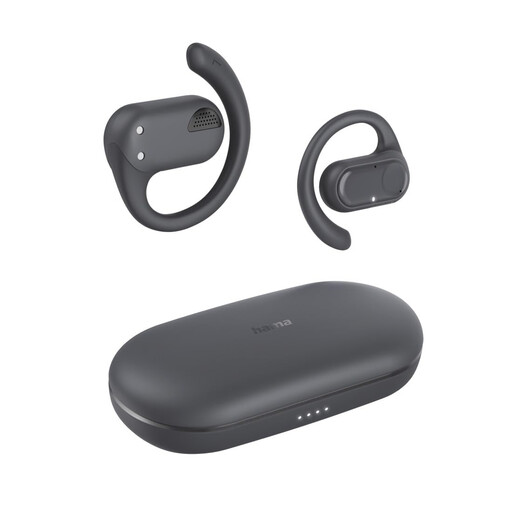
Why this product suits the profile: These open Bluetooth headphones combine ear hooks, touch controls and a stated battery life of around 18 hours including the charging case. IPX4 is intended for sweat and light splashes.
The rating is clearly stated as IPX4 and is not presented as protection against immersion. The open design means that surrounding sounds remain audible.
Ear hooks, Bluetooth 5.3, app support and ENC for calls.

Why this product suits the profile: This model uses an open design with a hybrid driver system, several EQ profiles and 360° spatial sound with head-movement tracking. Ear hooks with flexible memory titanium wire help keep the headphones securely in place.
The open design is described clearly. Rather than simply promoting a high battery capacity, the driver configuration, in-app EQ and wearing design are specified in detail.
Hybrid drivers, several sound profiles and spatial audio playback.
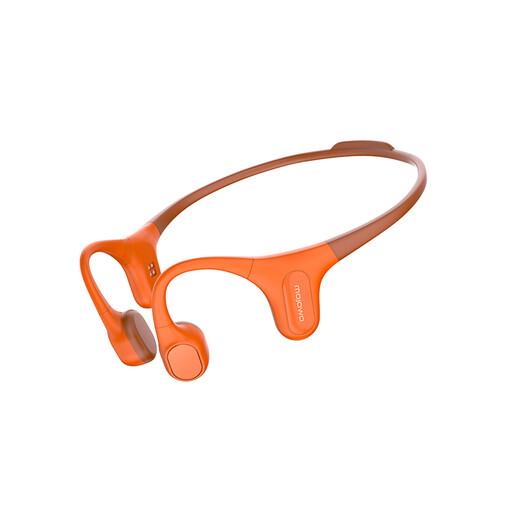
Why this product suits the profile: According to the product details, these bone-conduction headphones feature IP68, Bluetooth 5.2, 32 GB of built-in storage and up to eight hours of playback. This makes them suitable for training without a smartphone and for water sports.
Its suitability for use in water is described with a specific IP rating and usage guidance. Dry conditions are still required for the charging accessories.
32 GB of built-in storage, IP68 rating and Bluetooth 5.2.

Why this product suits the profile: The open-ring design, stated weight of 51.6 grams, 12 mm driver and four microphones are intended for extended use and everyday calls.
The water protection is described only as “water-resistant”. For heavier rain or swimming, you should therefore choose a model with a clearly stated higher IP rating.
Open-ring design, four microphones and touch controls.
We have put together a complete, regularly updated list of products that fully meet these strict selection criteria and the safety regulations applicable in the EU.
Clean the contact surfaces regularly with a soft, dry cloth. Sweat and dust should not be left on the ear hooks or charging ports for extended periods. Do not charge the headphones in a damp environment and use a suitable USB-C charger.
The microphone position is crucial during calls. Wind protection and beamforming can support voice transmission, but they are no substitute for a quiet environment. When walking, jogging or commuting, set the volume so that you can still hear warning signals. In traffic and during activities that require heightened attention, follow the manufacturer’s safety guidance and all applicable regulations.
Many models are designed for sports and use ear hooks, bands or bone conduction. Before buying, check the fit, weight and IP rating. When jogging near roads, staying alert and keeping the volume at a suitable level are more important than the advertised sports suitability.
Service life depends on the battery, charging cycles, moisture and care. The stated playback time is a guide and may decrease at high volume or when additional features are enabled. A charging case extends use between charges, but it does not prevent the battery’s natural loss of capacity over time.
Yes, provided the microphone quality, fit and Bluetooth compatibility are suitable. ENC or beamforming generally affect voice transmission and do not automatically mean noise cancellation for music playback. In open-plan offices, you should also keep the volume low so that conversations and sounds around you remain audible.