
Lieferung heute & morgen

Qualitätsgarantie

Willkommens-Angebote freischalten: KOSTENLOSE Lieferung | Bis zu 80 % RABATT | Kostenlose 30-Tage-JoyPlus-Testphase
App herunterladen
Open-ear headphones leave your ears largely uncovered, allowing you to enjoy music, podcasts or phone calls while staying aware of your surroundings. This is practical for commuters, professionals, runners and outdoor users. However, open-ear Bluetooth headphones can differ considerably in terms of fit, sound leakage, battery life and resistance to moisture.
If you only look at terms such as “Hi-Res”, “AI” or a long total playtime, you can easily overlook important details. The following points will help you avoid common buying mistakes and choose a model that suits your everyday routine.
Manufacturers often state the battery life including the charging case. However, the first thing to consider is the playback time of the individual earbuds. A model offering 7 hours per charge may be sufficient for training sessions, while frequent users should generally look for 8 to 10 hours per charge. The additional capacity of the charging case is useful for travel and commutes, but it does not replace sufficient individual battery life.
An IPX4 or IPX5 rating does not mean complete protection when submerged. IPX4 indicates protection against splashing water, while IPX5 indicates protection against water jets from different directions. These ratings do not include dust protection. For rain, sweat and outdoor activities, you should therefore check the specific IP rating. Despite the rating, the headphones should not be submerged or exposed to heavy moisture for extended periods.
With open-ear models, it is important to distinguish between ENC, ANC and the open design:
A pair of headphones with noise cancellation is therefore not automatically suitable for every noisy environment. When cycling, in traffic or on railway platforms, it is still important to remain aware of your surroundings.
Headphones with ear hooks usually stay more securely in place during movement. They are suitable for running, fitness and longer walks, but may create pressure when worn with glasses or with certain ear shapes. A flexible, adjustable hook can be helpful in this regard.
Clip-on headphones attach to the ear and are often particularly lightweight. Before buying, check whether the clip suits your ear shape and remains comfortable during extended use.
Bone-conduction headphones sit in front of the ear and transmit sound through the bone. They do not block the ear canal. However, their sound profile, bass reproduction and fit differ from those of conventional open-ear earbuds. For users who prefer to keep their ears as open as possible, this design can be a suitable alternative.
Bluetooth 5.3 or Bluetooth 5.4 can provide up-to-date connectivity with efficient data transfer and a stable range. However, the actual range also depends on walls, your smartphone and the radio environment. Figures such as 10 metres generally refer to an environment with few obstacles.
Automatic pairing, touch controls and support for Siri or Google Assistant are useful for everyday use. If you use several devices, you should also check whether Multipoint functionality is specified. It is not available on every pair of true wireless headphones.
Compare at least these three figures:
Models with long battery life are ideal for travel and working days. An indicator on the charging case, such as the four LED charge levels on the Hama Spirit Open, makes it easier to check the remaining charge before leaving home.
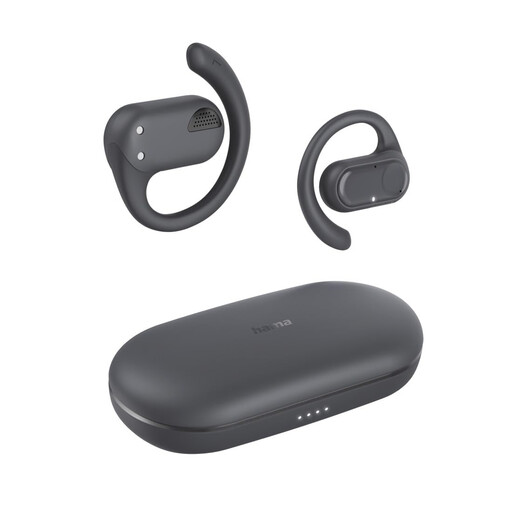
Why this product suits this profile: The open design with ear hooks, Bluetooth 5.3 and touch controls covers the essential requirements for the office, everyday use and light sporting activities.
The product details clearly state both individual and total battery performance: around 18 hours of battery life, IPX4 splash resistance and Bluetooth range of up to 10 metres.
ENC for microphone calls, the Hama Home app with equaliser and a charging case with LED indicator.

Why this product suits this profile: The combination of a hybrid driver design, app-based EQ profiles and 360-degree head tracking is aimed at music lovers who want to customise their listening experience.
The open fit is clearly distinct from in-ear models. The flexible ear hook with memory titanium wire can be adjusted to suit your ear shape.
Hybrid system with an 18 × 13 mm dynamic driver, two balanced armatures, equaliser profiles and a total weight of around 72 grams including the case.
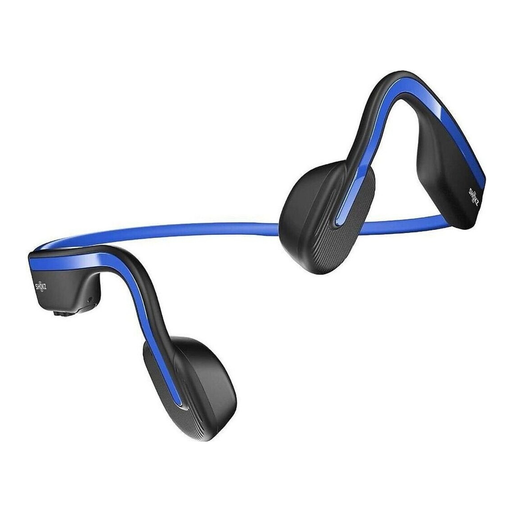
Why this product suits this profile: The design sits in front of the ear and is aimed at runners and outdoor users who want to keep their ear canals clear.
The product description specifies the IP55 rating and states that the headphones are not designed for submersion. The stated playback time is 6 hours.
Bone-conduction technology, Bluetooth connectivity, a noise-reducing microphone and IP55 protection against dust and water jets.
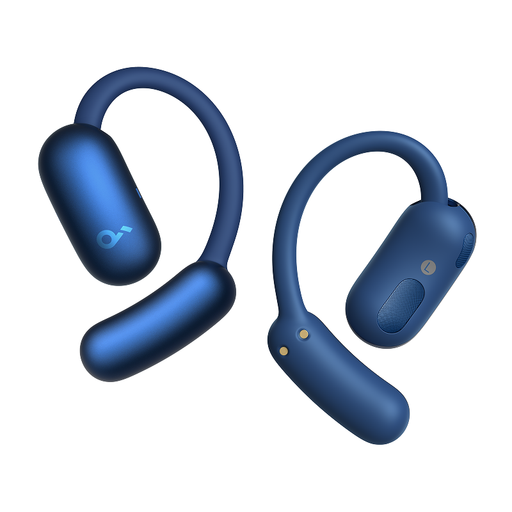
Why this product suits this profile: The stated individual playback time of up to 10 hours and up to 42 hours with the charging case are ideal for long working days, travel and regular use.
The battery specifications distinguish between individual and total playback time. Bluetooth 5.4, USB-C or wireless charging and IP55 are also explicitly listed.
Adjustable ear hooks, four microphones for calls, LDAC support according to the product details and a charging option without a permanently connected cable.
We have put together a complete, regularly updated list of products that fully meet these strict selection criteria and the safety regulations applicable in the EU.
Wireless headphones need to be charged regularly. The electricity costs of charging are generally low in everyday use; how you handle the battery and the charging environment are more important for the product’s lifespan. Use a suitable USB-C charger, avoid extreme temperatures and store the earbuds in the charging case.
Sweat and dust should be removed with a soft, dry cloth. The IP rating is not a substitute for cleaning or careful handling. If the casing is damaged, the headphones become unusually hot or the battery shows visible signs of deformation, stop using the product. Moderate volume levels and breaks can help reduce strain on your ears during longer listening sessions.
They can help you stay aware of your surroundings, but they are no substitute for paying attention. When cycling, driving or crossing roads, follow local regulations and keep the volume low. Phone calls or using the controls can also cause additional distraction.
Their actual lifespan depends on the battery, charging cycles, moisture, mechanical stress and care. The specific guarantee period is determined by the details provided by the relevant supplier. Models with replaceable components are not standard in this product category, so the charging case and ear hooks should be handled carefully.
In addition to the purchase price, the main ongoing expense is the small amount of electricity needed for charging. Additional costs may arise if you do not have a suitable USB-C charger or if the charging case or headphones need to be replaced after prolonged use. The stated battery life and number of charging cycles are therefore important points of comparison.