
Lieferung heute & morgen

Qualitätsgarantie

Willkommens-Angebote freischalten: KOSTENLOSE Lieferung | Bis zu 80 % RABATT | Kostenlose 30-Tage-JoyPlus-Testphase
App herunterladen
Listen to music, make calls and still stay aware of traffic, announcements and conversations: open-ear headphones are an appealing choice for commuters, professionals and sports enthusiasts because they do not completely block the ear canal. At the same time, open headphones vary considerably in terms of fit, sound projection, microphones and protection against moisture.
If you only look at terms such as “360° sound”, “AI noise cancellation” or “long battery life”, it is easy to overlook important details. Three common buying misconceptions are particularly worth considering.
An open design generally lets you hear ambient sounds more clearly than fully sealing in-ear headphones. However, awareness can still be limited at high volume, in strong winds or on noisy roads. Open-ear earbuds are no substitute for paying attention in traffic and should not be used while driving or in situations involving increased safety risks.
Ratings such as IPX4, IPX5, IP54, IP55 or IP57 describe protection under specific testing conditions. IPX4, for example, means protection against splashing water, not immersion. Sweat, rain and salt water can also put stress on materials and charging ports over time. The protection rating specified by the manufacturer must therefore match the intended use.
Battery life depends on factors including volume, codec, calls, ANC and multipoint connections. “Up to” refers to a favourable measurement result. What matters, therefore, is whether the earbud battery life per charge and the total battery life with the charging case suit your daily routine. A charging case with USB-C or wireless charging can make use in the office and on the go more convenient.
Open-ear headphones are usually secured using ear hooks, clip-on elements or a flexible support. Clip-on earbuds sit against the ear without blocking the ear canal. Ear hooks often distribute the weight over a larger area and can stay more securely in place when running or commuting.
Look for:
A model that feels comfortable when first put on may develop pressure points after several hours. For long working days, ventilation and even weight distribution are therefore more important than a particularly striking design.
Open headphones generally transmit sound through air conduction. As the ear canal is not sealed, the bass may be less pronounced on some models than with closed in-ear headphones. Manufacturers try to compensate for this effect in various ways, including larger drivers, directional sound guidance and bass algorithms.
Technical specifications such as driver size, frequency range and supported codecs can help with comparisons, but they are not by themselves a complete indication of the actual sound experience. For podcasts and phone calls, speech clarity and controlled volume are crucial. Music lovers may also value EQ profiles, Hi-Res support or spatial audio functions.
Wireless open-ear headphones with Bluetooth 5.3 or Bluetooth 5.4 offer a current connectivity platform. However, the supported profiles, range under real-world conditions and stability with your own smartphone or laptop are more important than the version number.
For calls, you should pay attention to the following:
Microphone descriptions such as “AI-powered” are no guarantee of clear calls in every environment. If you regularly make calls at railway stations, on the street or while working from home, check the specific microphone configuration and the manufacturer’s description.
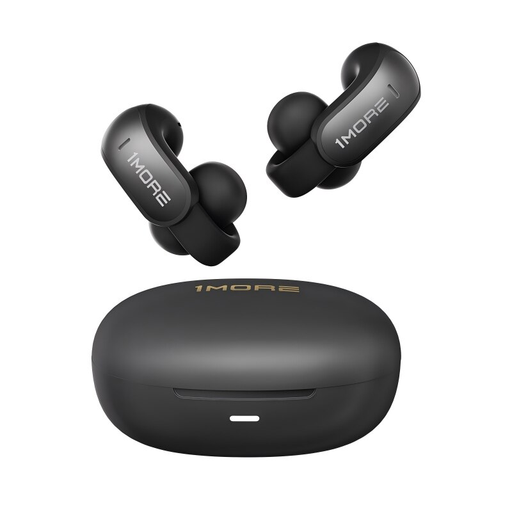
Why this product suits the profile: The clip-on design is suitable for users looking for an open fit and Bluetooth 5.4 for sport, commuting or everyday use. It offers up to 28 hours of playback with the charging case.
The IPX5 rating is more specific than a blanket description of being “waterproof”. Dual microphones with ENC are designed for calls; complete protection against immersion is not specified.
Clip-on design, Bluetooth 5.4, 360° panoramic sound according to the product description and up to 28 hours of playback with the case.
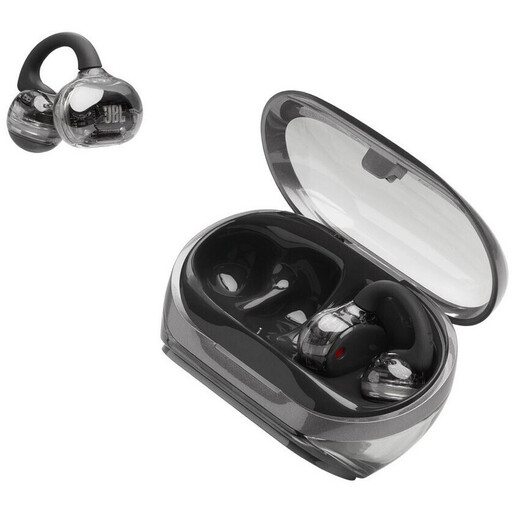
Why this product suits the profile: These open JBL headphones combine Bluetooth 5.4, multipoint for two devices and four microphones. That makes them a good fit for professionals who switch between a smartphone and laptop.
The product data clearly states IP54 rather than unrestricted water resistance. It also explicitly states that active noise cancellation is not included.
Up to 8 hours of battery life per charge, up to 32 hours with the charging case, four microphones and USB-C fast charging.
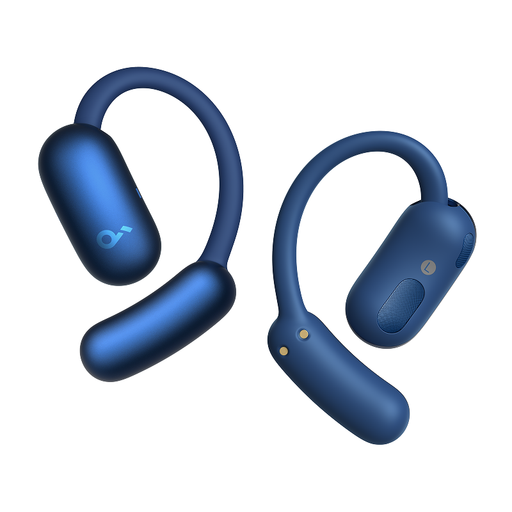
Why this product suits the profile: The adjustable ear hooks, Bluetooth 5.4, IP55 and stated total battery life of up to 42 hours are designed for frequent users who enjoy sport, commuting and long working days.
The IP55 classification sets a clear limit for dust and water resistance. Battery life is considered separately for the earbuds and charging case, rather than simply highlighting one total figure.
Up to 10 hours of playback per charge, wireless charging for the case according to the product description, four microphones and LDAC support.
We have put together a complete, regularly updated list of products that fully meet these strict selection criteria and the safety regulations applicable in the EU.
After exercising, remove sweat and moisture with a soft, dry cloth. Charging ports must be dry before the earbuds are placed in the case. Where possible, store the earbuds in their charging case and avoid direct sunlight and extreme temperatures.
To help preserve battery life, avoid storing the headphones completely flat for long periods. Use a suitable USB-C charger and follow the manufacturer’s instructions. If there is visible damage, unusual heat or a swollen battery, stop using the product.
Models with ear hooks or clip-on supports can stay securely in place during workouts. For rain and sweat, check the stated IP protection rating. Splash protection does not mean that the headphones are suitable for swimming or immersion.
Their service life depends on the battery, charging cycles, care and mechanical stress. Figures such as 28, 32 or 42 hours usually refer to use with the charging case, not to a single charge. For realistic planning, both figures should be considered separately.
Clarity depends on the number and position of microphones, wind filtering and the surrounding environment. ENC can reduce ambient noise picked up by the microphone, but it does not automatically improve every call. For regular calls, models with several microphones, beamforming or a manufacturer app for adjusting call processing are worth considering.