People who listen in different areas
You move between the living room, dining area and kitchen, and want to decide whether one device will do or whether separate, groupable speakers would be a better choice.


For background music in a limited space, one speaker may be enough. A compatible stereo pair is better suited to a fixed listening position with separate left and right channels, while grouped devices are more suitable for several areas. What matters is where you actually listen, whether your music service and playback method are compatible, and whether you have suitable places to position the speakers and plug them in. Claims of “room-filling” sound do not prove that playback will be even throughout your home or that the volume will go unnoticed by neighbours.
You move between the living room, dining area and kitchen, and want to decide whether one device will do or whether separate, groupable speakers would be a better choice.
You want to play music from your existing sources without any fuss. So check that your music service, smartphone, home network and playback method are compatible with the specific model.
You share an open-plan living space or live in a flat where sound travels easily, and want to enjoy music where you are without turning it up unnecessarily.
A good fit if: You mainly want music in one area, and your home network and playback method are compatible with the model.
Bear in mind: Check the volume at more distant listening spots; a single device does not provide separate stereo channels.
A good fit if: You mostly listen from one fixed position, have space for two speakers and want to use left and right channels.
Bear in mind: The devices must be compatible as a pair under the rules of the system you choose. A stereo pair is not the same as two music zones.
A good fit if: You want the same music playing at the same time in several separate areas, and the devices can be grouped within your chosen system.
Bear in mind: You’ll need compatible devices, a suitable network connection and extra places to position them.
A good fit if: You often change where you listen or want to take your speaker with you from time to time.
Bear in mind: Portability and battery power mean you’ll need to plan for charging. They also won’t automatically provide music in several places at once.
| Buying need | What to check before buying | Who it matters most to |
|---|---|---|
| Music in the places where you want to listen | Mark your listening spots and distinguish between a single device, a stereo pair and grouped devices. | If I move between the living and dining areas, I want to listen in both without turning up a single speaker unnecessarily. Around 29% of consumers say that having several listening spots is their main concern. |
| Music source and control | Check your music service, playback device, app and network are compatible; for the specific offer, also check the documentation for the relevant radio equipment requirements. | If I want my existing music source to work without any fuss, I check that it matches the model’s intended playback method. Around 23% of consumers put source and device compatibility first. |
| Listening at a low volume and being considerate | Listen from your usual spot at the low volume you want, consider speaker placement near adjoining walls and check local rules. | If I share my living space or live in a flat where sound travels easily, I want to hear clearly where I am without turning the volume up unnecessarily. Around 18% of consumers prioritise quiet, considerate listening. |
| Changing where you listen | Decide whether you want to move the speaker or listen to music in several places at once; check the playback method and charging requirements. | If I want to move my speaker depending on the situation, portability matters more to me than a permanently set-up listening zone. Around 18% of consumers say portable use is their main concern. |
| How much equipment you need | Decide in advance whether one device will be enough or whether you’ll need extra speakers or an adapter for the connection you plan to use. | If I only want the features I’ll actually use, I plan for all the equipment needed for my playback method. Around 12% of consumers focus first on limiting the devices and accessories they need. |
A manufacturer’s sound description does not assess every listening spot in your home or how much sound travels to your neighbours.
First, identify the places where you actually listen, then check the positioning and playback at the volume you want.
Stereo pairing depends on the rules of the system and the models involved. Sonos generally specifies that you use the same model, with certain combinations with the corresponding SL versions listed as exceptions.
Check the pairing rules for the specific system before planning to add a second device.
The mention of wireless technology alone doesn’t tell you whether your device can send music to the speaker in the way you want.
Check the specific model’s supported audio sources, set-up requirements and playback method.
IKEA Germany stopped selling the range in January 2026 and says it will continue to support speakers that have already been bought.
Bear in mind that support for existing devices does not mean you can still buy a new one from IKEA as a regular product.
The Era 100 and Era 100 SL are fixed-speaker options for Wi-Fi music and expandable listening areas.
The 2nd-generation HomePod is an option if you have compatible Apple devices and a suitable playback method.
The Home range with HEOS is worth considering if you want to manage music sources and playback in several places using the documented system.
The Portable Smart Speaker is worth considering if moving between listening spots matters more to you than setting up fixed devices in several places.
SYMFONISK is relevant if you already own the devices or are checking compatibility with an existing Sonos system, not as a new IKEA product range available to buy as standard.
This selection includes portable Bluetooth speakers, a Bluetooth soundbar and speakers for listening in several places. Check that each model suits your preferred listening spot and playback method.
 No image available
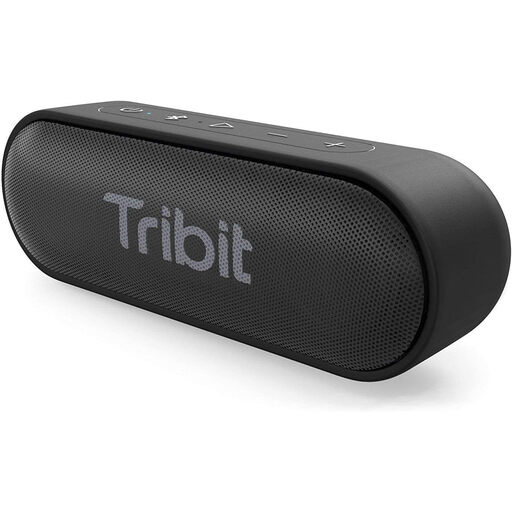
This portable Bluetooth speaker is a good fit if you want to play music from a compatible mobile device in different places.
Product information lists a weight of 550 g, a battery and USB-C charging.
True Wireless Stereo (TWS) for separate left and right channels is listed in the description.
 No image available
This portable Bluetooth speaker is a good fit if you want to play music from a compatible device in different places.
Bluetooth 5.0 and a built-in battery are listed.
 No image available
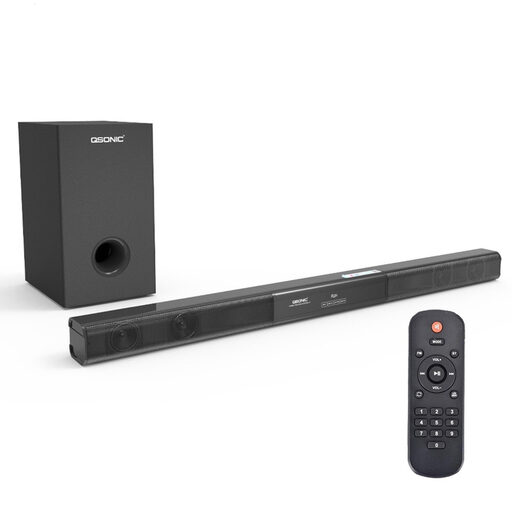
You can consider this soundbar for music from a compatible smartphone, tablet or laptop if Bluetooth playback suits your listening spot.
The product title lists Bluetooth 5.0 and a 5.25-inch subwoofer.
Coaxial, AUX and USB connections, a remote control and a wall bracket are listed in the title.
 No image available
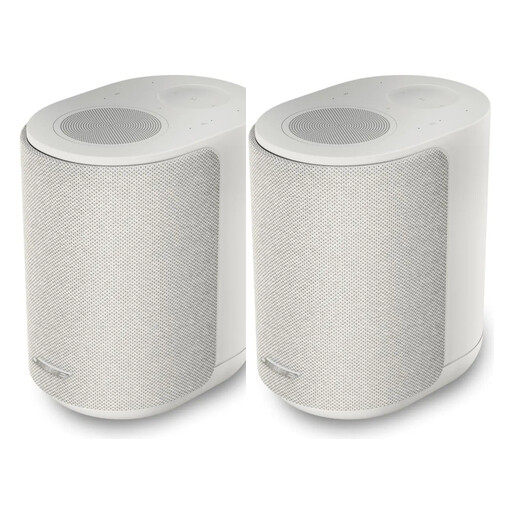
This set is an option if you want to play music in sync in several listening spots using compatible Bose devices.
Wi-Fi, Bluetooth, AirPlay and a Bose app are listed in the product description.
The description specifies compatible Bose devices for synchronised playback.
 No image available
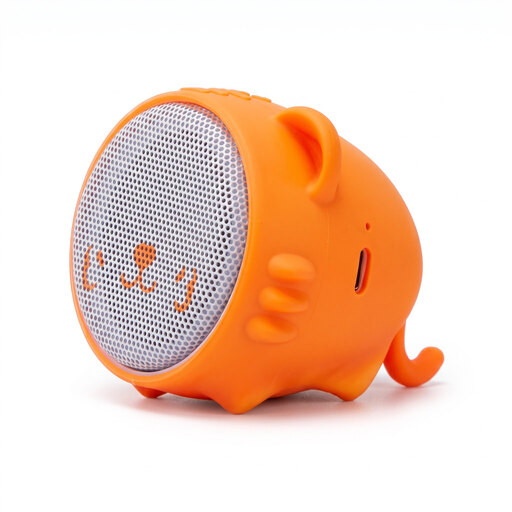
This Bluetooth speaker is worth considering if you want to play music from a compatible device at home or at your desk.
Bluetooth playback is listed in the product description.
No. With a stereo pair, two compatible speakers play the left and right channels in one listening area. To play the same music in separate places, check the grouping feature of the system you’re using.
One speaker may be enough if you mainly need music in one area and the volume works for you there. Groupable devices are worth considering for separate listening spots; a stereo pair is the right option if you want left and right channels in one fixed position.
Apple specifies a compatible iPhone or iPad with supported software, as well as Wi-Fi, internet access and a power connection. Before buying, check your specific device and preferred music service against Apple’s requirements.
For noise caused by people, the German Environment Agency refers to rules set by the federal states and local authorities, as well as tenancy agreements and building rules. Check the rules that apply to your home rather than assuming there is one standard time everywhere.
No. The Bluetooth version alone doesn’t tell you which audio input the speaker is designed to use. Check whether the specific model supports the direct playback method you want and what set-up it requires.