
Lieferung heute & morgen

Qualitätsgarantie

Willkommens-Angebote freischalten: KOSTENLOSE Lieferung | Bis zu 80 % RABATT | Kostenlose 30-Tage-JoyPlus-Testphase
App herunterladen
An open wardrobe is a functional clothes storage solution that offers both flexibility and a clear overview. Unlike closed systems, it allows direct access to your garments and can be adapted to various room layouts. Choosing the right system depends on your individual needs for stability, capacity, and assembly. Common options include the simple garment rack, modular shelving systems, or protective fabric wardrobes.
The decision for an open wardrobe system should be based on objective parameters. The following aspects are crucial for functionality and durability.
The design determines the system's application and flexibility.
The frame material is directly responsible for the stability and maximum load capacity.
Precisely measure your available space (height, width, depth). Also, consider the clearance needed in front of the wardrobe. The capacity is determined by the length of the hanging rail and the number and surface area of the shelves. Plan realistically how many items you need to hang versus how many you will store folded.
Based on an analysis of technical specifications and practical benefits, we present three distinct systems.
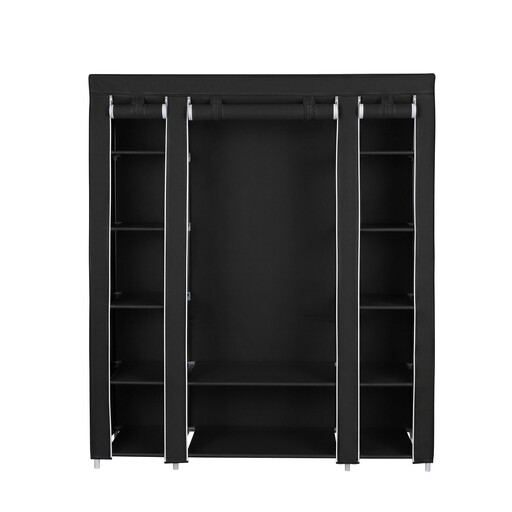
Why we recommend this product: This model combines the high capacity of a shelving system with the protection of a fabric wardrobe. With 12 shelving compartments and a hanging rail, it offers a structured solution for a large amount of clothing and accessories. Assembly is tool-free via a plug-in system.
Pros:
Best for: Individuals looking for an affordable, high-capacity clothes storage solution for a bedroom, basement, or as a seasonal extra closet, who also value dust protection.
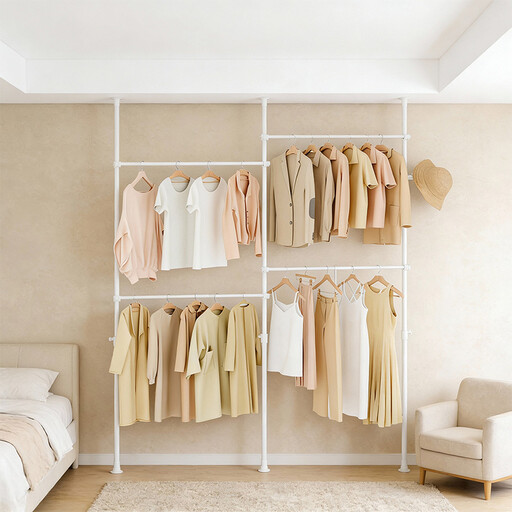
Why we recommend this product: The primary strength of this system is its exceptional adaptability. As a no-drill wardrobe, it can be flexibly adjusted to room heights from 200 to 295 cm and widths from 124 to 226 cm. It is an ideal solution for rental apartments and alcoves.
Pros:
Best for: Renters, students in shared flats, or anyone wanting to create a walk-in closet solution in a niche or small room without making structural changes.
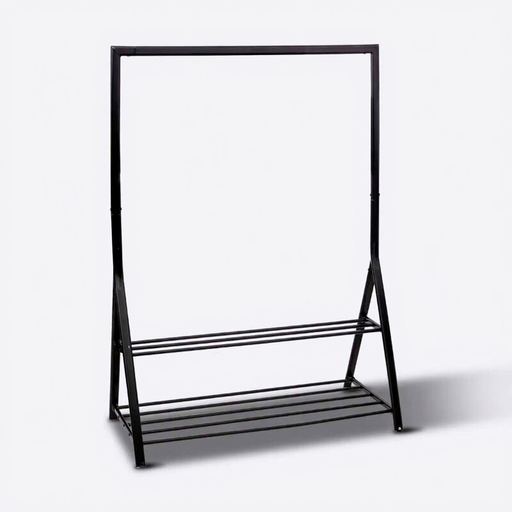
Why we recommend this product: This model focuses on stability and a minimalist design. The steel construction is designed for a very high maximum load of 90 kg, making it an extremely robust garment rack for heavy clothing like winter coats.
Pros:
Best for: Users who need a durable, high-capacity, and simple clothes rack with storage for daily use or for showcasing clothing.
The products featured cover common requirements. Should your needs demand more specific solutions regarding design, material, or size, a broader selection of systems may be beneficial. You can find a comprehensive overview of various designs and sizes in our Bedroom Garment Racks category.
1. How much weight can an open wardrobe hold? The load capacity varies greatly depending on the model and material. Simple clothes racks often hold 10–20 kg per rail. Robust steel systems can support 90 kg or more. Telescopic systems distribute the load and often achieve a total capacity of over 60 kg. Always check the manufacturer's specifications for the maximum static load capacity.
2. How can I keep an open wardrobe organised? Use uniform hangers for a cohesive look. Use storage boxes or baskets on the shelves for small items like socks or accessories. Sort clothes by colour or type. Trouser hangers or special accessory holders can make more efficient use of the hanging rail space.
3. Is a no-drill wardrobe stable? Yes, when installed correctly, telescopic systems are very stable. The hold is created by the constant pressure the rods exert on the floor and ceiling. It is crucial that the rods are aligned perfectly vertically and are tightly tensioned. The stability is designed for the intended load of clothing.
Written by: Joybuy Product Recommendation Officer