You don’t need another fridge if the existing shared fridge is cold enough where you plan to store the cream and has room for a covered container. If there’s a permanent shortage of fridge space, a table-top fridge without a freezer compartment may be suitable, provided you don’t need extra freezer space. If you need both, a model with a freezer compartment could be an option. Check the pack instructions, the temperature at the actual storage spot, the available internal and installation space, and annual energy consumption separately.
Who might benefit from an extra fridge?
House shares with limited fridge space
If you store opened cream and other perishable foods together, you need a sufficiently cold, well-organised place for them. The German Federal Institute for Risk Assessment recommends keeping food covered and separate from other items.
Shared kitchens that are always short on space
If your existing fridge is consistently too small, a table-top model can provide extra chilled storage. What matters is how much usable fridge space it offers and whether you need a freezer compartment.
House shares keeping an eye on energy use
If you’re considering a second appliance, weigh its stated annual energy consumption against the extra space it provides. The German consumer advice centre recommends taking energy use and the size of the appliance you need into account when choosing.
What should you look for when choosing one?
Keep using your existing fridge
A good fit if: There’s enough room in the spot you plan to use and the temperature meets the instructions on the cream packaging.
The trade-off: You won’t be adding another appliance, but you’ll need to organise the shared space carefully.
Table-top fridge without a freezer compartment
A good fit if: You’re regularly short of fridge space but don’t need extra freezer space.
The trade-off: The appliance takes up floor or worktop space and uses electricity continuously.
Table-top fridge with a freezer compartment
A good fit if: You need freezer space as well as extra fridge space.
The trade-off: The freezer compartment takes up some of the total capacity, so it doesn’t add to the fridge space available for cream.
Electric cool box
A good fit if: You need portable cooling and can check the temperature in the conditions where you’ll use it.
The trade-off: Cooling below the ambient temperature doesn’t guarantee a fixed storage temperature for cream kept inside long term.
| What matters |
What to check before buying |
Who should pay particular attention? |
| Temperature where food is stored |
Follow the instructions on the packaging and use a fridge thermometer to check the temperature at the spot you plan to use. The BfR gives 2 °C to no more than 7 °C as general hygiene guidance for perishable foods; follow stricter instructions on the packaging. |
If I store opened cream in a shared appliance, I want to know whether it’s cold enough in that specific spot. Around 36% of consumers name storage temperature as their main concern. |
| Usable fridge space |
Compare the stated fridge capacity rather than the total capacity, and check the shelves and space for the containers you need to store. |
If there isn’t enough separate, well-organised fridge space in your shared kitchen, you may need extra usable capacity. Around 29% of consumers name extra fridge space as their main concern. |
| Annual energy consumption |
Compare the stated kWh/year on the energy label and work out the cost over the same period using your own electricity tariff. |
If I’m considering a second appliance, I want to weigh its running costs against the extra fridge space. Around 21% of consumers name ongoing costs as their main concern. |
| Installation space and noise |
Check the width, height and depth, the space needed to open the door and, where relevant, the door hinge position. Compare noise figures only on a like-for-like basis. |
If space is limited or the kitchen is close to the living area, the appliance must fit in its intended spot with the door open. Around 14% of consumers name installation space as their main concern. |
Common mistakes when buying and storing food
-
Assuming the set temperature is the same as the temperature where food is stored
The appliance setting doesn’t prove that every part of the fridge is cold enough. This is especially important if the door is opened frequently.
Follow the instructions on the cream packaging and check the temperature at the spot you plan to use.
A seemingly suitable setting won’t prevent food from spoiling if the actual storage spot is too warm.
-
Buying an electric cool box as a fridge replacement without checking it first
A claim that an appliance cools below the ambient temperature doesn’t, by itself, tell you what temperature it will reach inside in your kitchen.
Only store opened cream in a place where the temperature meets the instructions on the packaging.
-
Confusing total capacity with fridge capacity
In appliances with a freezer compartment, not all the stated capacity is available for chilled food. The manufacturer states that the Bomann KS 2184.2 has 95 l of fridge space and a 14 l freezer compartment.
Compare fridge and freezer capacity separately, and choose based on the space you actually need.
-
Judging a second appliance by its purchase price alone
An extra fridge uses electricity continuously. Its stated annual energy consumption helps you assess the running costs alongside the fridge space you need.
First, check whether your existing fridge is big enough. Then compare the kWh/year and the installation space needed for specific appliances.
Brands to consider
Exquisit
According to the manufacturer, the KS16-V-H-010C is a freestanding table-top fridge with 134 l of usable capacity and no stated freezer compartment.
- The manufacturer lists external dimensions of 56 × 84,5 × 59,5 cm.
- The appliance needs manual defrosting and space in front of the open door. Its dimensions and the manufacturer’s specifications don’t replace checking the temperature where you’ll store the cream.
Bomann
According to the manufacturer, the KS 2184.2 table-top fridge combines 95 l of fridge space with a 14-l freezer compartment.
- The manufacturer says the door hinge can be changed; annual energy consumption is listed as 139 kWh.
- The freezer compartment takes up some of the total capacity, so it doesn’t increase the fridge space available for cream.
Beko
According to the manufacturer, the TSE1284N table-top fridge offers 101 l of fridge space and has a reversible door.
- The manufacturer describes MinFrost for the freezer compartment.
- MinFrost doesn’t confirm the temperature where you’ll store the cream. Check the fridge and freezer capacities separately, and make sure you’re looking at the correct model version.
Liebherr
According to the manufacturer, the Re 1201 Pure table-top fridge has a total capacity of 98 l and is 50 cm wide.
- The manufacturer says the temperature can be set between +2 °C and +8 °C; the stated noise level is 37 dB.
- The setting doesn’t replace checking the temperature at the actual storage spot. At 60,7 cm deep, the appliance needs to fit in the space available in your kitchen.
Severin
The TKB 2925 electric cool box shows the difference between portable cooling, which depends on the ambient temperature, and a household fridge.
- Severin describes cooling of up to 20 °C below the ambient temperature.
- This doesn’t tell you the fixed storage temperature for opened cream; the product is described as suitable for portable use.
Fridges for extra chilled storage
This selection includes extra refrigeration for shared kitchens, from compact table-top models to a fridge-freezer. A freezer compartment takes up some of the total capacity, so check the stated fridge space and measure the temperature where you plan to store the cream.
 No image available
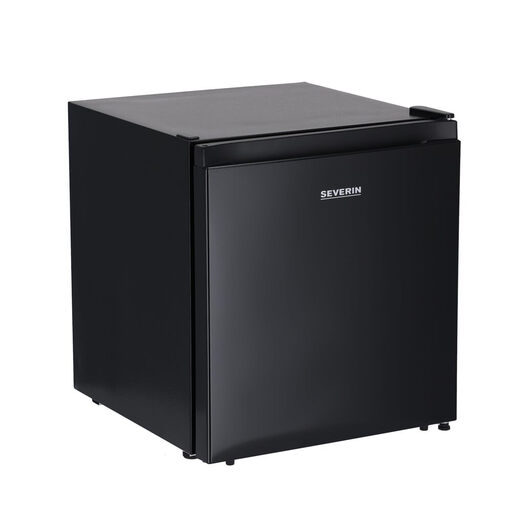
SEVERIN KB 8879 mini fridge with freezer compartment
Could provide extra fridge space if you need a compact table-top model with a small freezer compartment; check the actual temperature where you plan to store the cream.
45 l total capacity, including a 5 l freezer compartment; two shelves and a door shelf. Dimensions: 41,8 × 44,8 × 47,8 cm. The freezer compartment doesn’t count as fridge space.
View at Joybuy
 No image available
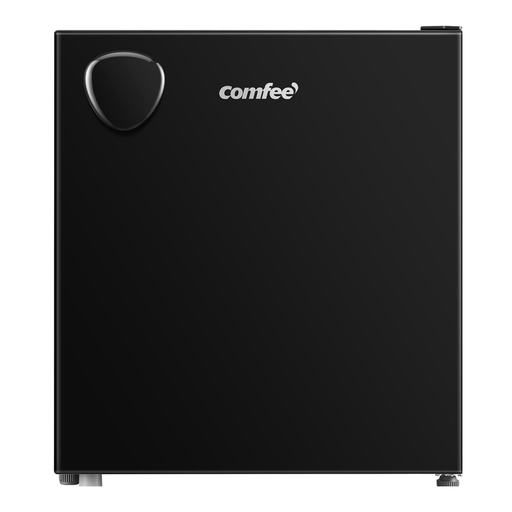
Comfee' Youniq Series RCD48BL2EUY(E) mini fridge
A compact option if you need extra fridge space and have limited room to spare; check that the internal layout can accommodate your cream packaging.
43 l total capacity, 80 kWh/year and 44,5 cm wide. Three temperature settings and adjustable shelves are listed.
View at Joybuy
 No image available
TCL RF120DWE0 fridge with 90 l capacity
Could provide extra fridge space if you’re looking for a compact appliance with adjustable shelves. The stated temperature range for the fridge compartment doesn’t confirm the temperature at the specific spot where you’ll store food.
90 l; a temperature range of 0 °C to 10 °C is stated for the fridge compartment. Dimensions: 449 × 485 × 842 mm; three glass shelves.
View at Joybuy
 No image available
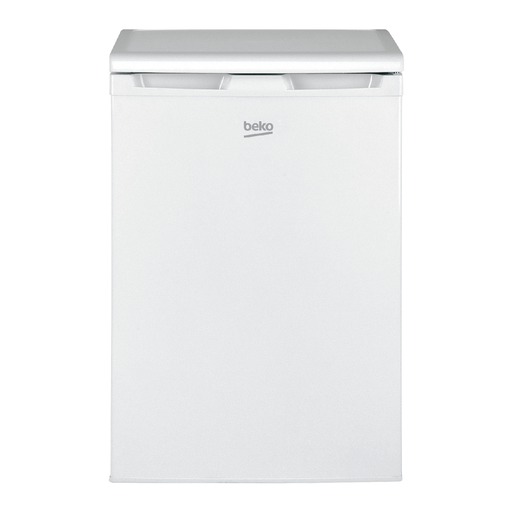
Beko TSE1284N b100 table-top fridge with freezer compartment
A good fit if you need a freezer compartment as well as extra fridge space. For opened cream, the stated fridge capacity matters, not the total capacity.
101 l of fridge space and a 13 l freezer compartment, giving 114 l total capacity. Dimensions: 59 × 54 × 84 cm. The door hinge is reversible; 5–10 cm of clearance is specified at the back and sides for installation.
View at Joybuy
 No image available
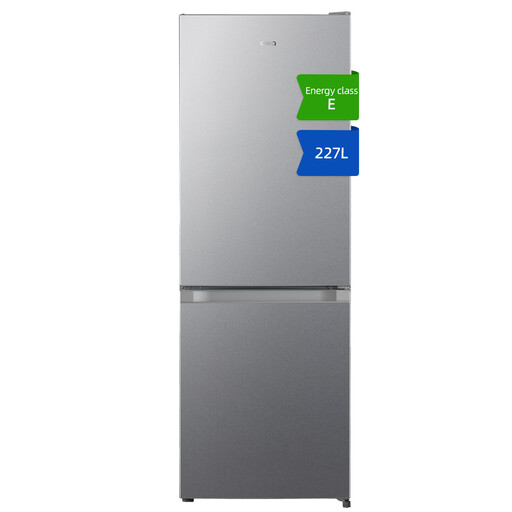
CHiQ JR227LSE fridge-freezer
A larger fridge-freezer for kitchens where you need freezer space as well as fridge space; check that its dimensions suit your available space.
153 l of fridge space and a 74 l freezer compartment. 54 cm wide and 55 cm deep; the door hinge is reversible. The freezer compartment is part of the appliance’s total capacity, not extra fridge space.
View at Joybuy
Frequently asked questions
Can I put opened cream in the fridge door?
Only if the temperature there meets the instructions on the cream packaging. Check the temperature at the spot you plan to use. The German Federal Institute for Risk Assessment gives 2 °C to no more than 7 °C as general hygiene guidance for perishable foods.
Does the best-before date still apply after opening?
No. The best-before date generally applies to products that are unopened and stored correctly. Follow the storage and usage instructions on the specific cream packaging after opening; there isn’t a general number of days that applies to every type of cream.
How can I compare an extra appliance and its running costs?
First, check whether your existing fridge is big enough. If you need a second appliance, multiply its stated kWh/year by your own price per kWh to estimate annual running costs; consider the fridge space you need separately.
Does a new household fridge in Germany need an energy label?
EU energy-labelling rules apply to the relevant refrigeration product group. According to the European Commission, the energy label must also be clearly visible when products are sold online. You can also compare model information in EPREL. Used products are exempt from the labelling rules.
Can an old fridge go in household rubbish?
No. Waste electrical appliances must be taken separately to an authorised collection point, returned to a manufacturer or handed to a retailer where the legal requirements are met. The German Federal Ministry for the Environment explains the rules; check how to return your appliance before placing an order.


