If there’s a clean, separate space available in the shared fridge and the temperature meets the guidance on the pack, you don’t automatically need your own appliance for opened hummus. The German Federal Institute for Risk Assessment (BfR) recommends keeping perishable foods in the fridge at between 2 °C and 7 °C at most; any stricter instructions on your hummus packaging take priority. If there’s no reliably available space, a fridge suitable for food storage may be an option. Check the temperature where the food will actually be stored, the space required and the annual energy consumption. The label “drinks fridge” alone doesn’t prove it’s suitable.
Who might need their own chilled storage space?
Shared houses with limited fridge space
If you share storage space for opened dips and other food, first check whether there’s a clean, sufficiently cold and clearly designated space available in the existing fridge. The BfR recommends keeping food covered and separate from other items.
People who need their own fridge space
If there’s regularly no reliably available space in the shared appliance, consider the usable interior space, the temperature where the food will be stored and the room required for a separate appliance. Product information from Bomann and Liebherr shows that models vary in features such as capacity and temperature settings.
People keeping an eye on energy use
An additional appliance may run all the time. The consumer advice centre and European Commission identify annual energy consumption as a useful comparison figure; weigh it against your actual storage needs.
What should you look for when choosing?
Keep using the shared fridge
A good fit if: there’s a clean, separate space available and the instructions on the pack can be followed there.
Things to consider: agree with the other users on how space is allocated, cleaned and labelled.
Compact fridge for food
A good fit if: you regularly need your own clearly designated chilled space and can check the temperature where you plan to put it.
Things to consider: the appliance takes up space and uses electricity. Consider usable capacity, annual energy consumption and noise together.
Drinks fridge or mini cooler
A good fit if: you can verify that the specific model meets the temperature guidance on your hummus packaging where you plan to put it.
Things to consider: the design and compact size alone don’t prove that it will cool sufficiently or is suitable for storing food.
| What matters |
What to check before buying |
Who is this especially important to? |
| Reliable cooling |
Check that it’s suitable for food, that the temperature can be adjusted and that it meets the instructions on the pack; check the temperature where the food will be stored. |
If I’m storing opened hummus, the required temperature must be maintained in the place where I actually keep it. Around 33% of consumers put reliable cooling first. |
| Usable, designated space |
Check what space is available in your existing appliance; if buying a new one, compare the interior layout, external dimensions and door opening. |
If there’s no clearly designated space in the shared fridge, usable storage space is key. Around 27% of consumers prioritise the layout. |
| Energy consumption |
Compare the stated annual energy consumption in kWh/year with your actual storage needs. |
If you’d be running your own appliance all the time, you’ll want to weigh the extra energy use against the benefits of separate chilled storage. Around 20% of consumers put energy consumption first. |
| Noise and where you’ll put it |
Check the noise rating, external dimensions and ventilation requirements in the instructions; the temperature at the location matters too. |
If the appliance is going in a shared kitchen, it’s important to have a suitable spot and keep disruption to a minimum. Around 20% of consumers prioritise placement and quiet operation. |
Common mistakes
-
Assuming a drinks fridge is suitable just because it’s small
When storing opened hummus, what matters is whether the specific appliance can meet the temperature guidance on the pack where you plan to put it. Its name or size won’t answer that question.
Check the information for the specific model and monitor its temperature under the conditions in which you’ll actually use it.
-
Applying the best-before date to opened hummus
Guidance for unopened food doesn’t automatically tell you how long it can be used for once opened.
If helpful, note the date you opened it and follow the storage and use-by guidance on your specific pack.
-
Assuming a compartment advertised as a “freezer compartment” is a freezer without checking
The Bomann KB 7245 product page lists a 4-l “freezer compartment”, while the EU product fiche doesn’t show a star-rated freezer compartment. You don’t need a freezer compartment to chill hummus.
If you also want to store frozen food, check the compartment type and labelling in the product fiche for the specific model.
A compartment like this isn’t automatically a substitute for a separate freezer.
-
Looking only at the purchase price of an additional appliance
A fridge uses electricity while it’s running; a low purchase price on its own tells you nothing about its annual energy consumption.
First check whether a suitable space in your existing fridge will do. If you’re buying a new appliance, compare its stated energy consumption in kWh/year.
Relevant brands and models
Bomann
The KB 7245 is an example of a small freestanding fridge for when you need your own, limited chilled storage space.
- Bomann’s EU product fiche lists a total volume of 45 l, energy consumption of 80 kWh/year, a noise level of 39 dB(A) and a recommended setting of 4 °C for the fresh food compartment on the KB 7245.
- The product page advertises a 4-l “freezer compartment”; the EU product fiche doesn’t list a star-rated freezer compartment for this model. This doesn’t confirm that it can freeze food.
Liebherr
The Rd 1400 Pure table-top fridge may be worth considering if several people regularly need more designated chilled storage.
- Liebherr lists a total volume of 125 l and a temperature setting range of +2 °C to +8 °C for this model.
- Its larger size means it needs more floor space. A selected setting doesn’t confirm the temperature of every hummus container where it’s stored.
Severin
The KS 9827 cool box is a compact appliance, but its suitability depends on where you put it.
- Severin lists a temperature range of around 2 °C to 7 °C for the KS 9827.
- According to Severin, the temperature reached depends on the location, ambient temperature, control setting and how the appliance is used. The manufacturer’s figure isn’t a measurement taken where you’ll put it in your kitchen.
Klarstein
The Beersafe M is a compact drinks fridge, making it a useful point of comparison when distinguishing between chilling drinks and storing food.
- F.A.Z. Kaufkompass recommended the Beersafe M in its mini-fridge test and describes it as using compressor cooling. Klarstein markets a 33-l version specifically for drinks.
- The recommendation and intended use for drinks don’t confirm that it’s suitable for all opened hummus. Check the specific version and the temperature where the food will be stored.
TCL
The single-door TCL RF092DWE0 could be considered as an alternative with different dimensions and an interior layout.
- TCL lists adjustable shelves and easy-to-clean door seals for this model.
- This information doesn’t confirm a specific temperature where you plan to store food; check that it’s suitable for your intended use.
Joybuy products for small chilled spaces
This selection ranges from compact cool boxes and drinks fridges to a small single-door fridge. With every model, the key question is whether it can meet the temperature guidance on your hummus packaging where you plan to store it.
 No image available
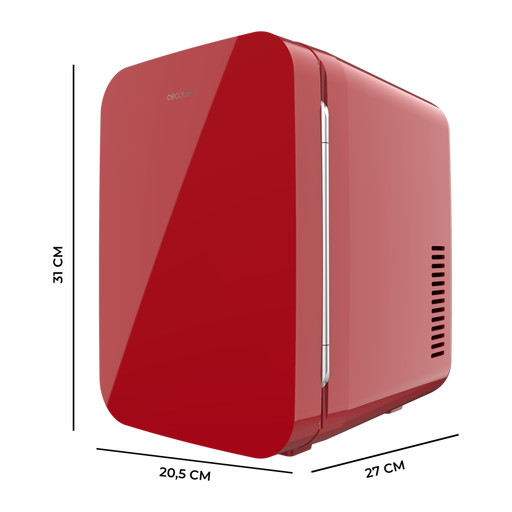
Cecotec Bolero MiniCooling, 6 l
Described as a portable mini cool box. Before using it for hummus, check that the temperature where it will be stored meets the guidance on the pack.
6 l capacity; operates on 12 V/220 V; stated temperature range of 5 °C to 65 °C, with cooling and warming functions.
Joybuy
 No image available
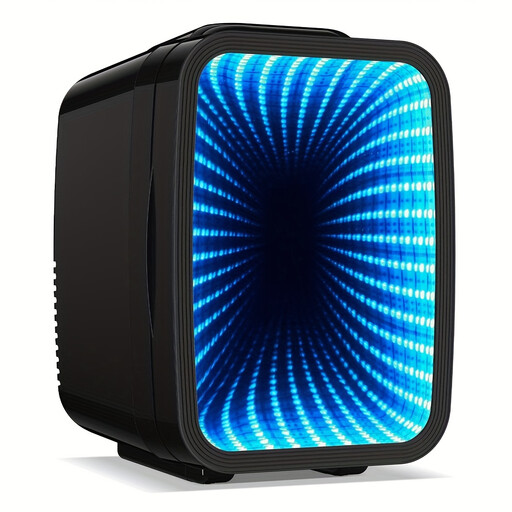
Mini fridge with cooling and warming functions, 4 l
Its compact design provides a small amount of chilled storage. Check the actual temperature before storing opened food in it.
4 l capacity; described as suitable for indoor and outdoor use, with cooling and warming functions and an EU plug.
Joybuy
 No image available
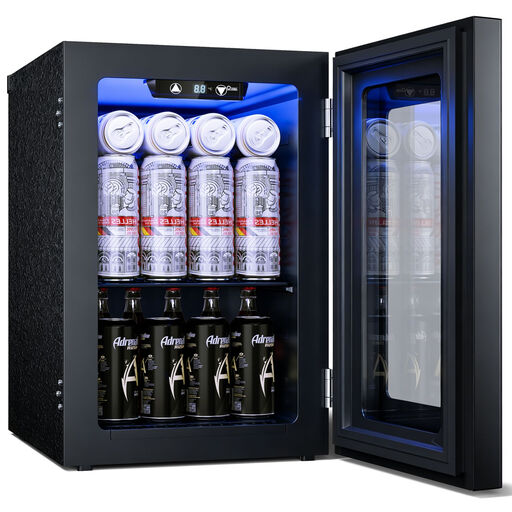
HavenWell drinks fridge, 18 l
Described as offering separately adjustable chilled storage. For hummus, the temperature where the pack is actually stored must meet its instructions.
18 l capacity; digital temperature control from 4 °C to 16 °C; adjustable shelves.
Joybuy
 No image available
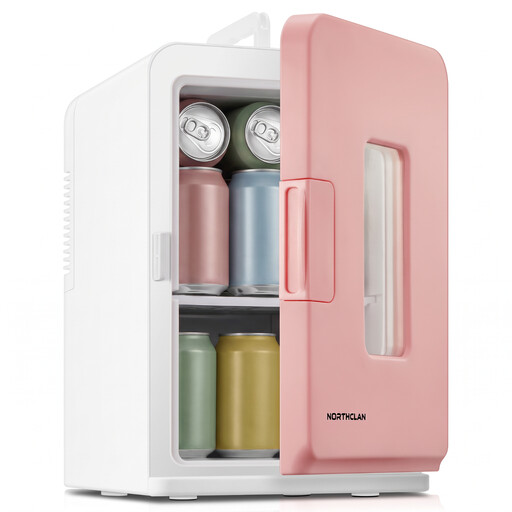
NORTHCLAN mini fridge, 15 l
Described as a portable appliance with cooling and warming functions. The stated cooling performance below ambient temperature doesn’t replace checking that the pack’s instructions can be followed where the food is stored.
15 l capacity; removable, adjustable shelves; described as operating via mains power or a 12 V connection.
Joybuy
 No image available
Sonlu CS-100L fridge, 82 l
Described as a fridge for storing food, so it’s a different type of appliance from the drinks fridges in this selection. Check the temperature where you plan to keep your hummus.
82 l capacity; mechanical temperature control; adjustable glass shelves, door shelves and salad drawer; energy class E.
Joybuy
Frequently asked questions
How long can opened hummus be kept in the fridge?
Follow the instructions on the specific pack rather than relying on a general number of days. Storage and use-by guidance can vary between products.
How can I store hummus hygienically in a shared kitchen?
Keep the hummus covered and separate from other food. The BfR recommends this approach to kitchen hygiene. Agree a space with the other users and continue to follow the instructions on the pack.
What should I check when setting up a small cooling appliance?
Follow the instructions for the specific model on where to put it and how to ventilate it. For example, Severin lists specific restrictions on installing the KB 8872; these don’t automatically apply to other appliances.
How do I compare a fridge’s energy consumption?
Compare the stated annual energy consumption in kWh/year, while also taking usable capacity and your actual storage needs into account. The consumer advice centre and European Commission point to energy consumption figures and the EU energy label as useful ways to compare models.


