If you mainly watch opera recordings in daylight, a specific Mini LED LCD model with suitable anti-reflection treatment is often a sensible starting point. However, high peak brightness alone won’t prevent reflections from windows. OLED is also worth considering if you often watch in the evening and value dark stage scenes or viewing from the side; here too, the screen’s reflection handling needs to suit your room. Also check the sound, playback options and screen size against your viewing distance and available space.
Who this comparison is for
Opera fans with daylight in the living room
If you watch with bright light coming through the windows and don’t want to draw the curtains every time, reflections and brightness in the picture mode you actually use are what matter. CHIP distinguishes between picture modes in its measurements, while the Verbraucherzentrale recommends considering factors such as viewing distance when choosing a screen size.
Opera viewers who care about sound
If you want to listen to singers and orchestras through your TV speakers or an existing audio system, assess the sound separately from the picture and check the audio connection on the specific TV you’re considering.
Opera fans watching in changing light
If you watch during the day and in the evening, or from several seats, you’ll need to consider how reflections, dark scenes, viewing angles and screen size work together—not just one brightness figure.
What to consider when buying
Start by thinking about what is most likely to affect your viewing in the living room: daylight, sound, seating position and picture size, or playback options.
Mini LED LCD
A good fit if: Visibility is your priority in a bright room. Compare reflection handling on the specific model, as brightness alone won’t eliminate reflections.
The trade-off: Dark stage scenes and viewing angles vary by model; local dimming may look less precise than on OLED.
OLED
A good fit if: You often watch in the evening and value dark scenes or seating off to the side. Even so, check how well the specific TV handles reflections in your room’s lighting.
The trade-off: OLED isn’t automatically suited to direct light from a window. The risk of permanent image retention, which depends on the model and how you use it, is also worth considering if parts of the picture stay on screen for long periods.
| Buying priority |
What to check |
Who it matters most to |
| Visibility in daylight |
Assess reflection handling and brightness separately on the specific model, using your preferred picture mode. |
If I watch opera during the day with bright light coming through the windows, I want to be able to see the stage and subtitles clearly. Around 33% of consumers put daylight visibility first. |
| Singers and orchestras |
Try listening with familiar material and, if you use an external audio system, check the audio connection. |
If singers and orchestras are my priority, I want to know whether my chosen audio setup will work from where I sit. Around 25% of consumers prioritise sound. |
| Stage picture and seating |
Measure your viewing distance and available space; check dark scenes and the picture from the seats you use. |
If multiple viewing positions or dark stage scenes matter, I want to judge the picture from the seats I’ll actually use. Around 25% of consumers prioritise picture quality and space requirements. |
| Playback and running costs |
Check the app or streaming device on the specific TV and compare the energy label figures for SDR and HDR on models with a similar screen size. |
If I want to watch recordings through a particular service or streaming device and understand the ongoing energy use, I’ll check both before buying. Around 17% of consumers prioritise playback options and running costs. |
Common buying mistakes
-
Assuming the highest brightness figure means a reflection-free picture
A peak brightness figure alone won’t tell you how clearly you’ll see the stage and subtitles with a window opposite the screen.
Check reflection handling and brightness separately on the specific TV, using your preferred picture mode.
-
Not checking TV sound for opera recordings
Picture specifications and the advertised speaker setup don’t show how singers and orchestras will sound from your seat.
Try listening with familiar material and check that an external audio system has the right connection.
An additional audio system may need more space and careful positioning.
-
Choosing screen size based on the impact of the stage alone
A larger screen won’t necessarily suit your viewing distance or available space. The Umweltbundesamt also points out the link between screen size and electricity consumption.
Measure your viewing distance and available space, and compare the EU energy label figures for similarly sized TVs.
Notable brands and model ranges
Sony
The BRAVIA 9 II K-65XR95M2 is a documented 65-inch model that CHIP also discusses in the context of bright rooms.
- CHIP measured high brightness on the model it tested.
- For this model, CHIP notes that HDR10+ is not supported and that it has two HDMI 2.1 ports. This finding doesn’t automatically apply to other BRAVIA TVs.
TCL
The X11L and Q7D Pro Mini LED ranges differ in their specifications; CHIP included the 75X11L and 65Q7D Pro sizes in a comparison of bright TVs.
- CHIP describes the 75X11L it tested as bright and high-contrast, and lists the 65Q7D Pro as a brighter TV option in its comparison.
- Manufacturer claims about dimming zones and HDR peak brightness shouldn’t be treated as equivalent to measurements by CHIP.
Samsung
The S99H and S95F are OLED ranges, while the QN90F is a Mini LED model. Compare the specific TV with the lighting conditions in your room.
- Samsung advertises Glare Free as a feature specific to the 65-inch S99H.
- This manufacturer claim doesn’t prove that OLED models in general are immune to window reflections.
Panasonic
The TV-55Z95BEG is a 55-inch OLED model with an integrated audio system.
- Panasonic lists “Array-Sound tuned by Technics” for the Z95B series.
- This detail alone won’t tell you how the TV will sound from your seat or whether it’s suitable for direct light from a window.
LG
The OLED evo G5 range is an OLED option for buyers who want to consider both daylight and dark scenes.
- LG advertises high brightness and Dolby Vision on the OLED65G59LS.
- These model specifications don’t replace checking for reflections in your own living room.
Joybuy products
This selection from Joybuy includes Mini LED LCD TVs for bright rooms, as well as models with specified streaming or sound features.
 No image available
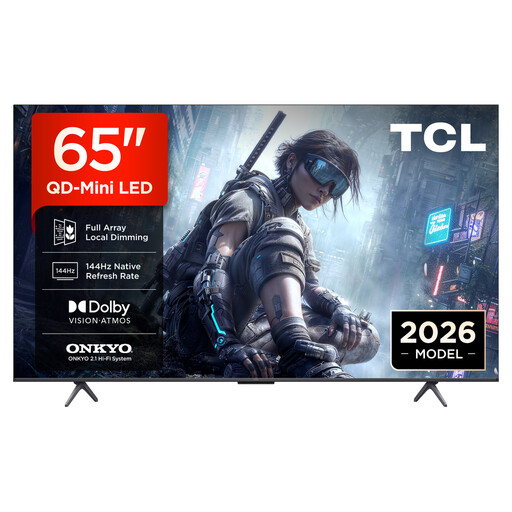
TCL 65T8D QLED QD Mini LED TV, 65-inch
A Mini LED LCD option for bright rooms; the listing also names Google TV and Chromecast as playback options.
4K, 144 Hz, Onkyo 2.1 sound and Dolby Atmos, according to the product details.
View at Joybuy
 No image available
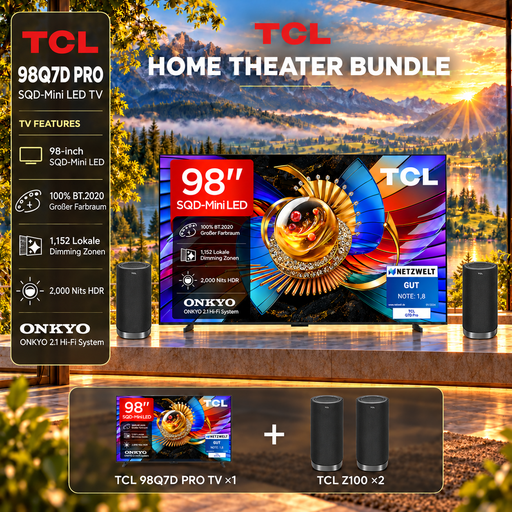
TCL 98Q7D PRO SQD Mini LED, 98-inch, with 2 Z100 speakers
A Mini LED LCD bundle with two Z100 speakers, for buyers considering a TV and speakers together.
4K, 1,152 local dimming zones and up to 2,000 nits HDR, according to the product details; the product name also mentions Anti-Reflection.
At 98 inches, carefully check your viewing distance and available space first.
View at Joybuy
 No image available
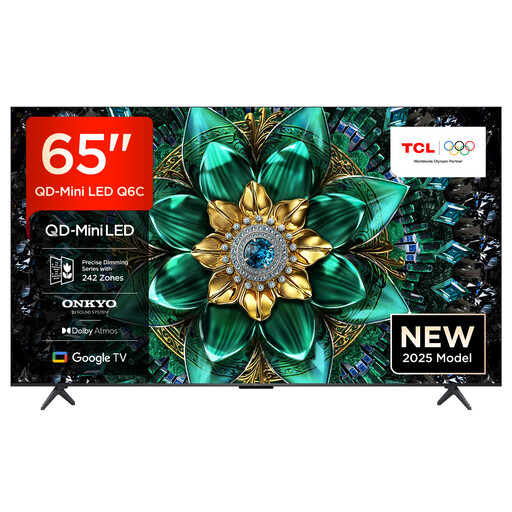
TCL 65Q6C QLED Mini LED TV, 65-inch
A 65-inch Mini LED LCD option; Google TV and Onkyo 2.1 sound are listed on the product page.
4K, Dolby Vision IQ, Dolby Atmos and AirPlay 2, according to the product name.
View at Joybuy
 No image available
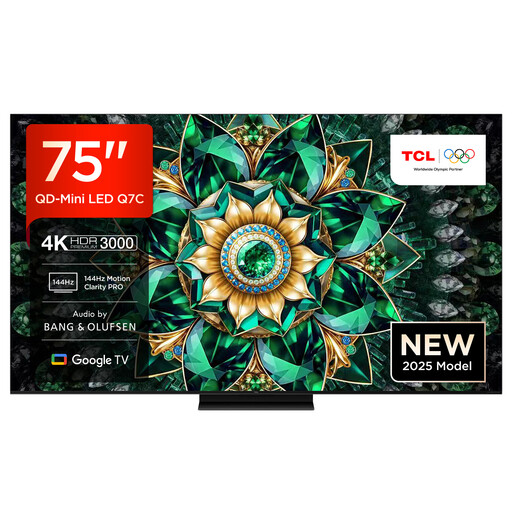
TCL 75Q7C QLED Mini LED TV, 75-inch
A 75-inch Mini LED LCD model for buyers who also want to consider integrated TV sound and streaming features.
4K, Dolby Vision IQ, Dolby Atmos, Google TV and Bang & Olufsen 6.2.2 sound, according to the product name.
View at Joybuy
 No image available
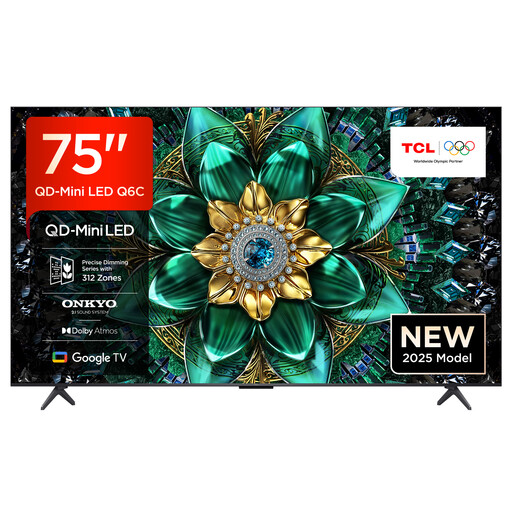
TCL 75Q6C QLED Mini LED TV, 75-inch
A 75-inch Mini LED LCD option with Google TV and Chromecast, according to the product listing.
4K, Dolby Vision IQ, Dolby Atmos and Onkyo 2.1 sound, according to the product name.
View at Joybuy
Frequently asked questions
Is a high stated peak brightness enough for opera recordings?
No. Also check reflections and the picture mode on the specific TV. CHIP lists different measurements for the brightest mode and the Cinema or Filmmaker mode on the TVs it tests.
For a bright living room, is Mini LED or OLED the better choice?
Mini LED LCD is a sensible starting point if visibility in daylight is your priority. OLED may suit you if you also watch often in the evening and value dark scenes or seating off to the side. Ultimately, what matters is how well the specific model handles reflections in your room.
How can I watch opera recordings from ARTE on my TV?
ARTE offers opera recordings. According to ARTE, its app is available on newer generations of smart TVs from various manufacturers; check that your specific TV is supported. Alternatively, ARTE explains how to stream using a connected Chromecast stick and the mobile app.
How do I choose the right screen size?
Measure your viewing distance and available space before choosing a screen size. The Verbraucherzentrale also lists resolution, lighting conditions and viewing angles as factors to consider.
How can I check whether the TV sound is good enough for singers and orchestras?
If possible, try listening to a recording you know well rather than relying on the speaker description alone. If you plan to use an external audio system, check that the specific model has the right connection.


