
Lieferung heute & morgen

Qualitätsgarantie

Willkommens-Angebote freischalten: KOSTENLOSE Lieferung | Bis zu 80 % RABATT | Kostenlose 30-Tage-JoyPlus-Testphase
App herunterladen
The search for the right 18V cordless impact wrench can quickly become overwhelming. The market is flooded with models promising impressive performance specs. But not every tool lives up to its advertising. As a Joybuy Product Recommendation Officer, I see firsthand which features truly count and where the common pitfalls lead to buyer's remorse.
Before you make a decision, you should be aware of three common marketing traps that often lead to disappointment:
To ensure your new impact wrench delivers the expected performance and meets your needs, you should carefully examine three core technical parameters.
Torque is the crucial force for loosening and tightening bolts. For demanding tasks like changing a car's wheels, high torque is essential. Pay attention to the specified nominal torque or tightening torque, as this value reflects the actual working performance.
The combination of motor technology and the tool's anvil determines the device's efficiency and versatility.
If you already own tools from a specific manufacturer, an impact wrench for Makita batteries or another compatible 18V system can mean significant cost savings. You can use your existing batteries and chargers without having to invest in a completely new system. Before buying, carefully check the exact compatibility to ensure flawless function and power delivery. On the other hand, an impact wrench kit with a battery and charger is a great option for newcomers who don't yet own a system.
Here are some models that represent a considered choice for specific user groups, based on objective criteria.
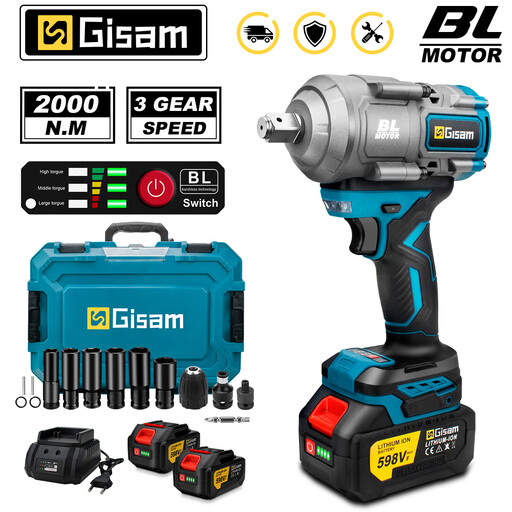
Why This Fits Their Persona: Ideal for professional users and ambitious DIYers who need maximum power for heavy assembly work or regular tyre changes on SUVs and vans. Its compatibility with Makita 18V batteries makes it the perfect addition to existing tool collections.
This model uses a brushless motor for durability and efficiency and offers explicit compatibility with Makita 18V batteries. Its very high torque is designed for the most demanding tasks.
High Torque: With up to 2000 N.m of breakaway torque for extreme demands. Brushless Motor: Ensures less wear and longer battery life.
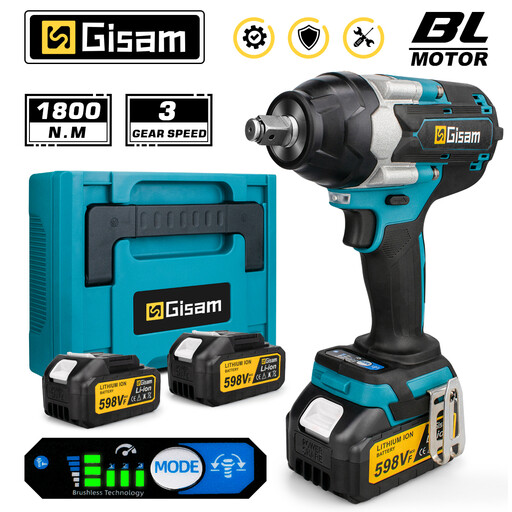
Why This Fits Their Persona: Perfect for the ambitious DIYer looking for a powerful tool for seasonal tyre changes and various projects around the house and garage. As a complete kit with batteries and a charger, it offers a cost-effective entry point.
This model also features a modern, brushless motor. With 700 N.m of nominal torque, it provides realistic power that is more than sufficient for most DIY applications, without advertising exaggerated figures.
Complete Kit: Supplied as an impact wrench set with a battery, charger, and case. Solid Performance: The torque is well-suited for all common tasks, including changing car tyres.
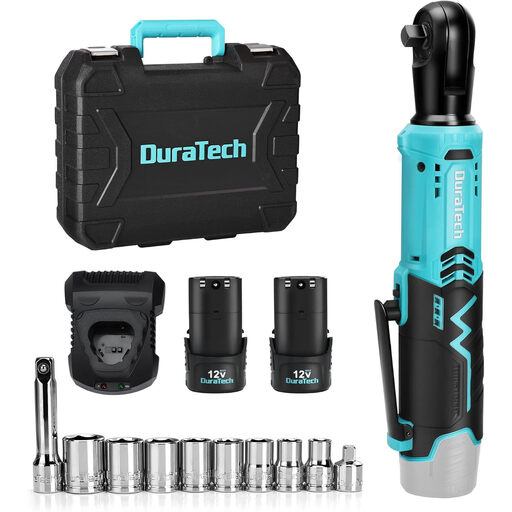
Why This Fits Their Persona: Not every job requires brute force. For work in engine bays, on dashboards, or in other hard-to-reach areas, a compact cordless ratchet wrench is often the better choice. It speeds up fastening where a large impact wrench can't fit.
This tool clearly positions itself as a ratchet wrench, not an impact wrench. It avoids the torque trap by specifying a realistic 65 Nm for its design and application—ideal for quickly turning fasteners, not for breaking loose stubborn bolts.
Compact Design: The slim head reaches places inaccessible to an impact wrench. LED Light: Directly illuminates dark work areas.
We have compiled a complete, up-to-date list of products that fully meet these strict selection criteria and safety standards.
For most passenger cars, lug nuts are tightened to a torque between 110 and 150 Nm. To loosen them reliably, even after a long time or with corrosion, an impact wrench should be able to apply a breakaway torque of at least 300 Nm. More provides a buffer for difficult cases. Important: Always use a torque wrench to tighten the lug nuts to the manufacturer's specified value as the final step.
A brushless motor has no physical carbon brushes that wear down through friction. Power transfer is managed electronically. This leads to several advantages:
Not necessarily. "Compatible" often just means the battery fits mechanically. However, for optimal performance and safety, the battery's electronic contacts must also communicate with the tool's electronics. This ensures that the motor receives the correct power and that protection features like overload and deep-discharge protection are active. Ideally, use batteries recommended by the tool manufacturer or those whose compatibility is explicitly confirmed.