Which setup is right for you?

Interviewers in rooms with a fan

If you’re recording someone’s memories in a room with a fan, test the microphone position and background noise in the intended location. Shure explains why microphone distance and room acoustics matter when recording.

Teams recording multiple speakers

If you want both the story and your questions to be clearly audible, positioning microphones separately can help. Zoom describes the H4essential as having two additional XLR/TRS inputs for external microphones.

People managing long-term oral history archives

If you’re recording longer conversations, plan the recording format, storage, power supply and file transfer as one complete workflow. Sony and Philips document different storage and recording options, depending on the model.

What should you look for when buying?

Buying priority What to look for Who it matters most to
Clear speech Test the recording in the interview location. Listen out for quieter passages and check whether you can position a microphone closer to the person telling their story. If I want to understand every word despite the fan noise, I test the sound in the planned location before the conversation. Around 42% of consumers prioritise clear speech.
Recording each speaker separately Check how many suitable microphone inputs can be used at the same time and where you plan to position the microphones. If the story and questions will come from different seats, I need a setup that can pick up both voices effectively. Around 25% of consumers prioritise recording speakers separately.
Safeguarding long conversations Check that the storage and power supply suit the planned recording duration and format. If I want to preserve a long oral history interview in full for an archive, I plan the recording, storage and file transfer together. Around 17% of consumers prioritise a reliable workflow for archival interviews.
Getting started easily Practise starting and stopping the recording and saving the file in advance. Check whether the built-in microphone is suitable for the planned distance. If I want to focus on the person telling their story during the conversation, I need to be confident using the controls beforehand. Around 16% of consumers prioritise a straightforward interview setup.

Avoid common misconceptions

  • Assuming 32-bit float or noise reduction guarantees clear speech

    Recording format and signal processing can’t make up for poor microphone positioning. Post-production processing can also have its limits when fan noise is loud.

    Compare test recordings made in the actual interview location and check that the speaker remains easy to understand during quieter passages.

  • Buying a recorder for two speakers without planning the microphone setup

    Separate microphones need suitable inputs and a practical setup.

    Before you buy, decide where both people will sit and which inputs you’ll need to use at the same time.

    Separate external microphones may also require suitable microphones and additional accessories.

  • Assuming the maximum recording time for a compressed format also applies to PCM

    Documented recording times depend on the format. Philips lists different recording times for MP3 and PCM across its VoiceTracer range.

    Check the storage and power supply against the format and duration of your planned interview.

Brands to help guide your choice

Zoom

The H1essential and H4essential models cater for different microphone positioning and input requirements.

  • Zoom says the H1essential has a 3.5 mm microphone input, while the H4essential has two additional XLR/TRS inputs.
  • External microphones and suitable accessories may be needed for a separate setup. Advertised noise reduction doesn’t prove that speech will be clear in your specific interview location.

Tascam

Tascam describes the DR-05XP as a handheld recorder with built-in stereo microphones and a 32-bit float mode.

  • The built-in microphones allow for a compact recording setup.
  • The manufacturer’s information about formats and controls doesn’t compare speech clarity when recording in a room with fan noise.

Sony

The ICD-UX570 is aimed at buyers looking for a compact voice recorder with internal storage and direct USB transfer.

  • Sony lists 4 GB of internal storage and PCM and MP3 recording.
  • Sony’s information about voice optimisation doesn’t prove that a running fan will be sufficiently suppressed in your specific room.

Philips

Philips says the VoiceTracer DVT4110 range includes features such as interview presets and a 3.5 mm microphone input.

  • The documentation lists internal storage, as well as MP3 and PCM recording.
  • Philips lists different recording times depending on the format. Check the exact model variant and included accessories before buying.

Interview recording options

The product cards below cover compact voice recorders and microphone systems for interviews. If you choose a microphone system, check how it connects to the recording device you’ll actually be using before you buy.
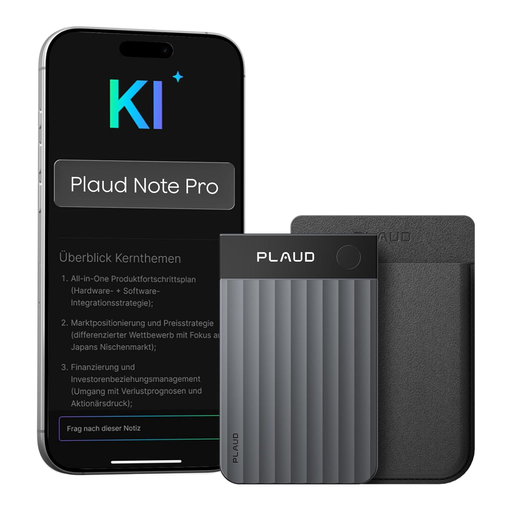
PLAUD Note Pro Voice Recorder, 64GB

PLAUD Note Pro Voice Recorder, 64GB

This model could be worth considering if you’re looking for a standalone, compact voice recorder.

The product title lists 64GB, 30 hours of battery life and 4 MEMS microphones.

Joybuy
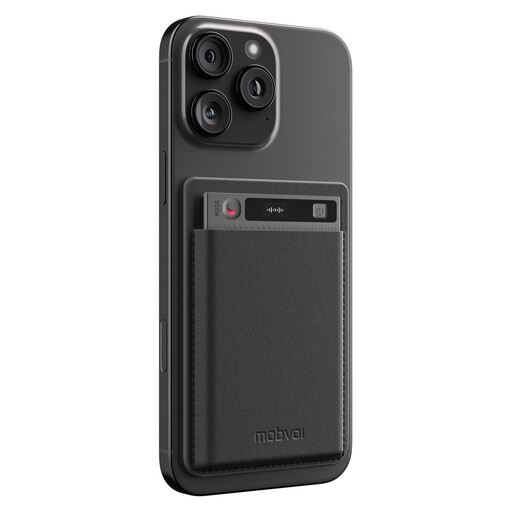
Mobvoi TicNote Lite AI Voice Recorder, 4GB

Mobvoi TicNote Lite AI Voice Recorder, 4GB

This device is listed as a voice recorder. Check in advance that its positioning and controls will suit your interview location.

The product title lists 4GB of storage and support for 120+ languages.

Joybuy
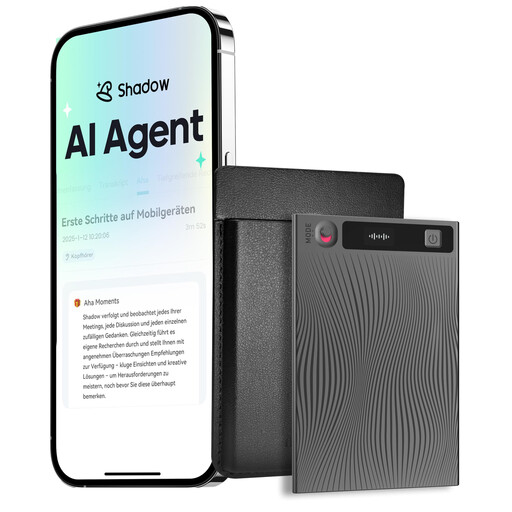
Mobvoi TicNote Standard AI Voice Recorder, 64GB

Mobvoi TicNote Standard AI Voice Recorder, 64GB

This model could be a good option if you’re looking for a voice recorder that’s compact, rather than a separate microphone setup.

The product title lists 64GB, a 3-microphone array, 20 hours of recording, Wi-Fi and Bluetooth.

Joybuy
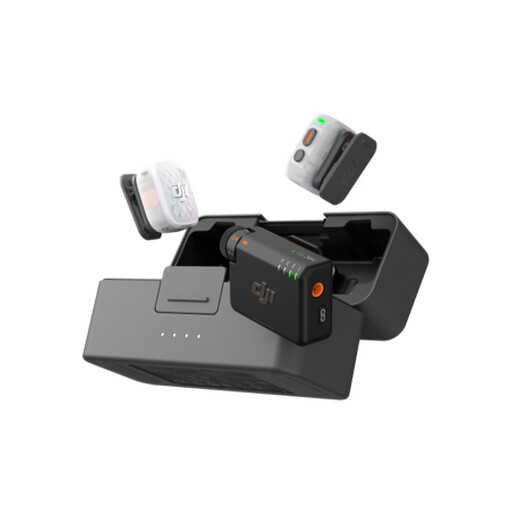
DJI Mic Mini 2S, 2 TX + 1 RX with charging case

DJI Mic Mini 2S (2 TX + 1 RX + Charging Case)

A microphone system with two transmitters could work for separately positioned microphones, provided it’s compatible with your recording device.

The product title lists 2 TX, 1 RX and a charging case.

Joybuy
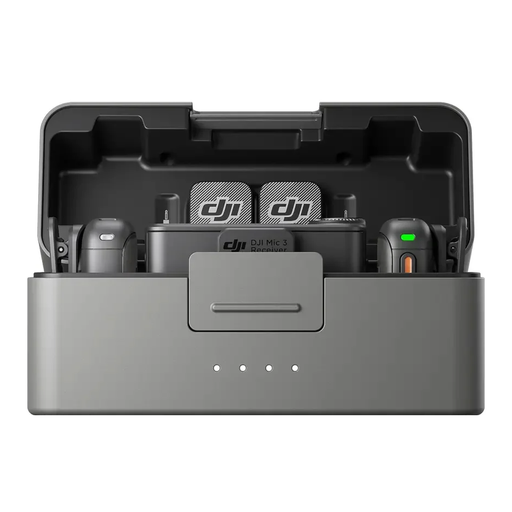
DJI Mic 3, 2 TX + 1 RX with charging case

DJI Mic 3 (2 TX + 1 RX + Charging Case)

This microphone system could be suitable if you want to record two speakers using separately positioned microphones, provided the connections are compatible with your recording device.

The product title lists 2 TX, 1 RX and a charging case.

Joybuy

Frequently asked questions

How can I check whether the fan is drowning out the speaker?

Record a short passage from the planned seating position, including some quieter speech, and listen back. If needed, move the microphone closer to the person telling their story or choose a quieter location before relying on filters in post-production.

Can I remove steady fan noise later?

Noise reduction can help with steady background noise, but the results aren’t always satisfactory. The Audacity manual notes that noise reduction has its limits when noise is loud. Work on a copy and check whether the speech has changed.

What should I consider for longer conversations and additional accessories?

Check what storage media, power supply and, where necessary, external microphones your specific setup requires. Philips lists different recording times for MP3 and PCM across its VoiceTracer range, so don’t assume a figure for one format also applies to another.

Am I allowed to record railway staff sharing their memories in Germany?

Under § 201 of the German Criminal Code (StGB), recording another person’s privately spoken words without authorisation, or sharing a recording made in this way without authorisation, is prohibited. Before the conversation, check that the recording and its intended use are permitted. If an employer processes employee data on the basis of consent, the specific requirements of § 26 BDSG must also be taken into account. This doesn’t automatically apply to every personal oral history project.

Do I need permission to conduct an interview in a DB building or on DB premises?

Check Deutsche Bahn’s rules for the specific location and type of project. Deutsche Bahn says that recording in railway buildings and on railway premises is generally only possible by prior arrangement. For journalistic audio recordings, it requires advance registration; for non-journalistic commercial productions, it requires written permission. The fact that the person being interviewed works for Deutsche Bahn doesn’t necessarily mean the conversation is taking place on DB premises.