For a seated one-to-one interview, a wired lavalier may be a good fit if you have a compatible microphone input. For a one-off account that would be difficult to repeat, a body-worn recorder is an alternative to a wireless system. If you also want to record the interviewer, a set with two microphones is a better option. Check the connections, power supply and storage, and make a test recording: neither 32-bit float nor a wireless connection will eliminate room echo or clothing rustle.
Which lavalier solution is right for you?
Capture the storyteller’s voice
To record someone’s life story as clearly as possible, microphone placement, background noise and a reliable start to the recording all matter. Zoom says the F2 has a Hold switch designed to prevent you from accidentally stopping a recording.
Record both sides of the conversation
If you want to capture both questions and answers, check whether the set really includes two microphones and how it records each voice. RØDE and Sennheiser describe sets with two lavalier or clip-on microphones.
Use the equipment you already have
If you plan to keep using your recorder or camera, check that the microphone connection and power requirements match your specific device. RØDE states that the Lavalier GO requires a TRS input with plug-in power.
What should you look for when choosing?
Wired lavalier
A good fit if: One person will mostly be seated and you already have a compatible microphone input.
Consider: The cable restricts movement, and a single microphone won’t automatically record a second voice separately.
Lavalier with a body-worn recorder
A good fit if: You want to record a one-off account that would be difficult to repeat, directly from the speaker and without a wireless system.
Consider: Batteries, a memory card, starting the recording and transferring the files afterwards are all part of the process. The recording won’t fix room echo or clothing noise.
Two-channel wireless set
A good fit if: You want to mic up both the interviewer and the storyteller, or they’ll be moving around.
Consider: Check the transmitters, batteries, receiver connection and channel separation at the location. A local backup recording is no substitute for listening to a test.
When recording oral history in untreated rooms, you can narrow down your options by deciding which need matters most.
| Priority |
What to check before buying |
Who it matters most to |
| Clarity of the storyteller’s voice |
Attachment and wind protection; test the position with the clothing being worn and listen back to a test recording. |
If a life story can’t easily be repeated, I want to spot echo and rustling in advance and attach the microphone in the right place. Around 36% of consumers prioritise a clear main voice. |
| Both sides of the conversation |
Two microphones in the set; check both voices and channel separation in a test recording. |
If I want my questions to be audible too, I check the number of microphones and how both people will be recorded. Around 29% of consumers prioritise recording both sides of the conversation. |
| Connection to existing equipment |
Plug type and microphone input; check the power requirements against the exact recording device. |
If I want to keep using my recorder or camera, I want to know before buying whether the input and power requirements are compatible. Around 21% of consumers prioritise device compatibility. |
| Protecting the recording |
Check how to start recording, the power supply and storage; listen to a test file and back it up afterwards. |
If a conversation is long or difficult to repeat, I want to keep track of when recording starts and where the file is saved. Around 14% of consumers prioritise safeguarding the recording. |
Avoid common buying mistakes
-
Assuming one lavalier will capture two separate voices
A one-person recorder set such as the Zoom F2 and a set with two microphones are designed for different interview setups. A single microphone won’t automatically capture a second voice just as clearly or record it separately.
Before buying, decide whether the questions need their own microphone source too.
To mic up two people separately, you may need an additional microphone or recording unit.
-
Assuming a matching plug means full compatibility
A similar plug type isn’t enough if the input and required microphone power aren’t compatible. RØDE specifies that the Lavalier GO needs a TRS microphone input with plug-in power; Shure offers the WL185m with TA4F and LEMO connector options.
Check the microphone variant, input type and power requirements against the exact recording device.
If the connection isn’t compatible, you’ll need to plan for a different recording method or a suitable connection component.
-
Assuming the stated wireless range applies to your interview room
Figures for maximum range don’t guarantee that the wireless connection will work reliably where you’ll be sitting. SYNCO and Joybuy give different range figures for the SYNCO G1 (A2).
Test both transmitters from the seats you’ll be using and listen back to the recording. A local backup recording is no substitute for this test.
Key brands at a glance
Zoom
The F2 combines a body-worn recorder and a lavalier for local recording of one voice.
- According to Zoom, 32-bit float recording and a Hold switch are among the F2’s features; the LMF-2 lavalier is included.
- A single F2 isn’t a two-channel set for two separately miked people. You’ll need to factor power and storage into your setup.
RØDE
The Lavalier GO is a wired option, while Wireless PRO is a set with two Lavalier II microphones.
- RØDE specifies that the Lavalier GO requires a TRS input that supplies power. Wireless PRO includes two Lavalier II microphones and supports local recording on the transmitters.
- For the Lavalier GO, check the input and plug-in power. Wireless PRO also requires a wireless connection, batteries and a connection for the receiver.
Shure
The WL185m is a cardioid lavalier with professional connector options.
- Shure lists TA4F and LEMO connectors, as well as a clip and foam windscreen.
- Don’t assume these connector options will work with a standard 3.5 mm TRS recorder input without checking first. Test the microphone position with a short recording.
Sennheiser
The Profile Wireless 2-Channel Set is designed for recording with two clip-on microphones and a receiver.
- Sennheiser lists internal backup recording and a headphone output for monitoring.
- It’s still a wireless setup: you’ll need to plan for batteries and a connection to the recording device, and test the settings on location. Manufacturer specifications aren’t an independent sound comparison.
SYNCO
The G1 (A2) is a wireless option with two transmitters for two-person conversations.
- SYNCO lists mono, stereo and safety channel modes.
- SYNCO and Joybuy give different figures for maximum range. These figures don’t tell you how the system will perform in your particular interview room.
Joybuy products for lavalier recording
The Joybuy products below include lavalier microphones for mobile recording, including wireless sets for conversations with more than one person and a wired option. Before choosing, check the connection, number of microphones and compatibility with your recording device.
 No image available
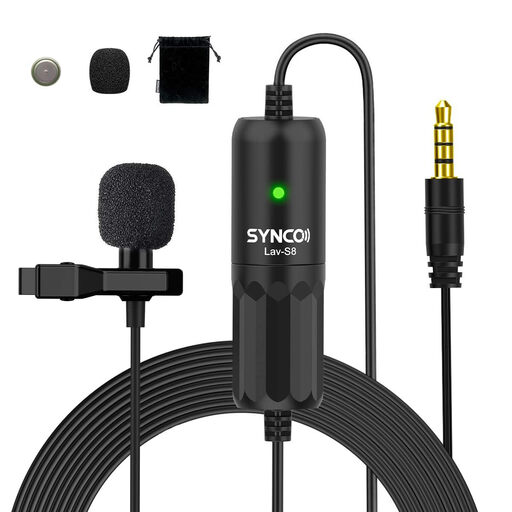
SYNCO S8 lavalier microphone for smartphone, PC, laptop and camera
This set may suit interviews with several participants; check that its connection is compatible with your recording device first.
The product title lists smartphones, PCs, laptops and cameras as compatible device types.
View at Joybuy
 No image available
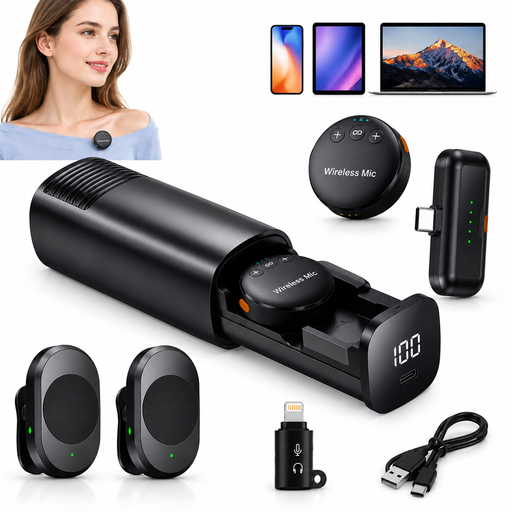
Wireless lavalier microphone set with 2 transmitters, 2.4 GHz, USB-C and Lightning
This set is designed for interviews with two people; check that the receiver connection is compatible with your recording device.
The product title lists 2 transmitters, 2.4 GHz, USB-C and Lightning, as well as a 500 mAh charging case.
View at Joybuy
 No image available
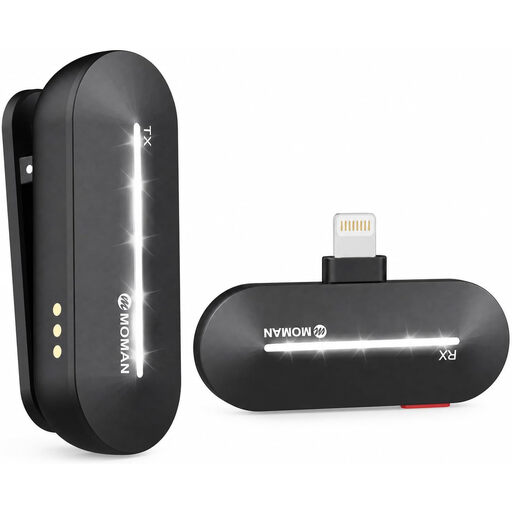
Moman M1CL lavalier microphone for iPhone, 1TX+1RX
For recording a single storyteller’s voice with a compatible iPhone; check device compatibility before the interview.
The product title lists 1TX+1RX and compatibility with iPhone 14/13/12/11/X.
View at Joybuy
 No image available
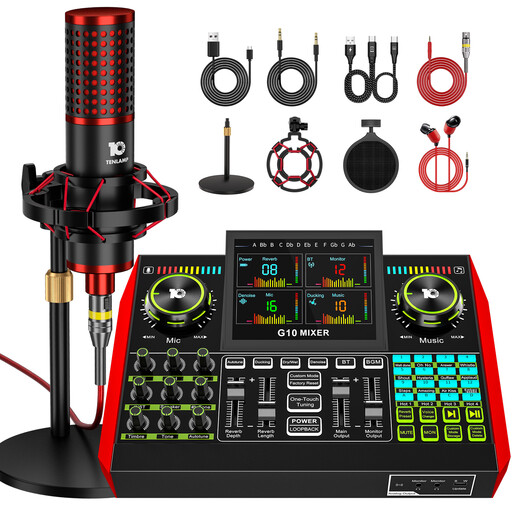
Yinkaer G10-P17 podcast microphone set with audio mixer and 3.5 mm condenser microphone
This set may suit an interview where one person does most of the talking; check that the recording setup works with your device and interview format.
The product title lists an audio mixer and a 3.5 mm condenser microphone.
View at Joybuy
 No image available
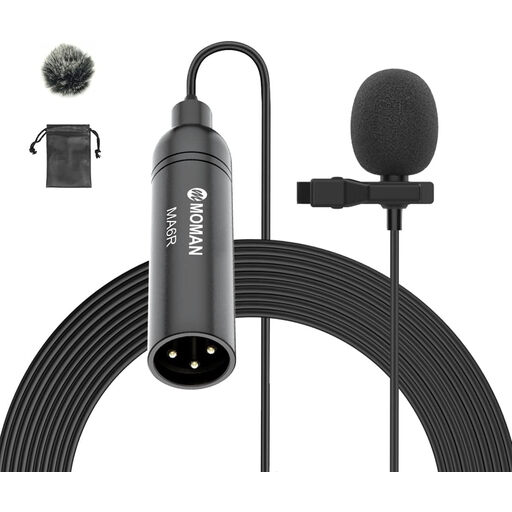
Moman MA6 lavalier microphone, 6 m, 3.5 mm
For smartphone recording with a lavalier, provided the 3.5 mm connection is compatible with your recording device.
The product title lists a 6 m cable, a 3.5 mm connection and an omnidirectional clip-on microphone.
View at Joybuy
Frequently asked questions
Does 32-bit float help with echo in an untreated room?
No. Zoom and RØDE describe 32-bit float as a recording feature; that doesn’t mean it removes room echo or clothing noise. Check the microphone position with a test recording.
What should I check just before and after an oral history interview?
Beforehand, check the microphone attachment, which voices need to be recorded, how to start recording, the power supply and storage with a short test recording. Listen back to the file afterwards and save a copy for the intended storage. The Oral History Association also recommends discussing the purpose, recording and future access with the storyteller in advance.
Can I record a private conversation in Germany without permission?
Section 201(1) of the German Criminal Code covers the unauthorised recording of another person’s privately spoken words, as well as certain uses of the recording. Before the interview, clarify and document that you have the necessary authority or consent; any later publication or archiving should be discussed separately.
Can I use any wireless clip-on microphone in Germany without checking its frequency?
There’s no blanket answer. In Notice 37/2026, issued in April 2026, the Federal Network Agency lists permitted frequency bands for wireless microphones, subject to technical and operational conditions. Check the frequency range of the specific model and the conditions that apply.


