Interviewers in reverberant rooms
If you can move the microphone close to whoever is speaking, you can control its position more carefully. Shure explains that a sound source at a shorter distance produces a stronger signal at the microphone.


For an oral history interview in an untreated room, a handheld microphone held close is a good choice if you can move it towards whoever is speaking. A lavalier mic is an option if the person telling their story needs to move freely. To record voices separately, you’ll need suitable microphones and inputs: Zoom lists two XLR/TRS inputs on the H4essential, but neither its built-in mics nor 32-bit float will eliminate room echo. Plan the microphone positions, connections and recording consent before the interview, too.
If you can move the microphone close to whoever is speaking, you can control its position more carefully. Shure explains that a sound source at a shorter distance produces a stronger signal at the microphone.
If the person telling their story needs to move their head or speak freely, a microphone worn on the body is worth considering. Zoom describes the F2 as coming with an omnidirectional lavalier microphone.
If you want to record questions and answers separately, plan for microphones and inputs for both voices. Zoom lists two XLR/TRS inputs for external microphones on the H4essential.
A good choice if: you can move the microphone towards whoever is speaking during the interview, or give each person their own microphone.
Bear in mind: the microphone needs to stay close and be positioned correctly; the e 835 requires a suitable XLR microphone input.
A good choice if: the person telling their story will be moving and shouldn’t have to hold a handheld mic; a Zoom F2 records locally with a lavalier microphone.
Bear in mind: test the mic’s placement, cable and recorder with the movements you’d expect during the interview; a single F2 is not a two-microphone solution.
A good choice if: you want a standalone recording device or need to connect external microphones to record separate voices.
Bear in mind: built-in microphones won’t solve distance and room echo on their own; external microphones require additional setup.
| What matters | What to check before buying | Who is it important to? |
|---|---|---|
| Clear speech despite room echo | Can you keep the microphone close to the speaker and positioned correctly during the interview? Try a recording in the room you plan to use. | If I want to record a clear voice for transcription or archiving, microphone placement is crucial. Around 40 % of consumers put clear, close-up recording first. |
| Freedom to move | Test the mic’s placement, cable and recording with the movements you’d expect during the interview. | If the person telling their story needs to move their head or speak freely, a lavalier microphone is worth considering. Around 20 % of consumers prioritise freedom to move. |
| Recording questions and answers separately | Match the number of voices to the microphone inputs you can actually use, and check which microphones are included. | If I want to edit questions and answers separately later, I plan for microphones and inputs for both voices. Around 20 % of consumers prioritise recording voices separately. |
| A simple, standalone setup | Check the power supply, recording media, headphone monitoring and where the recorder will sit in the room. | If I want to record without a computer and keep the setup manageable, I pay particular attention to the controls and microphone placement. Around 20 % of consumers prioritise a simple standalone setup. |
Greater distance can mean the speaker’s voice reaches the microphone at a lower level. Built-in X/Y microphones don’t guarantee clear recordings from every seat.
Try out the planned seating positions and listen back to a test recording made in the room you’ll actually use.
This refers to a recording format, not the effect of microphone placement. Zoom highlights 32-bit float features on its recorder models; microphone positioning still needs to be considered separately.
Check the recording format and microphone placement as two separate things, then listen back to a test recording.
A lavalier microphone or XLR handheld mic won’t automatically cover both sides of a conversation. The number of tracks on a recorder doesn’t tell you, by itself, which microphones you can connect.
Assign a microphone, connection and recording path to each voice. Depending on your setup, you may need extra microphones, suitable inputs or a recording device.
The ATR2100x-USB is an option for close-up speech recording, with USB or XLR connectivity.
The dynamic e 835 is a cardioid XLR handheld microphone designed for close-up speech.
Zoom offers different recording options with the F2 and H4essential.
The DR-10L Pro is a compact recorder with a wired lavalier microphone for recording audio worn on the body.
This selection includes USB and XLR speech microphones, as well as lavalier and wireless systems for interviews with one or two mic’d-up participants. Test microphone placement in the room and listen back to a recording.
 No image available
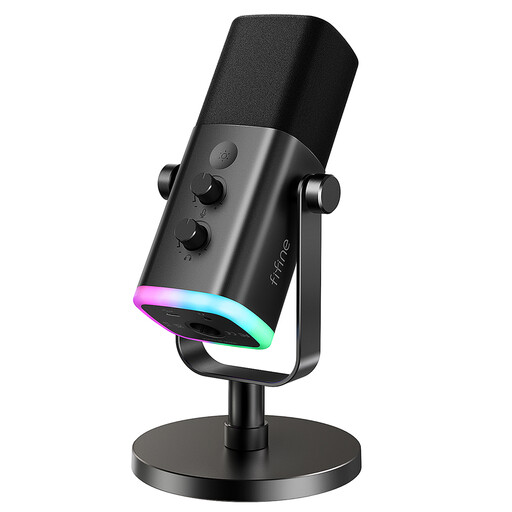
An option for interviews with someone monitoring the setup, where you can hold the microphone close to whoever is speaking.
USB-C and XLR connections, a headphone socket and a stand; the recommended recording distance is listed as 2 to 6 inches. An XLR cable is not included.
 No image available
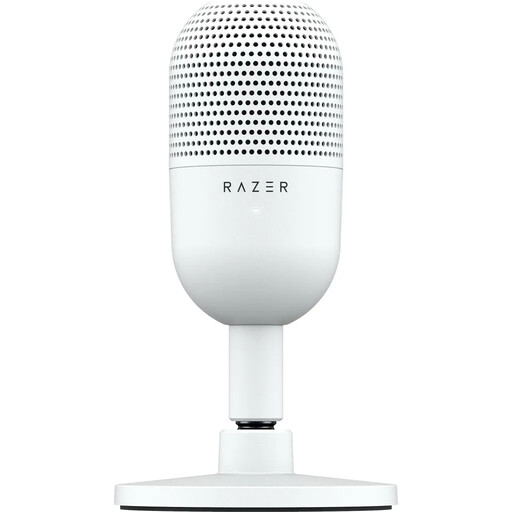
A desktop option for a fixed interview setup with someone monitoring the recording; point the microphone towards the speaker and check the recording in the room.
USB-C connection, supercardioid pickup pattern, adjustable stand and tap-to-mute.
 No image available
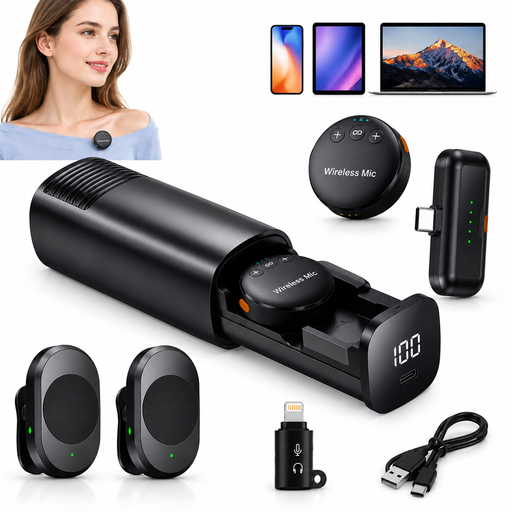
The two transmitters are designed for interviews with two mic’d-up participants; check how the kit connects to your recording device before you buy.
The kit is described as including two transmitters, one receiver, and USB-C and Lightning connections.
 No image available
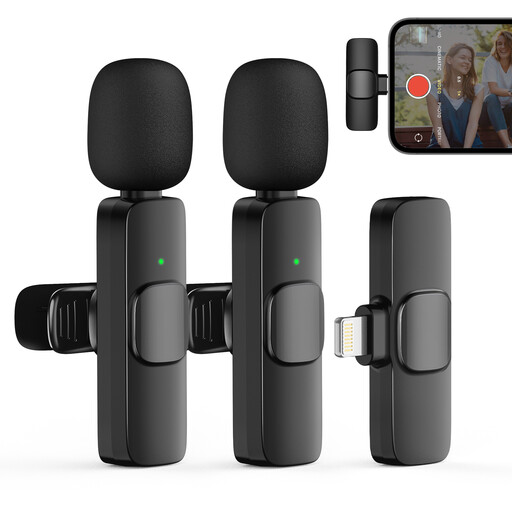
A lavalier option for an interview with two mic’d-up participants; check that the connection is compatible with your recording device.
The kit lists two transmitters and one receiver, and is described as a lavalier microphone for iPhone.
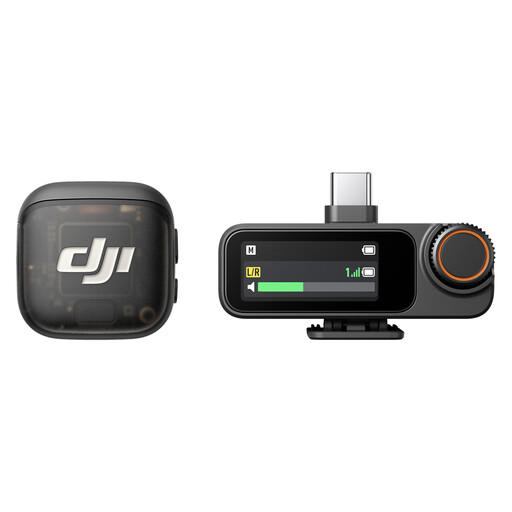 No image available
The two transmitters can be used for an interview with two speakers; check the connections and recording method you need before you buy.
The description lists two transmitters, one receiver, 8 GB of internal storage per transmitter, and USB-C, Lightning and 3.5 mm TRS connections.
Not without taking further steps: Section 201(1) of the German Criminal Code (StGB) covers the unauthorised recording of another person’s privately spoken words. The Federal Ministry of Justice and the Federal Office of Justice include this provision in the text of the law. Get the participant’s consent before recording, and discuss any later use separately.
No. Consent to recording shouldn’t be treated as automatic permission to archive or publish the interview. Agree and document who will be able to access the archive and whether the recording may be published; the General Data Protection Regulation must also be taken into account when processing personal data. The Freie Universität Berlin University Library and Oral-History.Digital treat recording, preservation and later use as separate planning steps.
Make a test recording in the room you plan to use, speaking from both typical positions, then listen back to it. Check the microphone’s distance and direction; if you’re wearing a Zoom F2, also test the attachment, cable and hold switch.
Make sure the microphone, connection and recording device work together for each voice. A Sennheiser e 835 needs a suitable XLR microphone input; to record two separately mic’d voices on the Zoom H4essential, you’ll need suitable external microphones. Also check the cables, recording media, power supply and what’s included with the specific offer.