Recording someone telling their story
You want to capture the memories of someone who will be seated most of the time, clearly and despite the fan, and can position the microphone close to them.


For someone who will be speaking mainly while seated, positioning a microphone close to them and keeping it steady is a sensible starting point. The key is to make a test recording with the fan running. If you also need to capture questions clearly, or the speaker will be moving around, a handheld microphone passed between speakers or two microphones worn close to the body may be a better fit. Just make sure the connections, mounting and recording device all work with your setup.
You want to capture the memories of someone who will be seated most of the time, clearly and despite the fan, and can position the microphone close to them.
You also want questions and interjections to be clear, so plan for the distance between both speakers or consider using two microphones.
If the speaker will be moving around or the recording location may change, the right mounting, connection and a sound check before the conversation are all important.
First decide whether you need to capture just the main speaker or questions too. Then consider freedom of movement and whether the connection suits your recording device.
| What matters | What to check when buying | Who it matters most to |
|---|---|---|
| Clarity of the main speaker | Pickup direction and a stable position; make and listen back to a test recording with the fan running. | If I mainly want to capture the main story clearly, I’ll pay attention to distance and positioning. Around 36% of consumers prioritise clarity for the main speaker. |
| Both voices in the conversation | Decide whether questions should be recorded; check the number of microphones and recording channels. | If the answers would be hard to follow without the questions, both voices need to be audible in the recording. Around 29% of consumers prioritise clarity for both speakers. |
| Freedom of movement | Test the attachment to clothing, receiver connection and power supply with your planned setup. | If the speaker changes position, I want to keep the distance from the microphone as consistent as possible. Around 21% of consumers prioritise freedom of movement and recording in different locations. |
| A straightforward recording setup | Check compatibility with your existing device, as well as the cable, stand and headphone monitoring. | If I want to check the setup easily before the conversation, the microphone, recording device and monitoring equipment all need to work together. Around 14% of consumers prioritise a simple, easy-to-check recording setup. |
Positioning and distance affect how clearly you hear the voice and room noise in the recording. Even a microphone placed further away can still pick up a lot of ambient sound.
Test it in the actual conversation position with the fan running, then listen back to the recording.
The person asking questions from further away may sound quiet compared with the main speaker.
Decide in advance whether you want to include the questions, then test both voices in your planned setup.
Depending on your setup, you may need a second microphone, additional inputs or a two-channel set.
Having an XLR connection available doesn’t, by itself, mean your recording device can capture the microphone signal.
Check the input, power supply, cable and what’s included against the exact model variant.
Depending on the equipment you already have, you may need a compatible recorder, interface, cable or mount.
RØDE’s 32-bit float specification refers to recordings made on the transmitters, not necessarily to the connected camera.
If you need the transmitter recording as a backup, test the recording mode and file export before the interview.
Audio-Technica describes the ATR2100x-USB as a dynamic handheld microphone with USB and XLR outputs, suitable for a fixed recording position or a guided conversation with compatible equipment.
Sennheiser describes the MD 46 as a dynamic handheld microphone with a cardioid pickup pattern, designed for guided interviews.
RØDE offers the PodMic USB for a single voice in a fixed position, as well as the separate Wireless PRO range, which includes two wireless microphones worn close to the body.
Zoom describes the ZSG-1 as a directional microphone for cameras and recorders, suitable for a compatible mobile recording setup.
Samson describes the Q2U as a dynamic USB/XLR handheld microphone with a cardioid pickup pattern, designed for speech and straightforward recording setups.
The Joybuy products featured include USB/XLR microphones for close recording in a fixed position, as well as a wireless dual clip-on microphone.
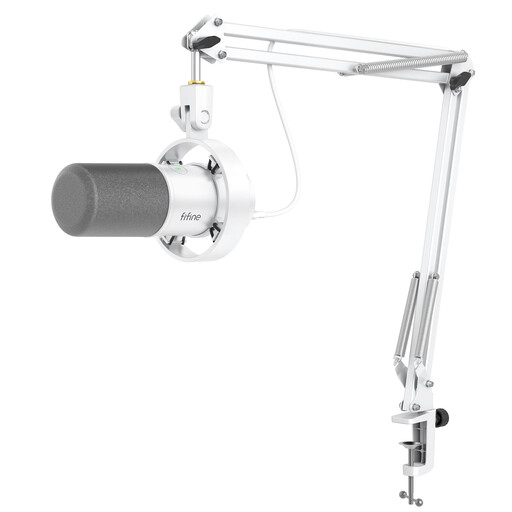 No image available
For recording someone telling their story in a fixed position, you can position the microphone using the included arm.
USB and XLR connections, headphone monitoring and a recommended speaking distance of 2–6 inches. According to the product description, an XLR cable isn’t included.
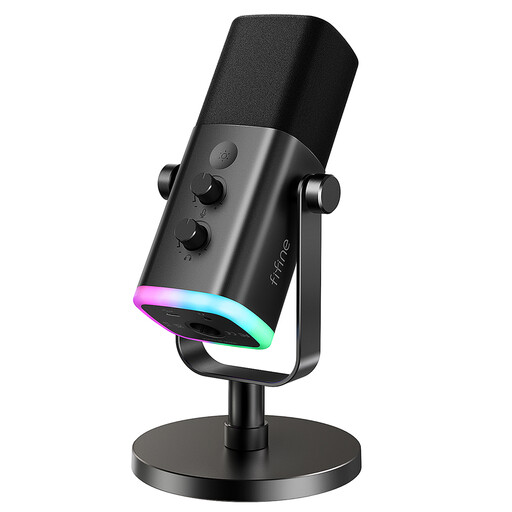 No image available
The included stand is designed to keep the microphone in position at a fixed recording spot.
USB and XLR connections, headphone socket and a pickup pattern described as unidirectional; recommended distance: 2–6 inches. According to the product description, an XLR cable isn’t included.
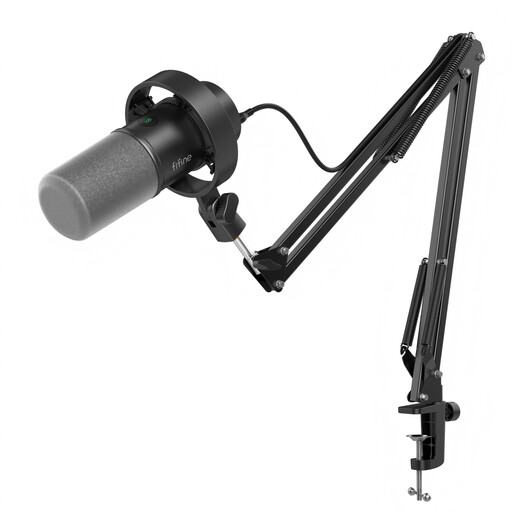 No image available
The included arm can position the microphone for recording someone telling their story at a fixed spot.
USB and XLR connections, headphone monitoring and a recommended speaking distance of 2–6 inches. According to the product description, an XLR cable isn’t included.
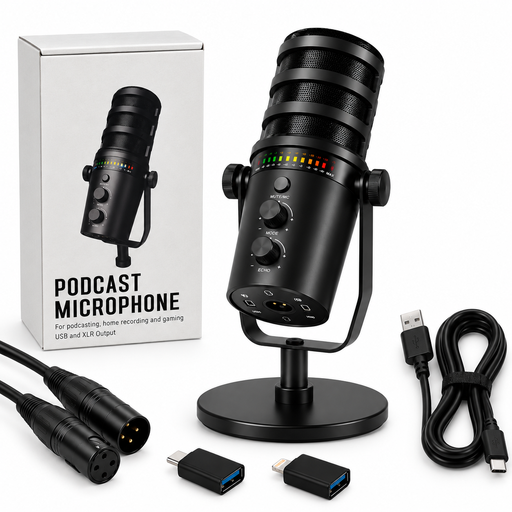 No image available
The desktop stand described is suited to keeping the microphone in a fixed position for recording someone’s story.
The product description lists USB and XLR connections, a desktop stand and a 3.5 mm headphone socket.
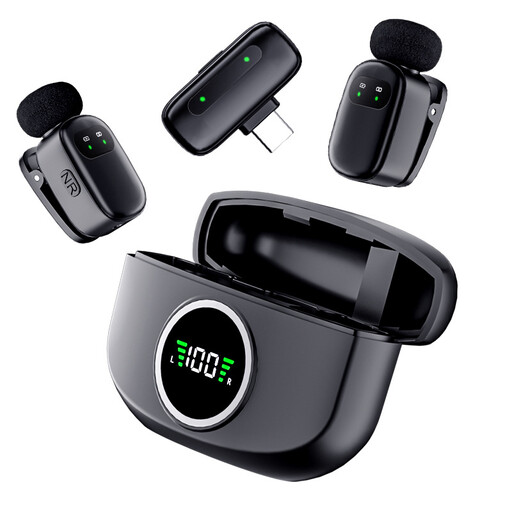 No image available
This set includes two clip-on microphones and is designed for recording two speakers or capturing audio while moving around.
The product description specifies a Type-C connection and a battery life of 3–6 hours. Check that the connection is compatible with your recording device.
No. It reduces sound from certain directions, but won’t automatically eliminate fan noise. Distance and positioning in relation to the speaker still matter, so record in the intended spot with the fan running and listen back to the test.
Connect the microphone and recording device, record a short sample of both speakers, then check the file with headphones. With clip-on microphones, also listen for rustling against clothing and check that the power and storage will last for the planned duration.
An XLR microphone needs a compatible microphone input on a recorder or interface. Sennheiser specifies XLR for the MD 46; with a USB/XLR model, you can use the USB connection instead, as long as your recording device is compatible. Before buying, also check that the cable and mount are included.
No. Section 201 of the German Criminal Code (StGB) covers the unauthorised recording on an audio medium of another person’s words spoken in private. Get permission before recording. Any later publication and the possible processing of personal data must be considered separately; the Oral History Association also recommends documenting informed consent and how the recording is intended to be used.
No. Permitted frequencies and technical conditions depend on the specific wireless system. The Federal Network Agency publishes general frequency allocations for radio microphones; before use, check the frequency range and conditions that apply to the specific model. Ruling 37/2026, among other things, repeals the earlier Ruling 109/2025.