What should you look for when buying?
First, decide whether you want to record both voices together or edit them separately later. Then check the recording space, connections and whether you can monitor the recording during the conversation.
| Priority |
What to check when buying |
Who is this most important to? |
| Recording both voices |
Check seating positions and, if needed, separate inputs and tracks. |
If I want to capture both questions and recollections clearly, neither voice should get lost. This is the top priority for around 36% of consumers. |
| Recording at home |
Make a test recording of both voices from the actual seats, with the room noise you’d normally expect. |
I want to be able to hear both voices clearly at home, despite any echo or background noise. For around 29% of consumers, clear sound in the room comes first. |
| Easy connection |
Check the recording device’s connections, the inputs you need and what’s included with the exact variant. |
If I want to get started without a fuss, I don’t want to have to put together an unsuitable signal chain first. A simple setup is the top priority for around 21% of consumers. |
| Monitoring the recording |
Check headphone monitoring, make a test recording and confirm how the recording will be stored. |
During a longer conversation, I want to know as soon as possible if there’s a problem with the levels or recording. Monitoring and backup come first for around 14% of consumers. |
Joybuy products for your recording setup
The products below are single-microphone kits for a permanent recording setup. To record two voices separately, you’ll also need a recording setup designed for that purpose.
 No image available
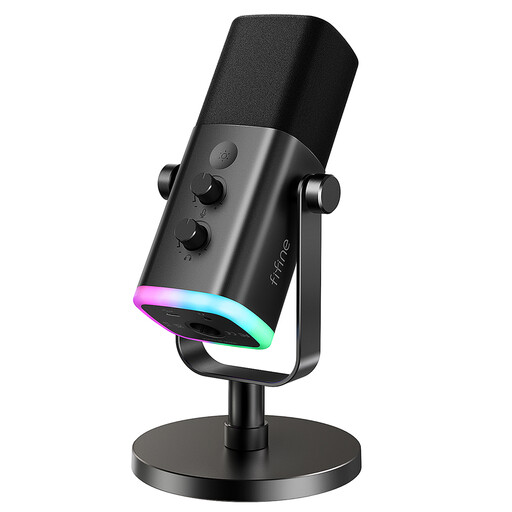
FIFINE AM8 USB/XLR
For close-mic recording of a single voice at a permanent recording setup; the kit includes a unidirectional microphone.
Dynamic microphone with USB-C and XLR connections, plus a headphone socket. Monitoring controls are specified for USB use.
An XLR cable isn’t included; the product description specifies a mixer or audio interface for XLR use.
View on Joybuy
 No image available
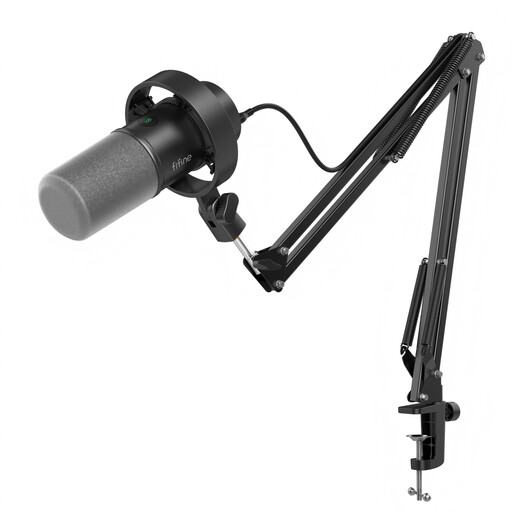
FIFINE K688CT
For close-mic recording of a single voice at a permanent recording setup; the kit includes a unidirectional microphone.
Dynamic microphone with USB-C and XLR connections, a headphone socket and a microphone arm. The controls are described for USB mode.
An XLR cable isn’t included.
View on Joybuy
 No image available
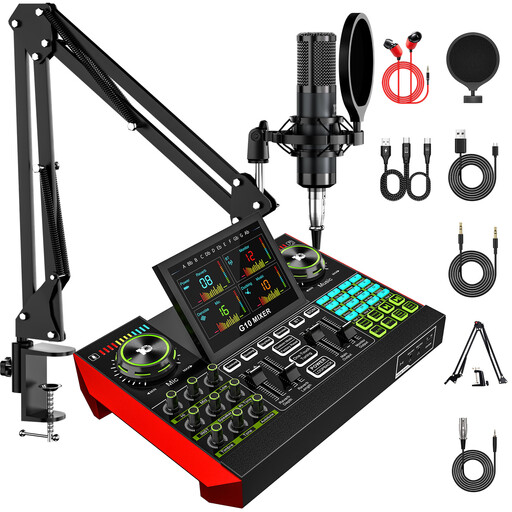
Yinkaer G10-P15-XB
For a permanent recording setup if you’re considering a kit with a microphone and audio mixer.
The product details list a 3.5 mm condenser microphone, an audio mixer and a microphone arm. Check that the connections are compatible with your planned recording equipment.
View on Joybuy
Frequently asked questions
Do I have to use two microphones for two people?
No. One shared microphone can work with the right seating arrangement, provided a test recording captures both voices clearly. If you want to edit the voices separately later, however, you’ll need a recording setup that handles separate signals. The Shure MV7i can output its own microphone signal and a connected second microphone as two mono tracks.
What should I test before a longer interview?
Make a test recording of both voices from the actual seats, listen back on headphones and check for room noise, levels and how the recording will be stored. Oral-History.Digital at Freie Universität Berlin puts the interviewee’s account first and recommends checking the equipment in advance.
What extra equipment might I need for an XLR microphone?
It depends on the specific model and your recording device. Check that you have suitable inputs, cables, a mount and headphones; RØDE specifies an audio interface for recording the XLR PodMic to a computer. Shure highlights the preamp gain required for the SM7B.
Can I record and publish a private oral history interview in Germany without permission?
Check that you have permission to record before you start, and separately confirm whether you can publish the interview. According to the Federal Ministry of Justice, Section 201 of the German Criminal Code makes the unauthorised recording of privately spoken words, as well as certain uses of such a recording, a criminal offence. For consent under data protection law, the Data Protection Conference lists factors including voluntariness, information and a clear affirmative action. Permission to record does not automatically mean that publication is also permitted.


