Recording family history
If you’re planning a quiet conversation at home, your main priority is to capture the person telling their story clearly, without having to set up complicated equipment.


For a quiet one-to-one conversation, an easy-to-use recorder with a well-positioned microphone may be all you need. If the people speaking are sitting at different distances from the recorder, separate microphones and suitable inputs are often a more practical choice. Shure points out that a microphone cannot separate room reverberation from the direct speech signal after it has already been recorded. So also check the recording format, monitoring options, power supply and storage capacity for the length of interview you have planned.
If you’re planning a quiet conversation at home, your main priority is to capture the person telling their story clearly, without having to set up complicated equipment.
If you want to capture both sides of the conversation separately, check whether you can position the microphones to suit the seating distances and record the signals separately.
If you want to pass on interviews or keep them for the long term, choosing a suitable original file format and agreeing clear terms of use are important considerations.
A good fit if: you mainly want to record a quiet one-to-one conversation easily, then listen back or transfer the recording later.
The trade-off: Check that the microphone layout and connections suit your seating arrangement. A list of features alone doesn’t guarantee that voices at different distances will be captured separately.
A good fit if: you want to record without external microphones and choose the recorder’s position and recording pattern carefully.
The trade-off: Having everyone recorded from the same position can be impractical if the speakers are different distances away. 32-bit float recording won’t remove room reverberation either.
A good fit if: you want to mic the interviewer and the person telling their story separately, or edit their tracks independently.
The trade-off: Depending on your setup, you’ll also need microphones, suitable cables and an appropriate power supply. Extra features are essential for every two-person interview.
| What you need | What to check before buying | Who is this most important to? |
|---|---|---|
| Clear speech | Microphone position and seating distance; a compatible external microphone input if needed. | If I want to hear the person telling their story clearly, even in a reverberant room, I’ll first check the distance and positioning. Around 36% of consumers put speech clarity first. |
| Recording both voices separately | Number of compatible inputs and microphones; separate recording tracks. | If the speakers are sitting at different distances from the recorder, I may need to position their microphones separately. Around 29% of consumers prioritise recording both voices separately. |
| Original file for archiving | WAV support; transfer options and the requirements of the intended archive. | If the interview is to be passed on or kept for the long term, I’ll want to plan for a suitable original file format. Around 21% of consumers put archiving first. |
| Recording a long conversation | Power supply and available storage; a test recording using your planned settings. | For a long conversation that would be difficult to repeat, I’ll want to check the power and storage before we begin. Around 14% of consumers pay particular attention to uninterrupted recording. |
In Germany, you should discuss the recording with everyone involved beforehand. Recording another person’s privately spoken words without their consent is covered by Section 201 of the German Criminal Code (StGB); the Federal Ministry of Justice and the Federal Office of Justice list this provision in the Criminal Code. Also agree the purpose, how long the recording will be kept and whether it is intended for publication with the person telling their story.
The bit depth affects how the signal is recorded; it doesn’t separate the voice from reflections in the room.
Start by testing the room and microphone distance. Choose extra recording features only if they suit the setup you have planned.
Recording from one shared position and positioning microphones separately address different challenges posed by the seating arrangement.
Before you buy, decide where both people will sit and whether you need separate signals.
For oral history recordings, the Oral History Association and the Library of Congress recommend using uncompressed standard formats where possible. Uncompressed files take up more storage space.
Check whether the device records WAV and what requirements the receiving organisation has for original files and documentation.
The range includes compact recorders with built-in microphones, as well as models with inputs for external microphones.
The DR-05XP is a compact handheld recorder, while the Portacapture X8 offers a more comprehensive multitrack setup.
The LS-P5 is a compact option for recording without a complex multitrack setup.
The ICD-UX570 is a voice recorder with Linear PCM recording and playback features.
This selection of Joybuy products includes voice and audio recorders that may be suitable for recording interviews at home. Compare the listed recording formats, storage details and microphone specifications with your particular setup.
 No image available
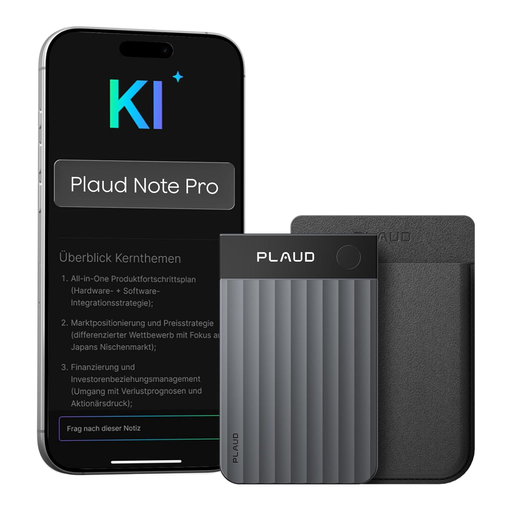
If a compact device with built-in microphones suits your setup, storage capacity and stated recording time are useful planning details.
Listed specifications include 64 GB of storage, four MEMS microphones and up to 30 hours of continuous recording.
 No image available
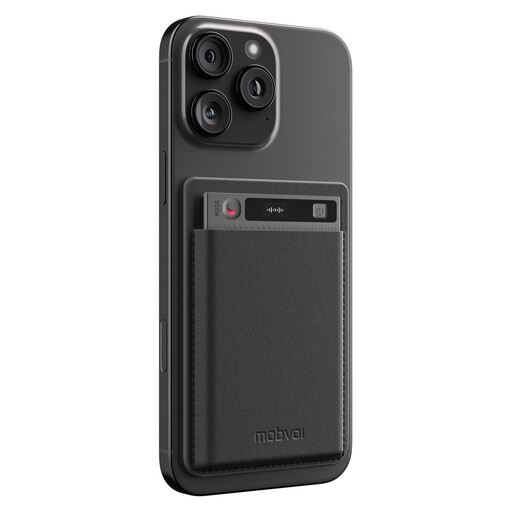
The product name identifies this as a voice recorder. Before your interview, check whether the microphone layout suits your planned seating arrangement.
The product name specifies 4 GB of storage.
 No image available
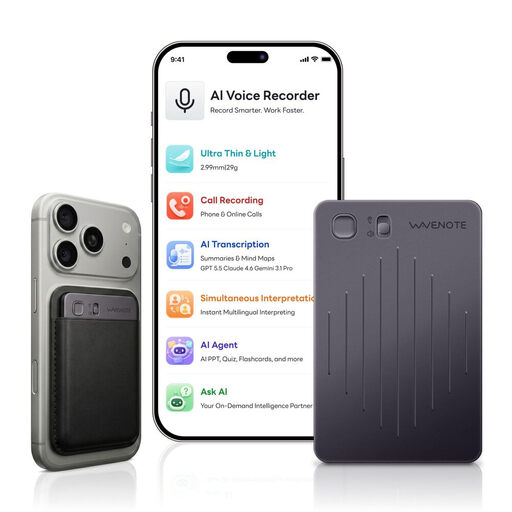
If you’re planning to hand over a recording to an archive, WAV is a relevant format specification; check that it meets the receiving organisation’s requirements.
Listed specifications include WAV recording, 64 GB of storage and up to 42 hours of recording time.
 No image available
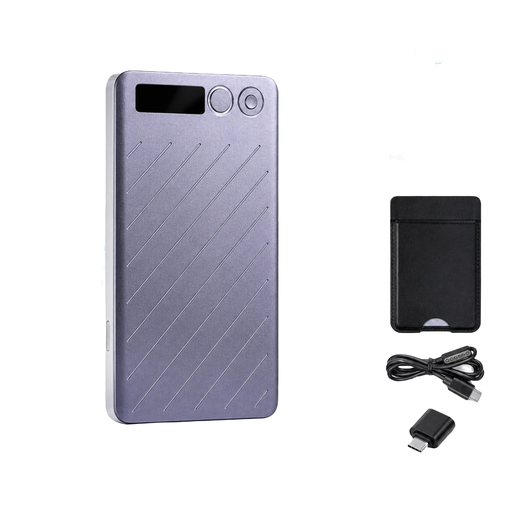
For a longer conversation, storage and power are important things to check. It’s also worth making a short test recording.
Listed specifications include 64 GB of storage, up to 36 hours of battery life and a transcription function.
 No image available
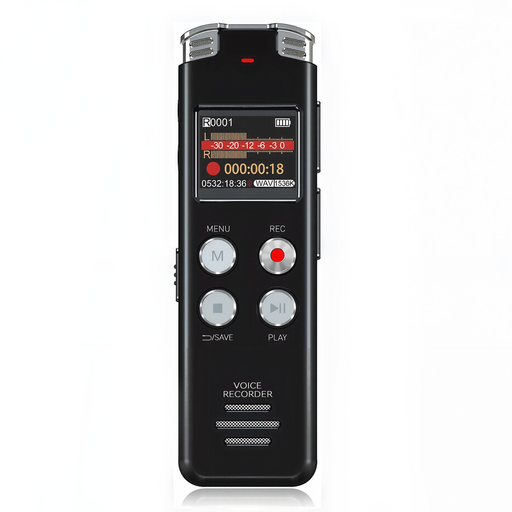
If WAV is a suitable original format for your project, also check that the microphone and its position will work well in the room.
Listed specifications include a dynamic microphone, WAV recording, 128 GB of storage and up to 35 hours of continuous recording.
If an archive or project doesn’t specify a different format, an uncompressed WAV recording is a well-supported choice. The Oral History Association recommends uncompressed standard formats where possible, and the Library of Congress prefers uncompressed digital audio files to compressed ones. Check the specific submission requirements with the receiving organisation.
Seat everyone in their planned positions, make a short test recording and listen back to both voices. If you hear a lot of room reverberation, start by changing the microphone position: Shure points out that a microphone cannot separate reverberation from the direct speech signal after it has already been recorded.
Recording another person’s privately spoken words without their consent is a criminal offence under Section 201 of the German Criminal Code (StGB). Discuss the recording with everyone involved beforehand and get their consent. Also agree the purpose, how long the recording will be kept and whether it is intended for publication. The Federal Commissioner for Data Protection and Freedom of Information explains that, where the GDPR applies, processing personal data requires an appropriate legal basis.
When you buy a new device as a consumer, you generally have statutory rights against the seller. The Verbraucherzentrale states that the time limit is two years from delivery or receipt. A voluntary manufacturer’s or retailer’s guarantee is separate from these rights. If there’s a fault, the first step may be a remedy such as repair or replacement.